Price Hike Wave Spreads Across the Board: From Memory to All Chips
2026-03-03
At the beginning of 2026, the semiconductor industry is experiencing an unprecedented wave of price increases, with the scope of hikes rapidly expanding from memory chips to power semiconductors, CIS image sensors, MCUs, analog chips, and virtually all other chip categories.
 On January 27, domestic MCU leader Cmsemicon became the first to issue a price increase notification, announcing price adjustments of 15% to 50% for MCU and Nor Flash products, with some scarce automotive-grade components seeing the maximum increase. Almost simultaneously, Goke Microelectronics announced tiered price hikes for its KGD (Known Good Die) memory products: 40% for 512Mb products, 60% for 1Gb products, and as high as 80% for 2Gb products. Entering February, CR Micro announced price increases of at least 10% across all product lines effective February 1. Silan Microelectronics announced 10% price increases for small-signal diodes, trench TMBS, and MOS-class chips effective March 1. NCEPower announced price hikes of at least 10% for MOSFET products. International giant Infineon also announced price increases for select power devices and integrated circuits effective April 1.
In early March, the price hike wave further spread to the CIS sector. SmartSens announced differentiated price adjustments for smart security and AIoT products, with Samsung-foundry products increasing by 20% and JCET-foundry products by 10%. Halo Microelectronics followed closely, announcing moderate price increases for select products effective March 1. At this point, the price hike wave has covered almost all chip categories including memory, power, analog, MCU, and CIS, forming an industry-wide resonance.
Dual Drivers of Cost and Demand
Unlike memory chips, which are primarily driven by strong AI demand, the price increases for power semiconductors, image sensors, and other products this time are the result of both soaring raw material costs and explosive downstream demand.
On the cost side, pressure continues to mount. Prices for upstream raw materials and key precious metals have risen sharply. Prices for copper, aluminum, palladium, silver, and other core semiconductor packaging materials have increased significantly since 2025, with copper prices up more than 35% year-over-year. For technologically mature small and medium-power discrete devices, metal raw materials account for 60% to 70% of packaging costs, with some products even reaching 80%. Meanwhile, wafer foundry and packaging/testing costs continue to rise, with 8-inch wafer foundry prices generally increasing by 5% to 20%, and some mature process orders seeing hikes of up to 20%. Leading foundries including TSMC, Samsung, and SMIC have all followed suit with price adjustments.
On the demand side, there is structural explosive growth. AI data center construction has entered a peak period, with sustained growth in demand for high-current, high-power products. The power consumption of AI servers has surged from several kilowatts for traditional servers to tens of kilowatts or even megawatts, directly driving massive demand for power semiconductors. At the same time, demand remains strong in new energy vehicles, energy storage, and industrial control sectors, with delivery lead times for some products extending to 40-70 weeks.
Summary
From Halo Microelectronics and SmartSens to Silan Microelectronics and NCEPower, from power semiconductors to MCUs and CIS, the chip price hike wave is sweeping across the entire semiconductor industry with unprecedented breadth. This is not merely a passive response to cost pressures, but rather the result of multiple factors including explosive AI computing demand, rising new energy vehicle penetration, and accelerating industrial intelligence. As the effects of price increases continue to ferment, structural differentiation within the semiconductor industry will intensify, with leading companies possessing technological barriers and production advantages positioned to secure more favorable positions in the new cycle.
Semicone IC Solutions Distributor
Amidst this dynamic market environment, leading electronic component distributors like Semicone play a critical role in bridging supply and demand. Specializing in high-performance semiconductors across power management, automotive-grade solutions, and industrial control applications, Semicone maintains robust inventory channels for scarce components during supply-constrained periods. Their portfolio spans diodes, MOSFETs, MCUs, memory solutions and more ic parts. Today's Featured IC Components:
● NRVB1H100SFT3G: High-efficiency Schottky diode for power rectification
● 10M08SAU169C8G: Intel MAX 10 FPGA with analog capabilities
● PMV130ENEAR: Low-Vce(sat) NPN transistor for switching applications
● H5TQ4G63EFR-TEC: 4Gb DDR3 SDRAM for high-speed memory systems
Email: info@semicone.com
Sony Divests Israeli Communications Chip Subsidiary at Discounted Valuation
MediaTek's Strategic Entry into Silicon Photonics: Investment in Ayar Labs
Related Article
Ericsson will merge Northeast Asia with Southeast Asia, Oceania and India into one APAC unit and dissolve its enterprise wireless division, effective Jan 1, 2027.
Ericsson Merges Asia-Pacific Regions, Dissolves Enterprise Wireless Division
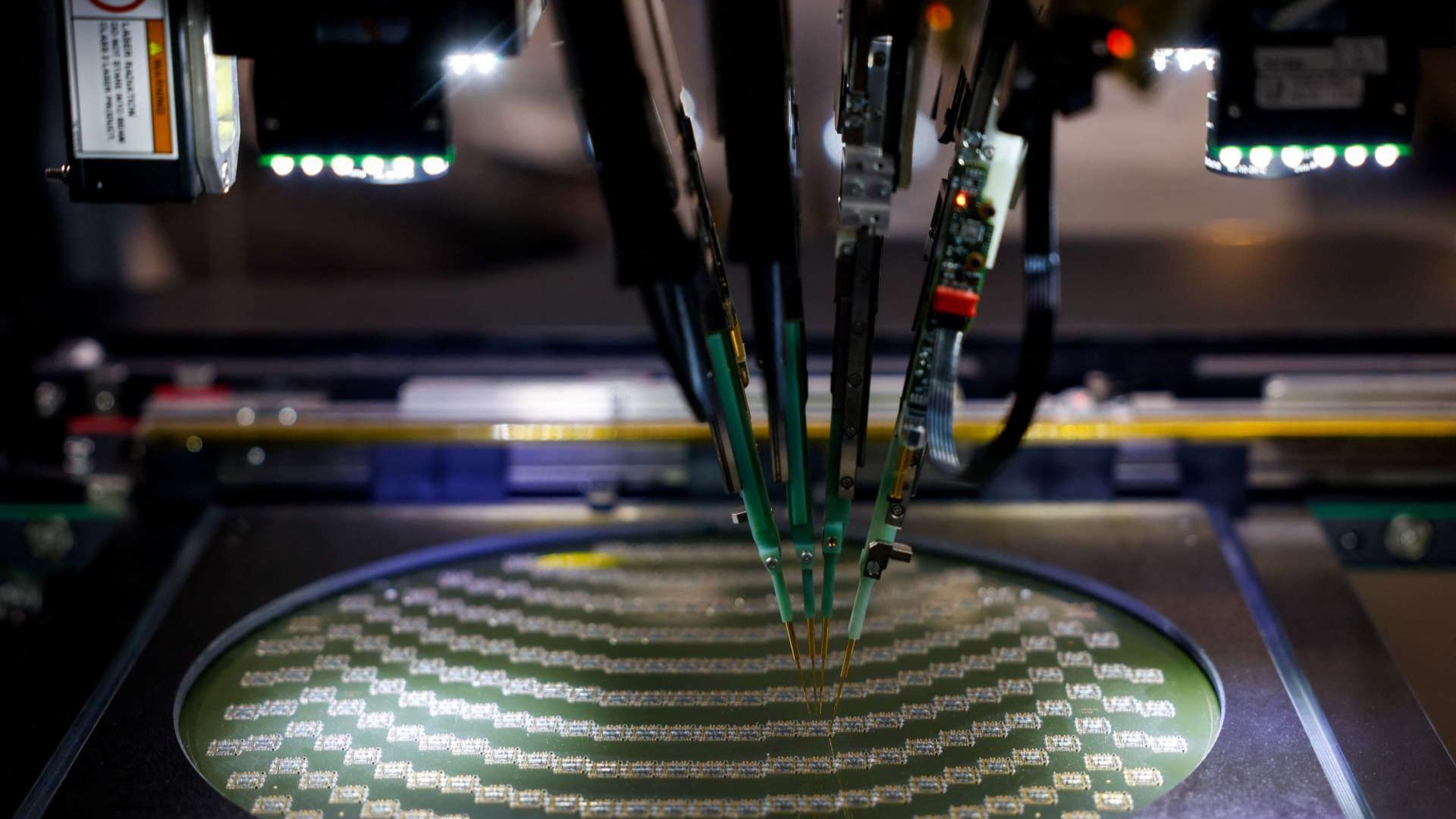
NVIDIA prepays KYEC to secure US testing capacity. KYEC and its AeternZ subsidiary will build the capacity, repayment offsets future service fees.
NVIDIA Prepayment Lock KYEC's US Testing Capacity