Unlocking the Efficient Memory Chip: A Comprehensive Guide
2025-12-03
In modern electronic system design, memory storage chips are indispensable components used to store data and program instructions. The performance of memory storage chips directly determines the efficiency, power consumption, and cost of the entire system. Choosing the right memory chip is crucial for system performance, cost, and reliability. Therefore, facing a wide variety of memory chips on the market, how to make precise selections based on specific application scenarios has become a key challenge for engineers and product managers.
Memory Storage IC Overview
Memory storage chips are semiconductor chips used to store program instructions and data. These chips can be classified in various ways, including access methods, volatility, modifiability, component types, and functions. Common types of memory storage include:
1. Static Random Access Memory(SRAM)
SRAM maintains data stability without a refresh circuit, offering fast speed but lower integration density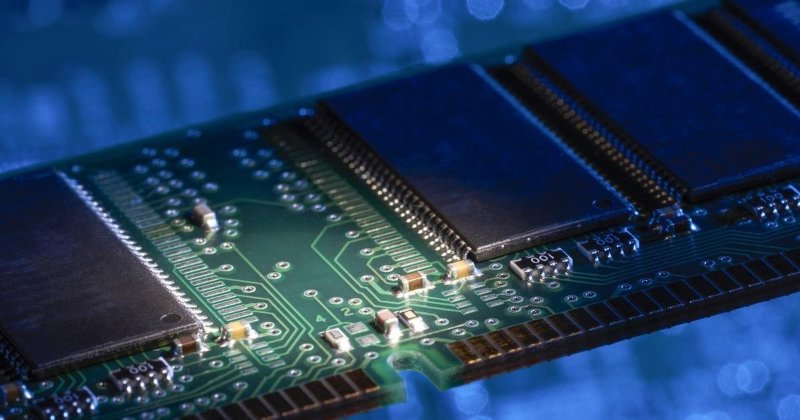 and higher cost. It is commonly used as a high-speed cache within CPUs or as a data storage device integrated within MCUs.
and higher cost. It is commonly used as a high-speed cache within CPUs or as a data storage device integrated within MCUs.2. Dynamic Random Access Memory (DRAM)
DRAM stores data using capacitors and requires periodic refreshing to maintain data integrity. It features high integration density and large capacity but slower speed. It is widely used as the main memory in devices such as smartphones and computers.
3.Read-Only Memory (ROM)
ROM has permanently fixed data content that cannot be modified. It is mainly used to store system boot programs and firmware, ensuring that information is not lost even after power-off.
4. Flash Memory
Flash Memory supports on-board content modification and retains data after power loss, but requires erasing existing data before writing. It is widely used in mobile storage devices and solid-state drives.
5. Ferroelectric Random Access Memory (FRAM)
FRAM combines the high-speed read/write characteristics of RAM with the non-volatility of ROM, offering high durability and fast read/write capabilities. It is suitable for applications requiring high-speed, frequent read/write operations, such as metering and industrial control.
Although there are various types of memory storage chips, each type has its unique characteristics and application scenarios. SRAM is suitable for small-capacity storage needs that require fast access, while DRAM is better for large-capacity storage needs. ROM is used for storing fixed programs and data, Flash Memory is widely used in applications requiring erasable and non-volatile storage, and FRAM has unique advantages in specific fields due to its high speed and non-volatile nature.
Memory Storage Chip Selection Guide and Common Issues
When selecting the appropriate memory chips, it is not advisable to focus solely on a single parameter. Instead, a comprehensive evaluation should be made based on the overall project requirements. Here are some key selection points:
- Capacity Requirement: Choose the appropriate storage capacity based on the actual system needs. For example, for applications requiring a large amount of temporary storage, a high-capacity DRAM should be selected; for small-capacity storage needs that require fast access, SRAM may be a better choice.
- Access Speed: Refers to the time delay of data read/write operations, which affects system response performance. High-speed applications, such as real-time data processing, should prioritize this parameter.
- Power Consumption: Involves the energy consumption of the chip during operation and standby. Low-power design is crucial for battery-powered devices, as it can extend their lifespan.
- Interface Type: Determines the connection method between the chip and the main controller, such as serial or parallel interfaces. Compatibility issues can lead to communication failures.
- Reliability: Involves the durability and environmental adaptability of the chip, including data retention time, operating temperature range, and anti-interference capability.
- Cost and Application Scenario: Choose the appropriate type of memory based on actual conditions. For example, although FRAM has superior performance, it is expensive and is typically used in scenarios with strict requirements for durability and speed.
Common Issues with Memory Storage Chips:
- Data Loss or Corruption: May be caused by unstable power supply, unexpected power outages (especially dangerous for NAND Flash), or the end of the memory's lifespan. Ensure reliable power design and enable wear-leveling management algorithms.
- Write Speed: Non-volatile memories such as EEPROM and Flash Memory have relatively slow write speeds, which may affect system performance.
- Compatibility Issues: Memory Chips from different manufacturers or batches may have subtle differences in timing or drive requirements, necessitating thorough testing.
- Soldering and Reliability: Especially for packages like BGA, which have high soldering process requirements. Poor soldering can lead to unstable connections.
Popular/Classic Memory Storage Chips
The following are some popular memory storage chips along with their characteristics and applications:
|
Model
|
Capacity
|
Interface Type
|
Operating Voltage
|
Package Type
|
Application Field
|
|
BL24C02A
|
2K bits
|
I2C
|
1.7~5.5V
|
DIP8, SOP8, TSSOP8
|
General-purpose storage
|
|
FM24C512
|
512Kb
|
I2C
|
5V
|
SOIC8
|
Automotive electronics
|
|
Various capacities
|
SPI
|
2.7~3.6V
|
Various packages
|
Embedded systems
|
|
|
Micron M25P Series
|
Various capacities
|
SPI
|
2.7~3.6V
|
Various packages
|
Smartphones, computers
|
|
FM22L16
|
4M (256Kx16)
|
Parallel
|
3.3V
|
TSOP-II-44
|
High-speed cache
|
In summary, selecting the appropriate memory storage chip requires a comprehensive consideration of multiple factors, including capacity, speed, power consumption, interface type, reliability, and cost. By understanding the characteristics and application scenarios of different types of memory and selecting based on specific needs, the efficiency and reliability of electronic system design can be significantly improved.
Email: info@semicone.com
Unlocking the Power of Popular IC Chips: A Comprehensive Guide
Samsung's Memory Business Reform: Accelerating the Layout of Next-Gen Storage Tech
Related Article

Micron skips 10th-gen NAND, jumping from 276-layer G9 to 400+ layer G11 with wafer-to-wafer bonding, targeting AI and an H2 2027 ramp.
Node Selection: Micron Skips 10th-Generation NAND

A guide covers how clock generators work, eight representative ICs compared, sourcing pitfalls and where to buy.
Clock Generator: From PLL Fundamentals to Selection and Procurement