Volkswagen's Reform: Cumulative Layoffs Reach 100,000
2026-09-08
Recently, the Supervisory Board of Volkswagen Group unanimously approved a comprehensive reform plan named "Future Plan 2030". This is regarded as the largest and most strategically profound transformation since the Group's founding 89 years ago. The plan involves 50,000 additional layoffs and concerns the fate of four plants.
Financial Difficulties and Workforce Optimization
In 2025, Volkswagen Group's revenue of €321.9 billion was roughly flat year‑on‑year, but operating profit plummeted from €19.1 billion to €8.9 billion, a year‑on‑year drop of 54%. The operating margin was only 2.8%. Entering 2026, the situation has not improved.
Previously, Volkswagen had agreed with labour unions to cut approximately 50,000 positions. The new plan requires an additional 50,000 global job cuts, including management positions, bringing cumulative layoffs to 100,000. The Group currently employs about 650,000 people worldwide. The Group has made it clear that layoffs will be carried out in a gentle manner, primarily through voluntary departures, attrition, and job integration. It is reported that over 37,000 employees have already signed severance agreements. The Group has also reached a wage settlement agreement valid until 2030, which, under the collective bargaining system, will reduce labour costs by €1.5 billion annually.
Production Suspension Risks and Product Streamlining
By 2035, the number of global vehicle models sold under the Group's ten brands will be cut by about 50%. The compression of model derivatives and optional equipment packages will reach 75%. Volkswagen explained that the model portfolio has become too complex over the past decades, with many products overlapping in positioning, dispersing R&D resources and making it difficult to achieve economies of scale. After streamlining, the remaining models will increase production volume per model, reducing per‑vehicle costs through scale effects.
Goals and Outlook
Volkswagen has set core financial targets for 2030: annual sales of 9 million vehicles, an operating margin of 9%, operating profit of approximately €31 billion, and administrative expenses controlled at €37 billion. Capital expenditure and R&D investment for 2027–2031 are targeted at €135 billion. The investment portfolio will also be streamlined by about one‑third, retaining only assets that bring clear strategic value to the core business.
SEMICONE Stable Chip Supply
In the context of major transformation in the automotive industry, the stability of the chip supply chain directly determines the success or failure of automakers' transformation. Whether it is intelligent cockpits, battery management systems, or autonomous driving domain controllers, they all rely on the support of high‑quality semiconductor components. For IC component inquiries or urgent supply needs, SEMICONE can provide timely and rapid supply services. Today's highly sought‑after components include:
- AT25PE20-SSHN-T – 2Mbit SPI NOR Flash, wide voltage 1.65V‑3.6V, industrial grade
- INA193AIDBVR – Current‑sense amplifier, suitable for power monitoring
- MSP430FR2110IRLLR – Ultra‑low‑power FRAM MCU, ideal for sensing and metering
- W25Q80DVSSSG – 8Mbit Serial NOR Flash, high‑speed SPI interface
- XC7Z030-L2SBG485I – Zynq‑7000 series FPGA & ARM SoC, industrial grade
SEMICONE, with its extensive supply channels and rapid response capabilities, can provide you with professional procurement support and supply assurance.
Email: info@semicone.com
Samsung Electro-Mechanics Secures Largest-Ever MLCC Order
Related Article
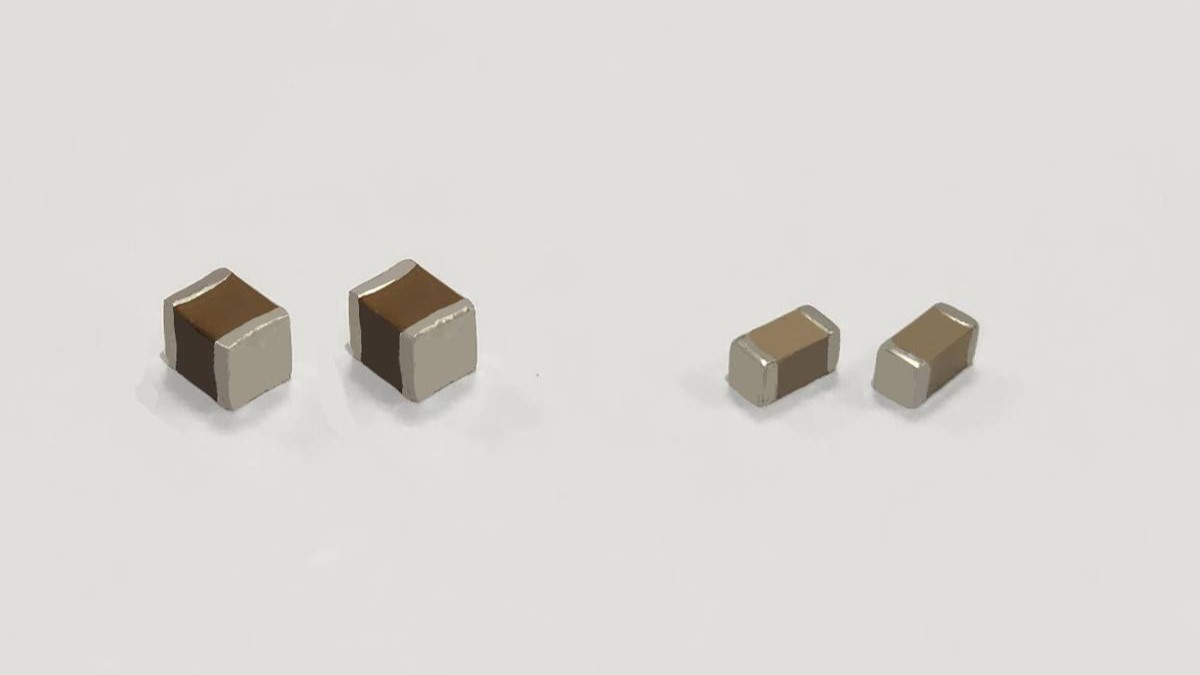
Samsung Electro-Mechanics secures record 1.07 trillion won AI server MLCC order, lifting 2027 LTA backlog past 3.3 trillion.
Samsung Electro-Mechanics Secures Largest-Ever MLCC Order

TI issues its fourth price hike in twelve months, with increases ranging 15%–85% on analog, MCU, and power management lines.
Analog Chip Leader TI Issues Another Price Increase Notice