Heart of Digital Age Information Storage: Evolution and Future of Memory Storage Chips
2024-08-23
In the digital era, the storage and processing speed of information have become key indicators to measure the performance of electronic devices. Memory storage chips, as indispensable core components in modern electronic devices, bear the crucial task of data storage and rapid retrieval. These chips are the cornerstone of high-speed data processing capabilities in devices ranging from personal computers and servers to smartphones and even intelligent vehicles.
Memory storage chips are an essential part of electronic devices for storing data and program codes, with the main types including Dynamic Random Access Memory (DRAM), Static Random Access Memory (SRAM), NAND Flash, and NOR Flash. DRAM, the core of computer memory, offers high read-write speeds at a higher cost, suitable for temporary data storage. SRAM is faster than DRAM and is commonly used for CPU caching, but it is more expensive and has a lower capacity. NAND Flash, with its advantages of large capacity and low unit cost, is widely used in solid-state drives and portable devices, while NOR Flash is mainly used for coded applications and features faster read speeds.
The working principle of storage chips is based on their internal storage cells. DRAM cells consist of a capacitor and a transistor, requiring regular refresh cycles to maintain data integrity. NAND Flash storage arrays are composed of cells connected in series, with read and write operations performed on a "page" basis and erasure on a "block" basis.
The main classification of storage chips is based on their storage principles, circuit structures, read-write speeds, storage capacities, and costs. They are widely used in various fields such as smartphones, PCs, servers, intelligent vehicles, and data centers. With technological advancements, storage chips are evolving towards higher integration, lower power consumption, and smaller sizes to meet the growing storage demands.
When selecting storage chips, factors such as read-write speed, storage capacity, power consumption, cost, and system compatibility must be considered. For instance, server applications requiring substantial data storage and rapid processing may necessitate the selection of NAND Flash storage chips with high storage density and fast read-write capabilities.
The development trend of storage chips indicates that with the advancement of technologies like artificial intelligence, the Internet of Things, and cloud computing, the requirements for the capacity, stability, speed, and lifespan of storage chips are continuously increasing. Particularly in the field of intelligent vehicles, the advancement of autonomous driving technology has raised the bar for the data processing speed and storage capacity of in-vehicle storage chips.
China's storage chip industry had a market size of approximately $82.84 billion in 2022, and it is expected that the market will accelerate domestication in the coming years, with domestic manufacturers like Yangtze Memory Technologies Co., Ltd. and ChangXin Memory Technologies Inc. rapidly developing and iterating their technologies. Globally, the storage chip market reached $134.41 billion in 2022, accounting for about 23.2% of the total semiconductor products, and it is projected that the NAND Flash market size will reach $93.2 billion by 2025.
As an indispensable part of modern electronic devices, the storage memory chip has broad technological development and market prospects, especially in today's intelligent and data-driven era, where the role of storage chips is becoming increasingly important. In the future, with continuous technological advancements, storage chips are developing towards higher density, faster speeds, and lower energy consumption to meet the growing demand for data storage.
Semicon Memory Chip Component
|
Winbond 128Mb flash memory chip with 128 megabits (Mb) capacity
The SPI (Serial Peripheral interface) is used for communication, and the operating voltage is between 2.7V and 3.6V and the operating temperature is between -40°C and +85°C
Suitable for storage requirements in a variety of embedded systems and digital devices
|
|
|
FRAM (ferroelectric Random access Memory) IC manufactured by Fujitsu Semiconductor
It has the characteristics of non-volatility, high speed reading and writing and high durability
Used in smart card and RFID, security systems, industrial control, medical equipment, automotive electronics and other fields
|
|
|
Samsung DDR3 DRAM (Dynamic Random Access Memory)
Enables high-speed double data rate transfer rates up to 1866Mbc/pin (DDR3-1866)
It is widely used in a variety of computing environments, including personal computers, home appliances, automobiles, and medical devices
|
|
|
SK Hynix Dynamic Random Access Memory (DRAM)
Contains 16GB eMMC flash memory and 16GB LPDDR3 memory, packaged in FBGA-221
It is widely used in various electronic devices and systems, such as smart phones, tablets, in-vehicle infotainment systems, high-end cameras and other portable devices requiring high capacity storage and memory to meet different data processing and storage needs
|
Email: info@semicone.com
Humanoid Robot Controllers: The Nerve Center of Intelligent Action
What Microcontroller Units and How does the MCU work?
Related Article

Renesas raises prices again; new rates start Jan 1, 2027. Cost inflation and AI data center buildout boost power chip demand. Secure high-demand parts with SEMICONE.
Renesas Raises Prices Again This Year: New Prices Take Effect in 2027
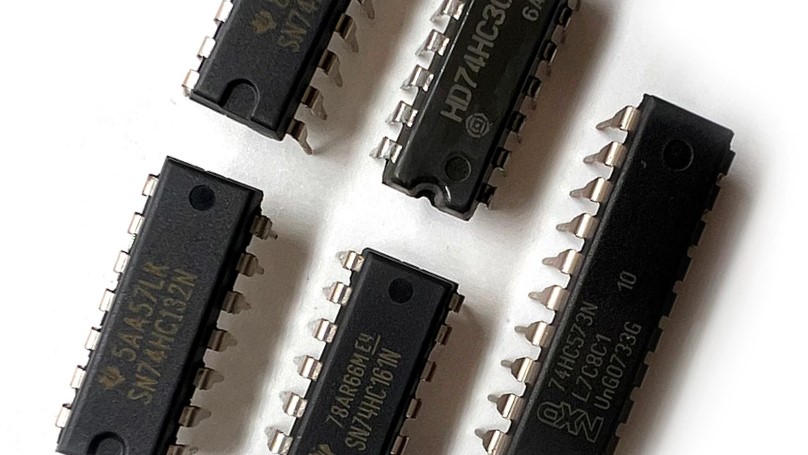
Why do 74-series logic ICs still matter? Spanning TTL to CMOS, this standardized family covers everything from decoders to bus buffers across 2–6V systems.
The 74 Series Logic ICs: A Detailed Guide and Selection Handbook