DDR Chip Market Surge: Tech Iteration and Scale Expansion
2024-08-19
Recently, the DDR chip market has experienced a significant price increase, reflecting the tense supply and demand relationship in the global semiconductor industry and indicating the profound impact of technological iteration on the market. In this surge, the prices of DDR5, DDR4, and DDR3 chips have all risen to varying degrees, with DDR5's increase exceeding market expectations, becoming the focus of market attention.
Effective Output Reduction and Price Protection Strategy
Facing the severe challenge of market supply and demand imbalance, major memory chip manufacturers such as SK Hynix, Samsung, and Micron have quickly adopted an output reduction and price protection strategy. The core of this strategy is to reduce the production of DDR series chips, especially by diverting some capacity to high-profit high-end memory such as HBM, to maintain product prices and enhance overall profitability. With the booming AI server market, the demand for large-capacity, high-speed memory has sharply increased. As a representative of the new generation of memory technology, the reduction in DDR5 supply has directly driven up prices. This strategy not only effectively alleviates the supply-demand contradiction but also brings considerable profit growth to manufacturers.
Accelerated Penetration of DDR 5 and Gradual Exit of DDR 4
As a new generation of memory technology, DDR5's advantages of high-speed transmission, low power consumption, and stable performance have been widely used in AI large models, cloud computing, and other fields. Its maximum transmission rate can reach 6.4Gbps, twice that of DDR4. This performance advantage makes DDR5 fully capable of dealing with the data torrent brought by the iteration and upgrade of AI large models. As the global storage industry enters an upward cycle, the penetration rate of DDR5 is expected to achieve a leap forward in the next few years, from 15% in 2023 to a key level of 50%-60%. This trend not only reflects the market's high recognition of DDR5 technology. In contrast, DDR4 is gradually exiting the market due to technological iteration, but its existing market will remain stable for a period.
DDR 3 Production Insufficiency and Price Increase Effect
Although DDR3 is gradually being replaced by new technologies, its production insufficiency has unexpectedly driven up market prices. As major manufacturers such as Samsung successively exit the DDR3 manufacturing field, while the demand for DDR3 from terminal devices such as AI and edge computing continues to increase, the supply and demand contradiction in the DDR3 market has intensified. This production insufficiency will gradually show its price increase effect in this quarter and the next quarter of 2024, bringing unexpected profits to manufacturers with DDR3 inventory. This phenomenon once again proves that under specific market environments, old technologies still have a certain market value and competitiveness.
Market Size Continues to Expand, Strong Development Momentum
In terms of market size, both the Chinese and global storage chip markets show a steady growth trend. After reaching about 540 billion yuan in 2023, China's storage chip market size is expected to recover and grow to 551.3 billion yuan in 2024. On this basis, the global storage chip market size is expected to further grow from about 903.7 billion US dollars in 2023 to 152.9 billion US dollars in 2024. Among them, the growth of the DRAM market size is particularly significant, from 505.3 billion US dollars in 2023 to an expected growth to 780 billion US dollars in 2024. This data fully demonstrates the huge potential and strong development momentum of the DRAM market, especially the DDR chip market.
Summary and Outlook
In summary, the DDR chip market is affected by multiple factors such as technological iteration, supply and demand imbalance, and industry development trends. The accelerated penetration and price increase of DDR5 indicate the reshaping of the market pattern by new technologies; while the production insufficiency of DDR3 highlights the irreplaceability of old technologies in specific markets. In the future, with the continuous development of AI, big data, and other technologies, as well as the continuous upgrading of the global semiconductor industry, the DDR chip market is expected to continue to maintain a growth trend. At the same time, manufacturers should closely monitor market dynamics and technology development trends, flexibly adjust capacity layout and product strategies to cope with the challenges and opportunities brought by market changes.
Semicon Logic IC Component
|
Diodes Incorporated Logical Signal switching digital signal processor interface solutions designed for data transmission
Single supply voltage operating range is 3V to 3.6V
A high-density logic integrated circuit design consisting of 10 separate circuits and two separate current sinks
Data and control buses for a variety of industries that can be seamlessly integrated into different systems
|
|
|
ON Semiconductor 4-bit binary drop counter
MOS P channel and N channel enhanced devices, can be preset, cascaded, synchronous down counter, can be used as a negative edge clock
Complementary MOS counters can be used in frequency synthesizers, phase-locked loops, and other frequency segmentation applications that require low power consumption and/or high immunity
|
|
|
Texas Instruments TI 2-bit non-inverting bus transceiver with configurable level switching
Achieve bidirectional data transmission between different voltage domains, suitable for a variety of low voltage nodes
Using two independently configurable power rails, supply voltages from 1.2V to 3.6V
For asynchronous communication, suitable for a variety of electronic devices, to achieve different voltage levels of logic level conversion, to ensure correct data transmission
|
Email: info@semicone.com
NXP Semiconductors: A Global Semiconductor Leader Driven by Innovation
Essential IC Components: Transistors VS. Resistors
Related Article

Renesas raises prices again; new rates start Jan 1, 2027. Cost inflation and AI data center buildout boost power chip demand. Secure high-demand parts with SEMICONE.
Renesas Raises Prices Again This Year: New Prices Take Effect in 2027
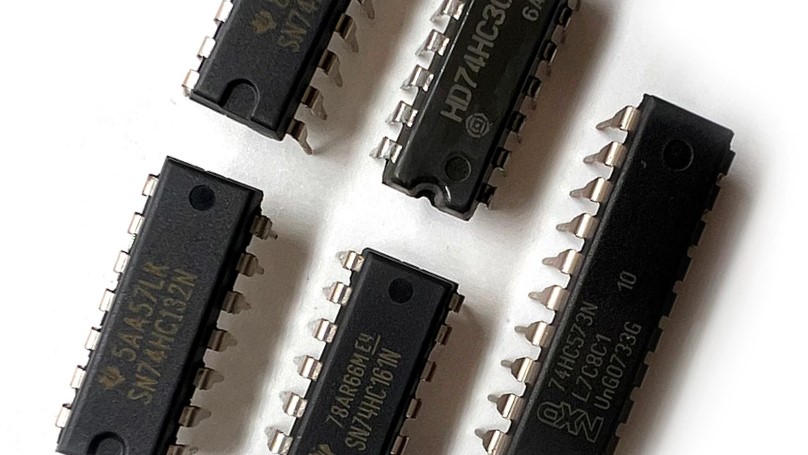
Why do 74-series logic ICs still matter? Spanning TTL to CMOS, this standardized family covers everything from decoders to bus buffers across 2–6V systems.
The 74 Series Logic ICs: A Detailed Guide and Selection Handbook