
US Tightens Export of Helium, a Critical Semiconductor Gas
2026-10-26
On October 23, the US Department of Energy listed helium as a critical material under the Energy Act of 2020, making it the 20th item on the list. The rationale: helium is essential to chipmaking and advanced technology production, while global supply risks are rising. In practice, eligible helium projects will gain access to federal financing channels, and government supply-chain monitoring will tighten accordingly.
Why Helium
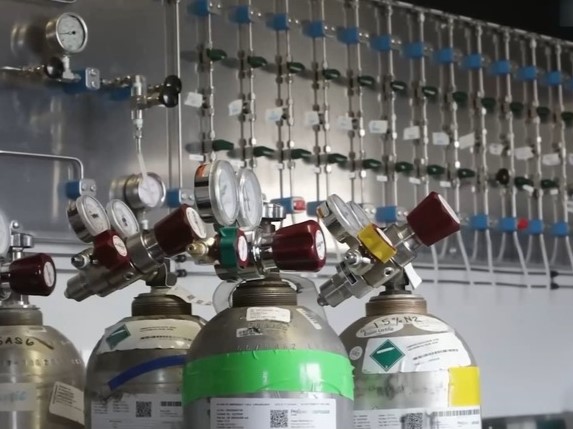 Helium's role in semiconductor manufacturing centers on several hard-to-bypass steps: cooling during etching and ion implantation, temperature control in lithography environments, and leak detection in packaging and device testing. Its physical properties—inert, non-flammable, and the lowest boiling point of all gases—leave it with few mature substitutes in these applications. Global semiconductor manufacturing accounts for more than 30% of total helium demand, using it as a carrier, protective, and purge gas in chip processes.
Supply Constraints
The US is the world's largest helium producer, with 2025 output of about 81 million cubic meters, or 43% of the global total, of which 38 million cubic meters were exported. But since 2021, US annual output has stayed around 80 million cubic meters, with growth stalled. Existing extraction plants are near full capacity, and new capacity requires years of permitting and construction.
Meanwhile, two other major suppliers are tightening at the same time. Qatar accounts for about 30% of the global helium market, but its helium exports must pass through the Strait of Hormuz; disruption there has halted LNG production at Ras Laffan Industrial City, cutting off helium as a byproduct. Russia imposed temporary export controls on helium in April 2026, lasting through the end of 2027, with exports outside the Eurasian Economic Union requiring special permission from senior officials. Spot helium prices have tripled since the conflict, and some suppliers have begun rationing.
Helium Recycling
Facing supply volatility, large wafer fabs are expanding deployment of helium purification and recycling systems. Taiwanese semiconductor manufacturers have installed capture units at the exhaust end of EUV equipment, purifying recovered gas to 99.999% via pressure swing adsorption or cryogenic distillation; large fabs can achieve recovery rates of 80% to 90%, significantly reducing reliance on the spot market.
But recycling is not a cure-all: some advanced process steps still require external gas sources as a baseline guarantee for helium purity, flow stability, and immediate supply. Recycling addresses "usage efficiency," not "availability."
IC Component Supply
Semiconductor supply-chain risk does not necessarily come from chips themselves; it can also come from a gas, a material, or a transport route. When the policy and geopolitical attributes of upstream materials change, downstream manufacturing can clarify the sources, inventories, and substitution paths of key inputs. As an IC component supplier and distributor, SEMICONE provides rapid allocation of scarce parts and one-stop full-BOM matching services, helping customers shorten sourcing cycles and reduce uncertainty. SEMICONE IC parts:
● TMP103AYFFR (TI) — low-power digital temperature sensor, I²C/SMBus interface, ±1°C accuracy, DSBGA-4
● TS3USB221DRCR (TI) — USB 2.0 high-speed switch, 2:1 multiplexer/demultiplexer, 1.1GHz bandwidth, VSON-10
● MCP9700AT-E/LT (Microchip) — analog temperature sensor, output voltage linear with temperature, SC-70-5
● BC857BLT1G (onsemi) — PNP small-signal transistor, collector-emitter voltage -45V, collector current -100mA, SOT-23
● CC0603KRX7R9BB681 (Yageo) — 680pF multilayer ceramic capacitor, X7R dielectric, 50V rating, 0603
Email: info@semicone.com
Node Selection: Micron Skips 10th-Generation NAND
Related Article
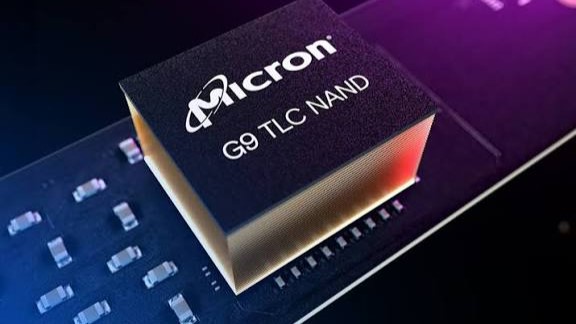
Micron skips 10th-gen NAND, jumping from 276-layer G9 to 400+ layer G11 with wafer-to-wafer bonding, targeting AI and an H2 2027 ramp.
Node Selection: Micron Skips 10th-Generation NAND
A guide covers how clock generators work, eight representative ICs compared, sourcing pitfalls and where to buy.
Clock Generator: From PLL Fundamentals to Selection and Procurement