Global Performance-Driven Layoffs at Qualcomm
2026-10-21
In October 2026, Qualcomm CEO Cristiano Amon told employees in an internal memo that the company will carry out performance-driven layoffs globally after annual performance reviews, with notices to be issued starting in November. The memo did not disclose the number of affected employees.
 As of September 2025, Qualcomm employed about 52,000 people worldwide, mostly full-time. Amon framed the layoffs as building a stronger performance culture and responding to the company's "persistent failure to meet expectations." Selection criteria include business priorities, organizational needs, and skills and expertise, with the core aim of realigning roles with capabilities.
Handset Business and Cost Pressure
The layoffs come against pressure on Qualcomm's core business. In fiscal Q3 2026, Qualcomm reported revenue of $9.947 billion, down 4% year on year, and net income of $2.002 billion, down 25%. Handset revenue was $5.086 billion, down 20% year on year, as Android shipments excluding Apple weakened and high-end devices extended the use of previous-generation platforms.
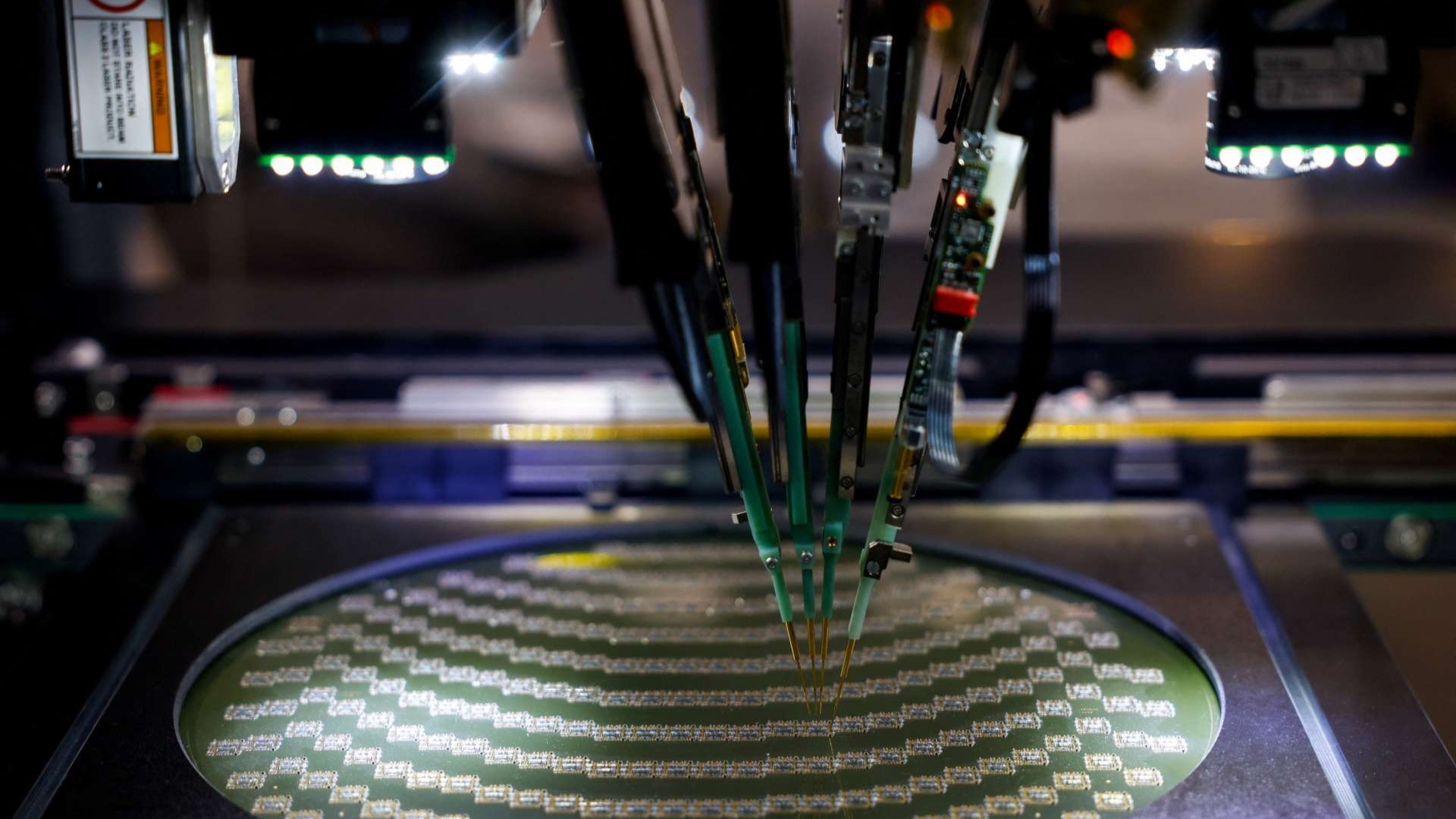
Meanwhile, wafer manufacturing, packaging and testing, and memory costs all rose. Gross margin fell to 53.1%, with rising costs and contracting revenue squeezing profit. Amon acknowledged in the earnings report that the memory and supply environment is challenging, and the company has initiated pricing adjustments to pass through cost pressure.
Layoffs Alongside Expansion
Notably, the layoffs are not a signal of contraction but are occurring alongside aggressive expansion. At its 2026 Investor Day, Qualcomm raised its fiscal 2029 non-handset revenue target to $40 billion, including more than $15 billion from data centers, $10 billion from automotive, and more than $14 billion from IoT. In data centers, the Dragonfly product line covers AI200/AI250 accelerators, the C1000 server CPU, and custom chips; customers including Meta and Amazon have signed multi-generation cooperation agreements, with a fiscal 2027 data center revenue target of $5 billion. Automotive revenue grew 61% year on year in Q3, making it the fastest-growing segment.
The issue is timing: the new businesses' revenue curve has not yet replaced the handset decline, while R&D investment and organizational costs are already front-loaded. Qualcomm expects non-handset revenue growth to rise from 24% in fiscal 2026 to more than 60% in fiscal 2027. The performance-driven layoffs essentially compress fixed costs during this window and shift workforce allocation toward growth areas.
An Industry-Wide Pattern
Qualcomm's move is consistent with industry patterns. AMD confirmed layoffs of about 4%, saying the aim is to align resources with its largest growth opportunities; Intel has continued to reduce headcount in recent years, with its data center business undergoing a new round of adjustments. As capital expenditure and R&D resources concentrate on AI, redundancies in mature business lines become the first target for adjustment.
Supply Assurance and IC Component Support
As a chip component distributor, SEMICONE provides rapid allocation of scarce parts and one-stop full-BOM matching services, helping customers shorten procurement time and reduce supply uncertainty. SEMICONE hot-selling parts:
● VN5E160S-E (ST) — high-side driver, 8V to 36V operating voltage, 160mΩ on-resistance, typical current limit 10A, PowerSSO-12
● PSD913F2-90JI (ST) — programmable system device, 90ns access time, 64KB Flash, PLCC-52
● HMC1118LP3DETR (ADI) — GaAs SPDT switch, 9kHz to 13GHz, LFCSP-16
● ATTINY1617-MFR (Microchip) — 8-bit AVR MCU, 20MHz, 16KB Flash, VQFN-24
● ISO7341FCDWR (TI) — quad-channel digital isolator, 3/1 channel direction, 25Mbps data rate, SOIC-16
Email: info@semicone.com
US Federal Civilian Agencies Ban DeepSeek
Related Article

US DHS orders DeepSeek removed from federal civilian IT systems, including third-party products using its models, turning model provenance into a procurement compliance issue.
US Federal Civilian Agencies Ban DeepSeek
TSMC's Kumamoto Fab #2 shifts to 3nm, starting at 6,000 wafers/month. Expansion depends on Japanese subsidies.
Japan's First 3nm Production Site: TSMC's Second Kumamoto Fab