NVIDIA Prepayment Lock KYEC's US Testing Capacity
2026-10-15
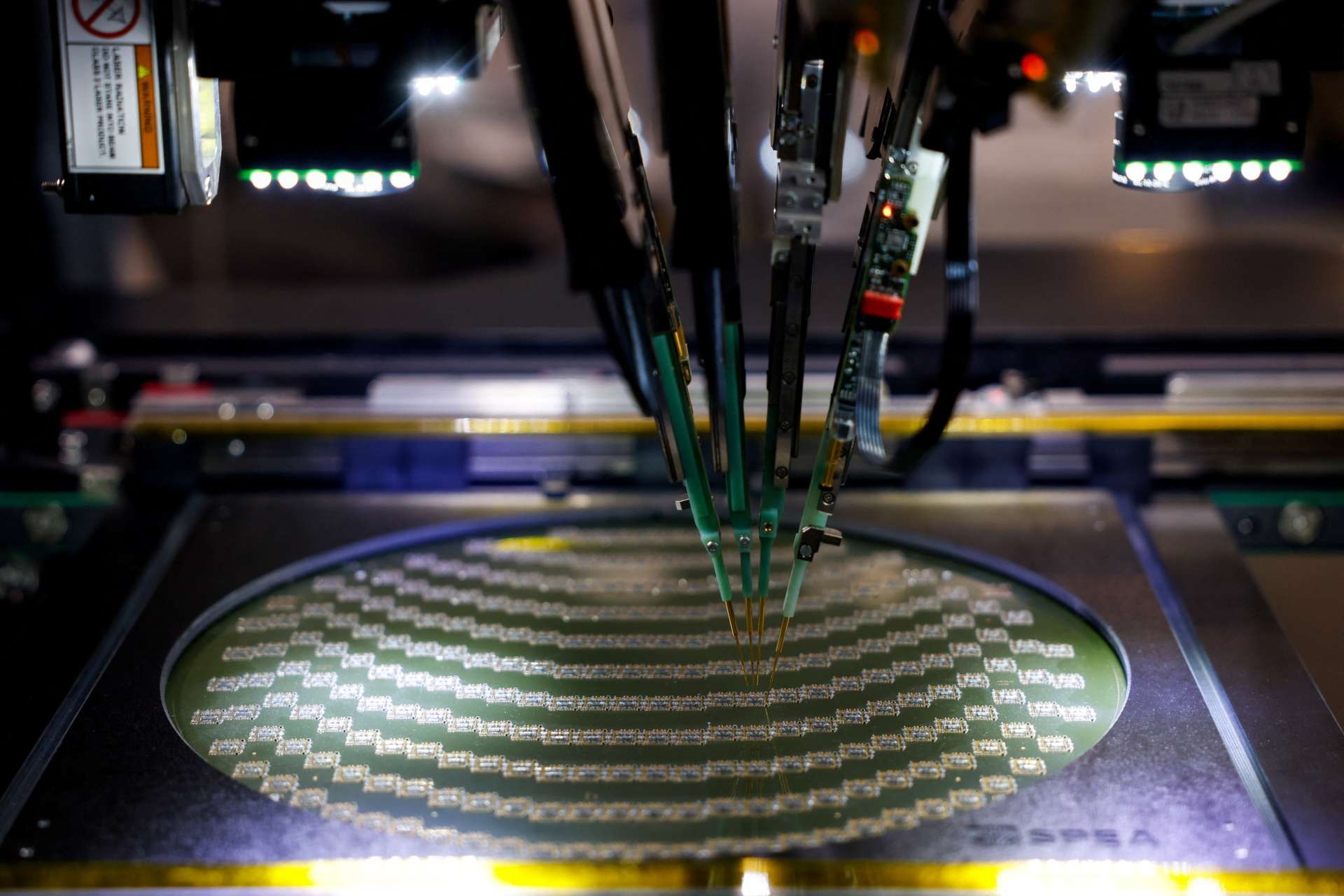 On October 13, Taiwan-based semiconductor testing company KYEC announced that its board had approved a customer prepayment agreement with NVIDIA International, Inc., a subsidiary of NVIDIA. Under the agreement, NVIDIA will pay in advance, and KYEC, together with its wholly owned U.S. subsidiary AeternZ Semiconductor Testing Corporation, will use the funds to build testing capacity in the United States, reserving dedicated testing resources and providing services for NVIDIA. The prepayment will not be recognized as current revenue; instead, it will be offset against future testing service fees over time. The contract will continue until the prepayment is fully offset.
What makes this arrangement unusual is the direction of the funds. Under the traditional OSAT model, testing companies bear equipment procurement and facility construction costs themselves, then arrange capacity based on customer orders. By prepaying as a customer, NVIDIA effectively assumes part of the construction risk in exchange for priority lock-in of future testing capacity. KYEC's U.S. plant plan was approved by its board in July 2026, with a maximum investment of US$1.4 billion. Initial plans call for small-scale operation in 2028.
Why Testing Has Become a Capacity Bottleneck
NVIDIA's willingness to prepay stems directly from the rapidly rising test complexity of advanced AI chips. As platforms such as Blackwell and Rubin continue to increase in power and integration density, the testing process is no longer limited to traditional final test. It may also include high-power burn-in, system-level test, and validation in liquid-cooling environments. The more complex the chip, the longer the test time per unit, and the longer the equipment occupancy cycle.
At the same time, the OSAT industry as a whole is in a rare period of tight capacity. As demand for AI chips remains strong and cloud providers intensively advance in-house chip projects, OSAT quotes have risen by 10% to 30%. Prices for expedited orders from small and medium-sized customers have even doubled. New capacity is mostly concentrated in Taiwan, Southeast Asia, and North America, but short-term supply increases are limited and cannot quickly fill the gap.
Significance of the Capacity Layout
KYEC has raised its 2026 capex to NT$50 billion. Institutional estimates suggest its capacity could expand by 30% to 50%. The establishment of the U.S. plant further extends its capacity layout to North America, aligning with NVIDIA's direction of concentrating key supply chain links in the United States. The prepayment agreement reduces the risk of insufficient orders after the new plant is completed, but KYEC still bears operational risks such as construction, equipment procurement, labor costs, and yield ramp-up. The real value of the agreement to KYEC lies in improving order visibility for its U.S. plant.
SEMICONE IC Supply Services
As an IC distributor, SEMICONE focuses on two-way matching between reactivating excess inventory and shortage parts. On one hand, it helps customers include long-idle inventory parts in its quotation network to find buyers with actual demand. On the other hand, for sudden shortage parts in customer production, it conducts cross-regional spot inventory searches, prioritizing in-stock resources that can be delivered immediately. Below is SEMICONE IC in-stock list:
|
Model
|
Manufacturer
|
Type
|
Key Specifications
|
|
ROHM
|
Thick film resistor
|
390Ω, ±1%, 0.1W, 0603, AEC-Q200
|
|
|
Nexperia
|
Schottky diode
|
40V, 1A, VF 640mV, SOD-123F, AEC-Q101
|
|
|
Analog Devices
|
Synchronous step-down regulator
|
3V–42V input, 2A output, 200kHz–2.2MHz, MSOP-10
|
|
|
Nexperia
|
Schottky switching diode
|
100V, 250mA, trr 5.9ns, SOD-323F
|
|
|
Infineon
|
N-channel power MOSFET
|
650V, 47A, RDS(on) 70mΩ, TO-247-3
|
For IC chip procurement needs, please contact SEMICONE for quotes and lead times.
Email: info@semicone.com
Microchip's Two Acquisitions: Aerospace & Defense and Edge AI
Related Article

Microchip acquired VORAGO and Hailo. VORAGO adds HARDSIL tech, Hailo brings 26 TOPS processors. Both deals closed in 2026.
Microchip's Two Acquisitions: Aerospace & Defense and Edge AI

MOSFET or IGBT? Learn how to choose power semiconductors by voltage, switching frequency, and load.
MOSFET or IGBT? A Practical Guide to Power Device Selection