MOSFET or IGBT? A Practical Guide to Power Device Selection
2026-10-13
In power electronics design—whether for power supplies, motor drives, or inverters—engineers regularly face a fundamental question: should I choose a MOSFET or an IGBT? Both are voltage-driven switching devices, but their suitable applications differ considerably. Choosing the wrong one can reduce efficiency, increase heat generation, or even force a complete redesign.
The Fundamental Difference
A MOSFET (metal-oxide-semiconductor FET) is a unipolar device that conducts solely through majority carriers. It switches fast with no tail current, and its conduction loss behaves as resistive loss, proportional to RDS(on) multiplied by the square of the current. An IGBT (insulated-gate bipolar transistor), by contrast, is a bipolar device controlled by a MOS gate. It injects minority carriers into the drift region during conduction, creating conductivity modulation that keeps the on-state voltage drop very low even at high voltage and current. However, the recombination of minority carriers at turn-off produces a tail current, making its switching speed noticeably slower than that of a MOSFET.
This leads to a basic rule of thumb: MOSFETs dominate in low-voltage, high-frequency applications, while IGBTs dominate in high-voltage, high-current, medium- and low-frequency applications. The commonly cited boundary sits around "200 V, 100 kHz," but as super-junction (SJ) and silicon carbide (SiC) MOSFET technologies mature, this boundary keeps moving upward.
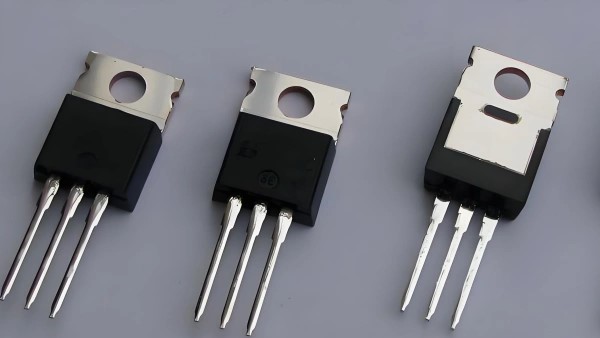
Guide to selection
When choosing between MOSFETs and IGBTs, focus on three key factors: voltage, switching frequency, and current.
● Check the voltage. For bus voltages below 200 V, a MOSFET is usually the first choice. Above 600 V at high power, the on-resistance of silicon MOSFETs rises sharply, making an IGBT or SiC MOSFET more reasonable.
● Check the switching frequency. For high-frequency conversion above 100 kHz—such as switch-mode power supplies and PFC circuits—silicon IGBTs are largely ruled out due to excessive switching loss; a MOSFET or SiC device is the appropriate choice.
● Check the current and load profile. Under heavy, low-frequency loads such as industrial motor drives, inverters, welders, and induction heating, the IGBT's low on-state voltage drop is a clear advantage. Where light loads dominate or current is small, MOSFETs often deliver better efficiency.
Beyond the device itself, also weigh driver circuit complexity, thermal design cost, and the size of magnetic components. Higher switching frequencies with MOSFETs can significantly shrink transformers and inductors. Meanwhile, SiC MOSFETs—whose switching loss can be as low as 10%–20% of a comparable IGBT—are gaining ground rapidly in high-power-density applications.
Classic and Popular Part Numbers
| Part umber |
Type / Mfr
|
Key Specifications | Typical Applications |
| IRFZ44N | MOSFET / Vishay | 55 V / 49 A, TO-220 | Low-voltage motor drive, power supplies |
| IRF3205 | MOSFET / Infineon | 55 V / 110 A, TO-220 | High-current switching, battery protection |
| AO3400 | MOSFET / AOS | 30 V / 5.7 A, SOT-23 | Load switching in portable devices |
| IPP110N20N3G | MOSFET / Infineon | 200 V / 50 A, OptiMOS | Telecom power, synchronous rectification |
| C3M0065090J | SiC MOSFET / Wolfspeed | 900 V / 36 A | On-board chargers (OBC), PV inverters |
| FGA25N120ANTD | IGBT / onsemi | 1200 V / 25 A, TO-3P | Induction cookers, small drives |
| IKW75N65RH5 | IGBT / Infineon | 650 V / 75 A, TO-247 | Welders, servo drives |
| FF600R12ME4 | IGBT module / Infineon | 1200 V / 600 A | High-power inverters, wind power |
Reliable Supply Matters
IGBT modules and SiC devices are subject to frequent lead-time and price fluctuations, and a dependable supply channel can directly affect project schedules. As a professional IC distributor, SEMICONE offers fast sourcing of hard-to-find components and alternative-part evaluation, one-stop BOM fulfillment, and professional support to help engineers strike the right balance among performance, cost, and supply certainty. For samples, volume pricing, or replacement suggestions on the parts above, feel free to contact the SEMICONE team.
Email: info@semicone.com
Cirrus Logic's Unsolicited Offer for Synaptics, onsemi Revises Deal to All Cash
Related Article

onsemi revised its Synaptics acquisition to all-cash $123/share after Cirrus Logic's unsolicited bid. Close set for mid-2027.
Cirrus Logic's Unsolicited Offer for Synaptics, onsemi Revises Deal to All Cash
GF will supply silicon interposers for TSMC's CoWoS packaging under a five-year, ~$2B deal, with Malta, NY output ramping in H1 2028.
$2 Billion Manufacturing Agreement Between GlobalFoundries TSMC

