Essential IC Components: Transistors VS. Resistors
2024-08-16
Transistors and resistors are fundamental components of electronic devices, playing a crucial role in the functionality of electronic circuits.
Transistor
- Bipolar Junction Transistors (BJTs) can be further divided into NPN and PNP types. They allow a small current or voltage to control a larger current or voltage and are used in a wide range of applications, including amplifiers, switches, and signal modulators.
- Field-Effect Transistors (FETs) commonly include Metal-Oxide-Semiconductor Field-Effect Transistors (MOSFETs) and Junction Field-Effect Transistors (JFETs). FETs use an electric field to control the flow of current, which makes them suitable for high-speed switching and amplification.
- Darlington transistor is two BJTs connected in such a way to provide higher current gain, and Insulated-Gate Bipolar Transistors (IGBTs) combine the characteristics of BJTs and MOSFETs.
Resistors
Resistors can be categorized into fixed resistors and variable resistors. Fixed resistors have a specific resistance value that does not change and are used in various applications requiring stable resistance. Variable resistors, also known as potentiometers or rheostats, allow for adjustable resistance and are used in applications that require a change in resistance, such as volume control or adjustable power supplies. Additionally, there are various types of resistors, including film resistors, wirewound resistors, and carbon composition resistors, each with different characteristics and applications.
Working Principle
The main principle of a transistor is to utilize the flow of the majority charge carriers (electrons or holes) to control the current flow between two terminals (collector and emitter) through a third terminal (the base of a BJT or the gate of a FET).
Resistors primarily use resistivity to oppose the flow of current. The resistance of a resistor is defined by its physical dimensions and the resistivity of its material.
Functional Feature and Application
Transistors can control current, which can be regulated by a small input current or voltage, making them effective for signal processing. In simple terms, transistors can amplify weak signals and also act as switches for controlling current, serving as building blocks for both digital circuits (such as logic gates) and analog circuits (such as amplifiers). Transistors are versatile and are used in a wide range of applications, from simple switches to complex integrated circuits.
Resistors are relatively simple passive components designed to dissipate heat, making them useful in circuits where thermal management is important. The value of a resistor is stable and does not change with time or environmental conditions. Resistors are usually cost-effective, especially for standard values and tolerances. Compared to transistors, they require less expertise to effectively use in circuit design.
In practical applications, transistors are mainly used in amplifiers, signal processing, digital logic circuits, power electronics, and radio frequency circuits. Resistors are primarily used in voltage dividers, current limiting, biasing in transistor circuits, and as feedback elements in operational amplifiers.
Choice: Transistor VS Resistor
The choice between using a transistor or a resistor in circuit design depends on the specific requirements of the application:
- Signal processing: If amplification or switching is needed, a transistor is the better choice.
- Current limiting: For simply limiting current or dividing voltage, resistors are typically used.
- Circuit complexity: If the design requires complex signal processing, a transistor may be necessary.
- Power efficiency: If minimizing power loss is crucial, resistors may be the preferred choice, especially in high-current applications.
- Cost and size: For cost-sensitive or space-constrained designs, the choice may lean towards resistors due to their lower cost and smaller size.
Summary
Transistors and resistors are essential in a variety of electronic devices, ranging from simple circuits to complex systems such as computers, smartphones, and automotive electronics. They are selected based on the specific requirements of circuit design, such as the needed amplification, switching speed, resistance value, and power handling capability. Transistors offer more functionality and flexibility but at the cost of increased complexity and potential heat generation, while resistors provide simplicity, stability, and cost-effectiveness but with limited functionality.
Semicon Transistor and resistor Component
|
Infineon HEXFET® Power MOSFET
55V VDSS
8.0mΩ RDS(on)
110A ID
Ultra-low on-resistance, dynamic dv/dt rating, 175°C operating temperature, fast switching, full avalanche rating
It is widely used in power management, motor drive, battery management and other occasions requiring high efficiency and high reliability power control.
|
|
|
Diodes Incorporated N-channel enhanced power MOSFET transistors
50V VDSS
200mA Id
Low on-resistance, low gate threshold voltage, low input capacitance, fast switching speed, low input/output leakage
Widely used in power management, electronic mobile devices, motor drives, automotive fields, military and defense, DC-DC converters.
|
|
|
Vishay Resistor hardware components
Push In Bracket HL SERIES 25 WATT
Designed for high power resistors, push-in design for easy installation and use.
Suitable for applications requiring high power resistance, such as power management, motor drives, DC/DC converters, etc.
It is also suitable for voltage divider, feedback circuit, signal regulation, measuring bridge and other circuits to provide stable resistance performance.
|
Email: info@semicone.com
DDR Chip Market Surge: Tech Iteration and Scale Expansion
PLCs and Microcontrollers: The Two Pillars of Industrial Automation
Related Article

Mobileye overhauls strategy: CEO Shashua exits after 30 years, Moovit cuts 60 jobs. The company refocuses on in‑house robotaxi launch in 2027.
Mobileye Strategic Overhaul: Moovit Cuts 30% of Staff, Founder CEO to Step Down
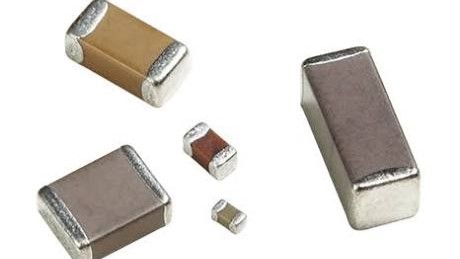
MLCC: compact SMD with stacked layers, high capacitance. Used in auto, AI. Technology Trends: miniaturization, reliability.
What is MLCC: A Comprehensive Guide to Multi-layer Ceramic Capacitors