Bosch Separates Mobility Business, Transfers 62,500 Employees
2026-10-27
On October 22, Bosch Group announced that its Germany-based Mobility business, together with three service units—Bosch Digital, Global Business Services, and Global Real Estate—will be transferred from Robert Bosch GmbH into four independent limited liability companies, all still wholly owned by the group. About 62,500 German employees will move to the new entities, with employment contracts transferred accordingly.
The headquarters will be reduced to a holding company, retaining only group financing, central research, and advanced engineering functions, leaving more than 3,000 employees. The new entities are scheduled to begin operating on August 1, 2027, with the overall adjustment completed in phases by the end of 2027.
Profit Pressure as the Direct Driver
 The separation stems from deteriorating profitability in the Mobility business. In 2025, the business generated €55.8 billion in revenue, about 60% of the group's total sales, but its operating margin fell from 3.8% in 2024 to 1.8%. Bosch acknowledged that the business needs to close an annual cost gap of about €2.5 billion. In the first half of 2026, Mobility sales declined slightly further to €27.8 billion, with the market still subdued.
On the customer side, European automakers such as Volkswagen and Stellantis continue to press prices under their own operating pressure. On the supply side, CATL dominates power batteries, while Huawei is investing heavily in intelligent driving, software, and computing platforms. Facing intensifying competition, Bosch believes it must bring innovations to market faster and significantly simplify processes.
Separation Without Sale
Unlike Continental's independent listing of its automotive business, Bosch made clear that the new entities will not be sold, listed, or merged. This choice is directly related to Bosch's foundation ownership structure: the group needs to retain control of core assets while giving operating units greater decision-making space. The official logic is that Industrial Technology, Consumer Goods, and Energy and Building Technology already operate as independent subsidiaries; Mobility is simply replicating the same model to gain shorter decision chains and closer customer response.
But separation itself does not automatically improve profitability. What matters is whether, after separation, the business can more decisively cut fixed costs and adjust its product portfolio. Bosch previously announced in 2025 cuts of about 13,000 jobs, mainly in Mobility. The structural adjustment gives greater autonomy, but the €2.5 billion cost gap remains.
Automotive Component Supply
As the automotive supply chain shifts toward electrification and intelligence, source stability and delivery certainty for key components are as important as supplier organizational efficiency. As an IC component supplier and distributor, SEMICONE provides rapid allocation of scarce parts and full-BOM matching services, helping customers shorten procurement cycles and reduce uncertainty. SEMICONE hot-selling parts:
- DSPIC33EP64MC204-E/PT (Microchip) — 16-bit digital signal controller, 70 MIPS, 64KB Flash, TQFP-44 package
- TL431AMFDT (Nexperia) — adjustable precision shunt regulator, output voltage 2.495V to 36V, ±0.5% accuracy, SOT-23 package
- DMN2053U-7 (Diodes) — N-channel MOSFET, drain-source voltage 20V, continuous drain current 4.1A, SOT-23 package
- IRFR3707ZTRPBF (Infineon) — N-channel power MOSFET, drain-source voltage 30V, continuous drain current 56A, DPAK package
- BTS441RG (Infineon) — single-channel intelligent high-side power switch, operating voltage 4.5V to 42V, on-resistance 22mΩ, TO-263 package
Email: info@semicone.com
US Tightens Export of Helium, a Critical Semiconductor Gas
Related Article
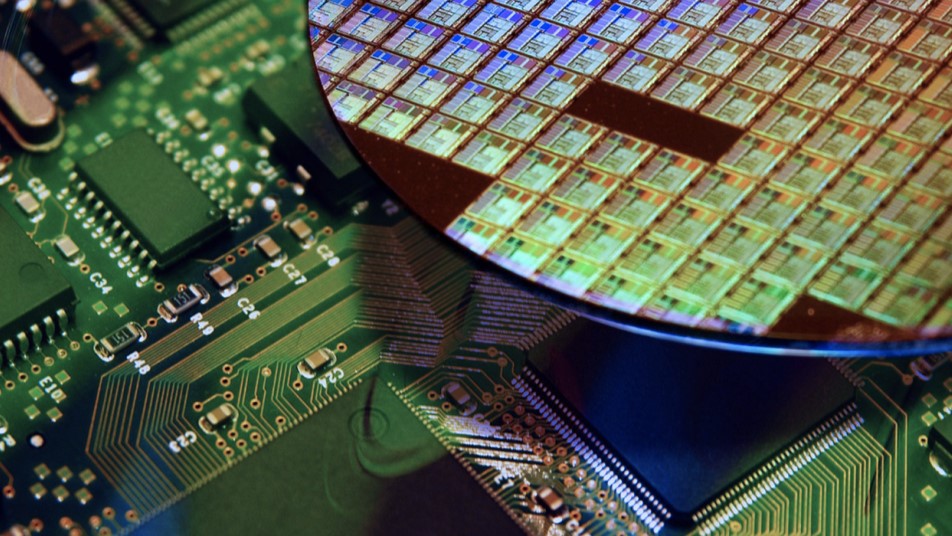
Helium joins the US critical materials list. Supply is constrained by flat US output and export limits in Qatar and Russia.
US Tightens Export of Helium, a Critical Semiconductor Gas
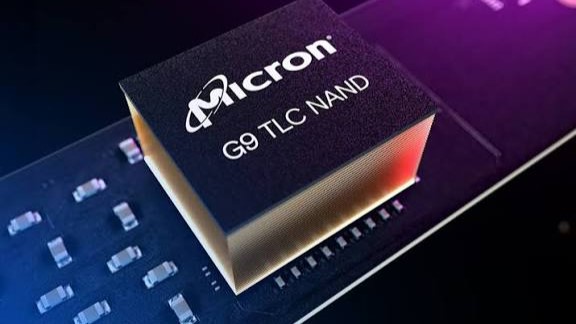
Micron skips 10th-gen NAND, jumping from 276-layer G9 to 400+ layer G11 with wafer-to-wafer bonding, targeting AI and an H2 2027 ramp.
Node Selection: Micron Skips 10th-Generation NAND