Digital Isolator Chips: A Deep Dive into Technology and Applications
2025-03-11
In modern electronic systems, digital isolator chips play a crucial role. According to market research, the global digital isolator market is projected to reach $767 million by 2024, with China's market growth being particularly significant. The main drivers of this growth include new energy vehicles, photovoltaic power generation, and industrial automation. The core function of digital isolator chips is to safely transmit signals between different voltage domains while preventing high voltage, noise, and surges from interfering with sensitive circuits.
The Working Principle of Digital Isolator Chips
Digital isolator chips primarily achieve signal isolation through technologies such as capacitive coupling or electromagnetic induction. Specifically, they use electrical isolation techniques to completely separate input and output signals, preventing high voltage from damaging low-voltage circuits. Capacitive coupling technology, for example, uses a silicon dioxide (SiO₂) insulating barrier as the isolation medium, transmitting signals through electric field changes. For instance, TI's ISOW784x series employs dual capacitive SiO₂ insulating barriers combined with on-chip transformers to achieve power isolation. This design not only enhances the reliability of signal transmission but also improves electromagnetic compatibility (EMC). The main technologies for digital isolators include:
- Magnetic Coupling: This method transmits signals via magnetic fields, offering high voltage isolation (up to 5kVrms) and fast transmission speeds. However, it has weaker radiation resistance and higher costs.
- Capacitive Coupling: Using SiO₂ as the insulating medium, this method transmits signals through capacitive coupling. It offers high integration, low cost, and stable performance across a wide temperature range, making it suitable for high-demand applications like new energy vehicles.
Major Manufacturers and Representative isolator Models
In the field of digital isolator chips, numerous well-known manufacturers have provided a wide range of solutions for different application scenarios with their advanced technologies and extensive product lines. International companies such as Silicon Labs, ADI, and TI have long dominated the market, but domestic manufacturers like Coto Technology and Novosense have rapidly risen in recent years. Through technological innovation and domestic substitution strategies, they are gradually breaking the monopoly. Below is a detailed introduction to some representative models.
- ISO78xx Series: Enhanced digital isolators with up to 5.7kVrms isolation voltage, suitable for high-voltage applications.
- ISOW784x Series: These chips integrate both power and signal isolation, using polymer film as the insulating material and supporting multiple channel configurations.
- ISO7220/ISO7221 Series: Dual-channel digital isolators that support both forward and reverse communication, widely used for I²C interface isolation.
- Analog Devices (ADI)
- ADuM1200/ADuM1201 Series: Dual-channel digital isolators with up to 2.5kVrms isolation voltage, suitable for industrial control and communication interfaces.
- ADuM1400 Series: Four-channel digital isolators with a data rate of 90Mbps, designed for high-speed signal transmission.
- Silicon Labs
- SI8642BB-B-IS1R: Featuring 2.5kVrms isolation voltage, this chip supports two forward and two reverse channels, suitable for various industrial applications.
- Novosense
- NSi8100/NSi8101 Series: High-reliability bidirectional I²C digital isolators with 3.75kVrms isolation voltage.
- NSi822X Series: High-performance digital isolators with excellent common-mode transient immunity (CMTI) and ESD protection capabilities.
- Chipanalog
- CA-IS36XX Series: These chips integrate isolated power and signal isolation functions, with a voltage isolation rating of up to 5kVrms, widely used in industrial automation and medical devices.
Applications of Digital Isolator Chips
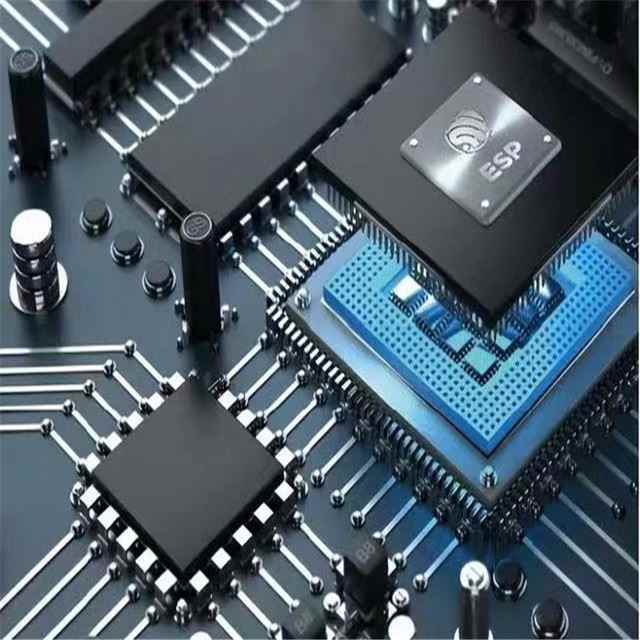 Digital isolator chips, known for their high reliability, low power consumption, and high performance, have found extensive applications across multiple fields. In the realm of industrial automation, they are widely used in PLCs, frequency converters, and servo drives to achieve electrical isolation and protect circuits. Additionally, as new energy generation and energy storage systems continue to grow rapidly, digital isolator chips play a vital role in inverters, converters, and PCS devices for functions such as isolation, sampling, and communication. In the automotive electronics sector, digital isolator chips are a key component in new energy vehicles, used extensively in on-board chargers (OBC), battery management systems (BMS), and motor control units (MCU) to ensure system safety and reliability.
In the communications field, digital isolator chips are primarily used in power modules of communication base stations and their supporting facilities. With the widespread adoption of 5G technology, the increasing number of base stations and higher power density of these stations have significantly boosted the demand for digital isolator chips. Moreover, digital isolator chips are also crucial in medical devices, where they protect patients and equipment from electrical interference in medical monitoring devices. As intelligent devices become more prevalent, the application scope of digital isolator chips continues to expand. For example, in smart power management and industrial IoT, digital isolator chips provide essential safety and stability for devices.
Development Trends of Digital Isolator Chips
With continuous technological advancements, the development of digital isolator chips is showing trends in multiple directions. First and foremost, digital isolator chips are evolving towards higher integration, performance, and reliability. For example, modern digital isolator chips not only achieve signal isolation but also integrate communication protocol parsing functions to optimize signal transmission to MCUs or SoCs. Meanwhile, with the advancement of emerging technologies such as 5G, IoT, and autonomous driving, the demand for high-frequency and high-speed signal transmission isolation is becoming more urgent, and the transmission speed and bandwidth of digital isolator chips are also increasing accordingly.
Secondly, low-power design has become an important direction for the development of digital isolator chips. By using new semiconductor materials, optimizing circuit design, and integrating low-power technologies, digital isolator chips can reduce power consumption while extending device life, in line with green and environmentally friendly requirements. Additionally, with the rapid development of new energy generation and energy storage systems, the application demand for digital isolator chips in power electronic converters is also increasing.
Lastly, with the global shift and upgrade of the semiconductor industry, the domestic digital isolator chip industry is achieving technological breakthroughs and gradually increasing its market share. In the future, digital isolator chips will further replace traditional optocouplers to become the mainstream in the market. Their advantages include smaller size, lower power consumption, wider temperature range, and higher reliability and service life.
Conclusion
Digital isolator chips are an essential component in modern electronic systems. By employing advanced technologies such as capacitive coupling or electromagnetic induction, they safely transmit signals between different voltage domains. Representative models from major manufacturers like TI, ADI, and Novosense demonstrate the outstanding performance, reliability, and integration of digital isolator chips. As technology continues to advance, digital isolator chips will play an increasingly important role in more fields, providing robust safety and efficient operation for electronic systems.
Email: info@semicone.com
In-Depth Analysis of AMD/Xilinx Virtex-6 FPGA Series
Western Digital Spin-off, Sandisk Takes Charge of SSD Market
Related Article

A guide covers how clock generators work, eight representative ICs compared, sourcing pitfalls and where to buy.
Clock Generator: From PLL Fundamentals to Selection and Procurement

Qualcomm will begin performance-driven global layoffs in November after annual reviews, with no headcount disclosed.
Global Performance-Driven Layoffs at Qualcomm