Rise of eSSDs: AI Reshaping the Storage Industry Landscape
2024-11-01
In the digital age, data has become one of the most valuable resources. With the rapid development of Artificial Intelligence (AI) technology, the demand for data processing and storage is growing increasingly. Enterprise Solid-State Drives (eSSDs), as a core component of data centers and high-performance computing, are facing unprecedented growth opportunities. This article will explore the concept of eSSDs, their market status, competitive landscape, and future prospects, analyzing how major storage manufacturers are optimistic about the growth of eSSDs and increasing their product and capital investments.
Concept and Importance of eSSDs
eSSDs (Enterprise Solid-State Drives) are high-performance storage devices, playing an increasingly important role in data centers and high-performance computing fields due to their high speed and low latency characteristics. With the rapid development of AI technology, the explosive growth of data volume has put higher demands on storage performance. As a representative of high-speed storage solutions, SSDs are gradually becoming the new favorite in the AI field. The speed advantage of SSDs is significant, being 40 times faster than HDDs, potentially replacing Hard Disk Drives (HDDs) as the preferred storage medium for AI training applications.
Impact of AI on the Storage Market
The rapid development of AI technology has had a significant impact on the storage market. The demand for HBM storage in AI servers has already generated a substantial revenue volume and performance, promising to bring more than 10 billion US dollars in market demand. The development of generative AI is significantly driving the storage industry, not only increasing the size of the storage market but also bringing continuous growth in future demand.
Current Status and Trends in the eSSD Market
AI has brought new growth opportunities to the storage industry, covering aspects such as AI servers, AI PCs, and AI phones. Due to the AI wave driven by applications like ChatGPT, AI servers have already injected a large volume of orders and revenue into the storage industry. The development of AI technology, especially generative AI, has significantly driven the demand for HBM and DRAM, not only increasing the size of the storage market but also bringing continuous growth in future demand. The storage industry, driven by AI applications, is welcoming a "cycle + growth" resonance, with an expected bottoming out in 2023 and a continuous upward cycle in 2024. TechInsights predicts that by 2025, the storage market will achieve significant growth, mainly due to the accelerated popularization of AI and related technology applications. The demand for AI-led high-bandwidth memory (HBM) is expected to grow by 70% year-on-year in shipments by 2025.
Major Manufacturers' Products and Market Competition
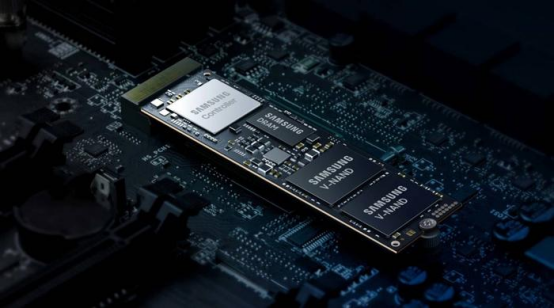 Major storage manufacturers such as SK Hynix and Western Digital are increasing their investments in eSSD products and capital. SK Hynix's operating profit margin for the third quarter of the 2024 fiscal year was 40%, and the net profit margin was 33%, with quarterly performance reaching a historical high, mainly due to the expansion of sales of high-value-added products such as HBM and eSSDs. Looking at Western Digital's performance in the first quarter of the 2025 fiscal year, under Non-GAAP, the quarterly revenue was $4.095 billion, a 9% increase quarter-on-quarter and a 49% year-on-year increase; operating profit was $884 million, a 33% increase quarter-on-quarter, and a year-on-year turnaround from loss to profit; net profit was $648 million, a 21.1% increase quarter-on-quarter, and a year-on-year turnaround from loss to profit, with a net profit margin of 15.8%. SK Hynix's 60TB eSSD is currently undergoing customer validation, and the company plans to start supplying 122TB eSSD in the first half of 2025 to maintain market competitiveness. Western Digital expects that by the 2025 fiscal year, the eSSD combination will account for more than 15% of the total product portfolio shipments, with a growth rate far exceeding previous expectations.
Future Outlook
After nearly two years of decline, the storage industry has once again seen an increase in prices. Storage itself is cyclical, with supply and demand changes directly affecting the price trends of storage chips. Driven by new applications such as AIGC, the storage industry is expected to welcome a "cycle + growth" resonance. The continuous development and popularization of AI technology have driven the development of the storage market, especially new storage technologies like HBM and QLC SSDs. The rapid popularization of AI applications has increased the market's demand for high-performance, high-reliability storage products, with enterprise SSDs receiving unprecedented attention. The eSSD market is facing unprecedented growth opportunities, especially driven by AI technology. Major storage manufacturers are actively deploying in the eSSD market by increasing product and capital investments to meet the growing demand for high-performance storage.
Conclusion
The eSSD market, driven by AI technology, shows a strong growth momentum. The active investment and technological innovation of major storage manufacturers will further promote the development of the eSSD market. With the continuous advancement of AI technology, eSSDs, as a key storage solution, will continue to expand in market demand and application scenarios, bringing new growth points to the entire storage industry.
Electronics ic chips, Search / Find in Semicone
- The AD9744ARZ is a 14-bit, high-performance, low-power CMOS digital-to-analog converter (DAC) with a wideband TxDAC series, optimized for communication systems.
- The ADS1220IPW is a precision 24-bit ADC with integrated features for measuring small sensor signals, including two differential or four single-ended inputs, a PGA, two programmable current sources, a voltage reference, an oscillator, a low-side switch, and a precision temperature sensor.
- The LTC1625IS is a no RSENSE current mode synchronous step-down switching regulator controller with a wide VIN range of 3.7V to 36V and a VOUT range of 1.19V to VIN.
Email: info@semicone.com
Licensing Dispute Between Arm and Qualcomm: Truth Behind and Future Outlook
ByteDance's Ola Friend: AI Headphones and the Future of Smart Audio
Related Article

A guide covers how clock generators work, eight representative ICs compared, sourcing pitfalls and where to buy.
Clock Generator: From PLL Fundamentals to Selection and Procurement

Qualcomm will begin performance-driven global layoffs in November after annual reviews, with no headcount disclosed.
Global Performance-Driven Layoffs at Qualcomm