
Texas Instruments: The Evolution of a Semiconductor Innovation Leader
2024-07-29
The history of Texas Instruments (TI) dates back to 1930 when J. Clarence Karcher and Eugene McDermott founded Geophysical Service Incorporated (GSI), primarily providing geophysical exploration services for the oil industry. During World War II, GSI began manufacturing defense electronics for the U.S. Army and Navy. In 1951, the company restructured and was renamed General Instrument Company, which was later renamed Texas Instruments (TI).
Entering the Semiconductor Field
In 1952, Texas Instruments purchased the patent rights for manufacturing transistors from Western Electric, marking its official entry into the semiconductor industry. In 1954, Gordon Teal, the head of research at TI, developed the first commercial silicon transistor, making the company the only one at the time to mass-produce silicon transistors. In 1958, TI employee Jack Kilby created the world's first integrated circuit, for which he was awarded the Nobel Prize in Physics in 2000.
Product Innovation and Market Expansion
In 1967, Texas Instruments invented the handheld electronic calculator and developed a single-chip microcomputer in 1971. In 1978, TI introduced the first single-chip voice synthesizer, used in a series of handheld educational toys. Additionally, Texas Instruments began researching digital light processing (DLP) technology in 1977, which was successfully commercialized in 1996 after two decades of development.
Mobile Chips and Microprocessors
Texas Instruments also held a significant position in the mobile chip market. In 2003, TI launched the OMAP series 1710 processor, which was favored by mobile phone manufacturers for its excellent DSP capabilities. However, with the advent of the smartphone era, TI's shortcomings in baseband chip technology led to a gradual loss of market share. In 2012, Texas Instruments decided to abandon the OMAP series processors and shifted its focus to broader markets, including automotive production and industrial equipment.
Analog Circuits and Embedded Systems
In 1997, Texas Instruments acquired National Semiconductor for $6.5 billion, expanding into analog circuits and embedded systems. In 2020, TI's analog circuit revenue reached $10.9 billion, accounting for 75.38% of total revenue; embedded system revenue was $2.6 billion, accounting for 17.98% of the total revenue in 2020. These two businesses have become the main sources of revenue for Texas Instruments.
Diversification and Transformation Across Industries
After selling its LCD, DSL, sensor and controller, and mobile baseband businesses to Intel, Infineon, and Bain Capital in 2007, Texas Instruments expanded its business market to the automotive and industrial sectors. In 2020, revenue from the industrial and automotive markets accounted for 57% of TI's total revenue, making it a major market for the company.
Research and Development and Talent Cultivation
Texas Instruments has always emphasized the construction of research and development and sales capabilities, with its research and development expenses (R&D) consistently accounting for about 10% of revenue. In 2020, TI invested $1.53 billion in R&D, ranking among the top ten semiconductor companies in the United States in terms of R&D investment, and has a total of 61,316 patents to date. Additionally, Texas Instruments is known as the "cradle of the semiconductor industry," having cultivated numerous industry elites.
Future Outlook
Texas Instruments will continue to focus on cutting-edge technology fields such as artificial intelligence (AI), the Internet of Things (IoT), and autonomous driving, continuously launching high-performance FPGAs, mixed-signal, and security chips, providing complete solutions for global customers. TI is committed to the fields of automotive electronics, robotics, and energy infrastructure, striving to build smarter and more reliable solar energy systems, energy storage systems, and electric vehicle (EV) charging technologies, and continuously enriching its product chain to provide more innovative research and solutions for various electronic fields. It is evident that Texas Instruments, with its deep accumulation in the semiconductor industry and continuous spirit of innovation, maintains a leading position in the fierce market competition.
TI Hot Trend Intergrated Circuits
|
Texas Instruments (TI) Low Power, high precision Analog-to-Digital Converters (ADCs)
Low power design, operating voltage range from 2.7V to 5.5V Optimize power consumption and provide multiple operating modes to reduce overall power consumption Application scenarios are wide, such as sensor measurement, medical equipment, industrial automation and environmental monitoring |
|
|
88E6390-A0-TLA2I000
|
TI Ethernet chip
Overcome latency and Ethernet bandwidth limitations It is used to build and upgrade network devices Suitable for domestic, commercial and industrial applications |
|
BQ76PL455ATPFCRQ1
|
High precision, multi-channel battery management chip (PMIC) from Texas Instruments
It has a variety of protection functions, including overvoltage protection, undervoltage protection, overcurrent protection, etc Designed for use in high-reliability automotive applications, energy storage systems, UPS and other battery management systems |
Email: info@semicone.com
Algorithm Processors: The Key to Optimizing Energy Storage Charging
Global Semiconductor Market Status and Future Outlook
Related Article

Renesas raises prices again; new rates start Jan 1, 2027. Cost inflation and AI data center buildout boost power chip demand. Secure high-demand parts with SEMICONE.
Renesas Raises Prices Again This Year: New Prices Take Effect in 2027
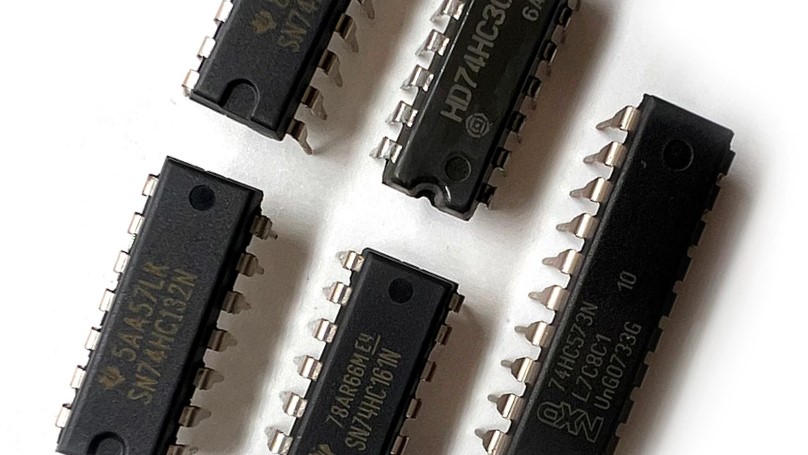
Why do 74-series logic ICs still matter? Spanning TTL to CMOS, this standardized family covers everything from decoders to bus buffers across 2–6V systems.
The 74 Series Logic ICs: A Detailed Guide and Selection Handbook