AI MCU: Revolutionizing Motor Control and Driving Intelligence Across Industries
2024-09-10
The convergence of artificial intelligence (AI) and microcontrollers (MCUs) is reshaping the landscape of embedded systems. AI MCUs, which integrate AI capabilities directly into traditional MCUs, are emerging as a pivotal technology in motor control and various other applications.
AI-Powered MCUs: A Quantum Leap in Performance
The advent of AI has pushed MCUs beyond the limitations of higher clock speeds and more powerful cores. By incorporating dedicated AI accelerators such as neural processing units (NPUs) or digital signal processors (DSPS) , AI MCUs can execute complex AI tasks at the edge, including image recognition, speech recognition, and data analysis, enabling intelligent upgrades for devices.
Transforming Industries with AI MCUs
AI MCU, equipped with AI accelerators and optimized algorithms,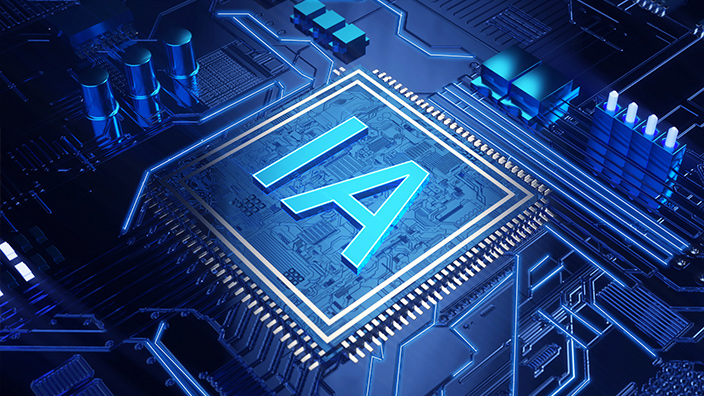 empower edge devices to perform complex AI tasks. This has opened up new opportunities for intelligent upgrades in various sectors:
empower edge devices to perform complex AI tasks. This has opened up new opportunities for intelligent upgrades in various sectors:Smart Homes: AI MCUs enable smart home devices like smart bulbs, smart plugs, and smart locks to recognize user habits and needs, automatically adjusting the home environment for enhanced comfort.
Industrial Automation: In industrial settings, AI MCUs significantly improve production efficiency and product quality by monitoring various parameters in real-time and automatically adjusting process parameters. Additionally, AI models can predict equipment failures, enabling proactive maintenance and reducing downtime.
Healthcare: AI MCUs facilitate remote healthcare, wearable devices, and intelligent diagnostic systems. Wearables can monitor vital signs and provide health advice, while intelligent diagnostic systems can analyze medical images to assist doctors in diagnosis.
Edge Computing: AI MCUs play a crucial role in edge computing by processing data closer to the source, reducing latency and bandwidth consumption, and ensuring data privacy.
New pattern of motor control
AI and MCU meet, which has brought about a paradigm shift in motor control. Traditional motor control often relied on simple PID algorithms or predefined control strategies, limiting dynamic adjustments and fault prediction capabilities. AI MCUs, on the other hand, can learn from vast amounts of data to optimize control algorithms, resulting in more intelligent, efficient, and stable motor control. This not only enhances motor system performance but also reduces energy consumption and extends equipment lifespan, and provide users with a better experience.
Innovative Practices with AI MCUs
In China, Companies like Guoxin Microelectronics and Renesas Electronics are at the forefront of AI MCU development. Guoxin's CCR4001S AI MCU, based on the RISC-V architecture, offers a highly reliable solution for industrial motor control and energy optimization through MCU+AI. Similarly, Renesas' RA8T1 microcontroller, equipped with a high-performance Arm Cortex-M85 processor and Helium technology, enhances CPU performance and digital signal processing capabilities.
Abroad, Internationally, NXP and STMicroelectronics are key players in the AI MCU market. NXP's MCX N series microcontrollers integrate dual-core Arm Cortex-M33 CPUs and eIQ Neutron NPUs, providing powerful machine vision processing and AI algorithm deployment capabilities. NXP MCX N-Series MCUS are also equipped with intelligent peripherals and accelerators, communication and signal processing capabilities, which are extremely scalable and easy to develop. The STMicroelectronics' STM32N6, featuring an Arm Cortex-M55 core, integrates ISP, and NPU, is specifically designed for machine vision and AI applications. And STM32N6' built-in neural-ART accelerator optimizes Neural network operations.
Conclusion
The integration of AI into motor control algorithms and hardware is an inevitable trend. AI MCUs, with their powerful AI processing capabilities and wide range of applications, are transforming the traditional landscape of motor control. As technology advances and applications expand, AI MCUs are poised to play an even more significant role in driving intelligent upgrades across various industries, including industrial automation, smart homes, and consumer electronics.
Semicon MCU IC Wholesale
|
Infineon Technologies PSoC® Programmable System-on-Chip
Based on the PSoC architecture, the Harvard architecture processor can run at a maximum speed of 24 MHz
Powerful 8-bit M8C processor with high-speed multiplication and 32-bit accumulation capabilities
Supports a wide range of operating voltages from 2.4V to 5.25V and operating temperatures from -40°C to +85°C
|
|
|
Motorola 68HC08 series MCU
An 8-bit CPU core
A variety of built-in peripherals, such as timers, serial communication interfaces, analog-to-digital converters, etc.
Rich memory resources, including flash memory, SRAM, etc.
Supports a wide range of operating voltages and temperatures for industrial applications
|
|
|
STMicroelectronics Arm Cortex-M55 core NPU universal microcontroller
Integrated with ST's self-developed Neural-Art Accelerator™, it provides up to 0.6TOPS of AI computing power
A variety of video peripherals are integrated, including MIPI CSI cameras, ISPs, H.264 video encoders and Gigabit Ethernet controllers
Supports time sensitive network (TSN) endpoints for industrial communications
|
Email: info@semicone.com
Powering the Future: The Critical Role of PMU in Portable Energy Storage
Qualcomm make a move? May Acquire Intel's PC Chip Business
Related Article

Qualcomm will begin performance-driven global layoffs in November after annual reviews, with no headcount disclosed.
Global Performance-Driven Layoffs at Qualcomm
US DHS orders DeepSeek removed from federal civilian IT systems, including third-party products using its models, turning model provenance into a procurement compliance issue.
US Federal Civilian Agencies Ban DeepSeek