What Microcontroller Units and How does the MCU work?
2024-08-22
Microcontroller Units (MCU), also known as microcontrollers or single-chip microcomputers, are miniature computer chips that integrate a processor, memory, and input/output interfaces into a single unit. They are designed to provide a cost-effective, low-power, highly integrated solution suitable for various embedded systems.
How Microcontroller Units work
MCUs operate by executing a sequence of instructions stored in their program memory. These instructions may involve data reading/writing, arithmetic operations, logical judgments, and controlling external devices. When an MCU receives an external signal, it responds according to a preset program, such as reading sensor data, controlling motor speed, or sending wireless signals .
MCU Architecture
The internal structure of an MCU typically includes:
- A Central Processing Unit (CPU) for executing instructions and operations.
- Memory, divided into program memory (ROM or Flash) and data memory (RAM).
- Input/Output Ports (I/O) for communication with external devices.
- Timers/Counters for time management and frequency measurement.
- An Interrupt System that allows the MCU to respond to external events promptly.
- Special function modules such as ADCs (Analog-to-Digital Converters), DACs (Digital-to-Analog Converters), PWM (Pulse Width Modulation), and communication interfaces like UART, SPI, and I2C .
MCU Features
- MCUs are known for their low power consumption, making them ideal for battery-powered portable or remote devices.
- They have a small size, allowing for easy integration into various devices for intelligent control and management.
- MCUs offer a rich set of interfaces to connect with a variety of sensors, actuators, and other devices.
- They are programmable, enabling the implementation of various control logics and algorithms for flexible and intelligent control .
MCU Applications
MCUs are widely used across different fields, including:
· Automotive Electronics: Engine management systems, safety airbag controls, in-vehicle entertainment systems, and smart driving assistance systems.
· Consumer Electronics: Smartphones, smartwatches, gaming consoles, and home appliances.
· Industrial Automation: Robot control, factory automation lines, environmental monitoring systems, and energy management systems.
· Medical Devices: Vital signs monitors, blood glucose meters, pacemakers, and portable diagnostic devices.
· Internet of Things (IoT): Smart home, smart city infrastructure, agricultural automation, and remote monitoring systems.
How to Choose MCU
When choosing an MCU, designers need to consider several key factors to ensure that the chosen microcontroller can meet the needs of the specific application, especially the need to balance processing power and power consumption. Taking the following factors into account, designers can choose the MCU that best suits their specific application needs, ensuring the performance, reliability, and cost-effectiveness of the final product.
1. Processing power: According to the complexity of the application, determine the required processing power. If the application requires the execution of large amounts of data or complex algorithms, a higher-level processor, such as a 32-bit MCU, may be required.
2. Power consumption: For battery-powered portable devices, low-power MCUS are the ideal choice. Some manufacturers offer series specially designed to reduce energy consumption, such as the STM32 series from STMicroelectronics and the Kinetis L series from NXP.
3. Memory requirements: The size and complexity of the program will determine the amount of RAM and ROM required. Applications that need to run multiple programs or store large amounts of data may require more memory.
4. Input/Output interface: According to the type and amount of interaction with external devices (such as sensors, displays, communication modules, etc.), determine the type and number of input/output interfaces required.
5. Temperature range: If the MCU will operate at extreme temperatures, you need to choose a device that can withstand these conditions. Some manufacturers offer MCUS designed for high or low temperature environments, such as Infineon's XMC series and AURIX series.
6. Security: With the increasing number of hacks targeting iot devices, security has become an important aspect of design. Some MCUS offer built-in security features such as encryption and secure boot to protect data and prevent unauthorized access.
7. Cost: MCU prices range widely, from as low as a few dollars to hundreds of dollars. Cost-effectiveness is an important consideration when producing products on a large scale.
8. Software support and development tools: The selected MCU should have good development community support and provide the necessary software tools and libraries to simplify the development process.
9. Flexibility and Scalability Choose an MCU family that offers a wide range of performance and power level options to adapt to changing application needs.
......
Conclusion
As the core component of modern electronic devices, MCUs play a vital role in various applications. A deep understanding of MCUs allows engineers to design embedded systems that meet specific needs, driving technological progress and societal development. With the advancement of IoT, AI, and other technologies, MCUs are expected to demonstrate their unique value in an even broader range of applications in the future .
Semicon MCU Chip Component
|
Atmel RISC architecture 8-bit AVR microcontroller(MCU)
Equipped with 2KB of flash memory, 128B of EEPROM, 128B of SRAM, and an array of functional modules including a USART interface and an 8-bit ADC
Perfect for small electronic devices, embedded systems, and IoT applications
|
|
|
TI MSP430 series 16-bit RISC architecture Microcontroller Unit
Operating at up to 8MHz, it has a built-in 12-bit analog-to-digital converter (ADC) and digital comparator
Especially suitable for battery power and light industrial control applications
|
|
|
STMicroelectronic ARM Cortex-M3 core 32-bit MCU
With 32 MHz processing speed and comes with up to 128KB of flash memory and 32KB of RAM
Features enhanced I/O and peripherals, including a 12-bit ADC, two 12-bit Dacs, multiple communication interfaces such as USART, SPI, I²C and USB, and up to 20 capacitive sensing channels
Suitable for a variety of portable or battery-powered applications, such as alarm systems, metering and medical devices, and remote sensors...
|
Email: info@semicone.com
Heart of Digital Age Information Storage: Evolution and Future of Memory Storage Chips
eBike Market Technological Innovation: New Opportunities for DJI and Semiconductor Manufacturers
Related Article

Mobileye overhauls strategy: CEO Shashua exits after 30 years, Moovit cuts 60 jobs. The company refocuses on in‑house robotaxi launch in 2027.
Mobileye Strategic Overhaul: Moovit Cuts 30% of Staff, Founder CEO to Step Down
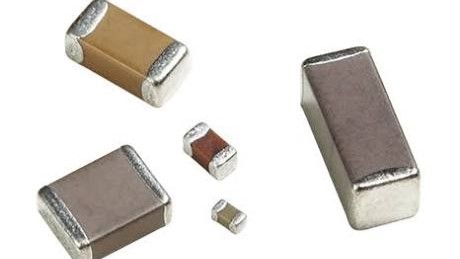
MLCC: compact SMD with stacked layers, high capacitance. Used in auto, AI. Technology Trends: miniaturization, reliability.
What is MLCC: A Comprehensive Guide to Multi-layer Ceramic Capacitors