
Large Models Frontiers: Integration of Multimodality, AI, and Edge Intelligence
2024-06-25
In the wave of artificial intelligence, AI large models are becoming an important engine driving industry progress. After more than a year of rapid development, large model technology is becoming more mature, and application scenarios are continuously expanding. This article will explore the future development trends of AI large models, especially in the latest developments in multimodal intelligence, autonomous intelligence, and edge intelligence.
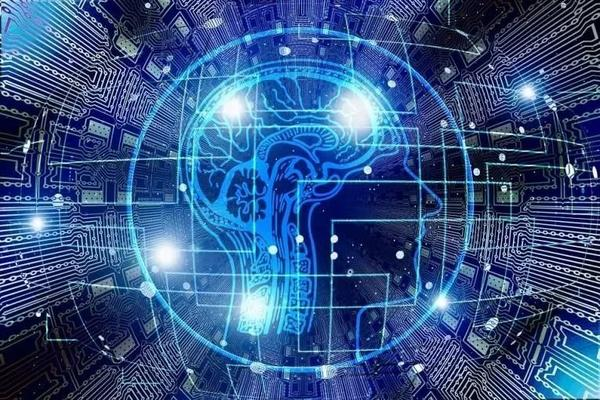
Multimodal Intelligence: Integration of Perception and Generation
Multimodal intelligence represents an important direction in the development of AI large models. It integrates language, text, video, LiDAR point clouds, 3D structural information, 4D spatiotemporal information, and even biological information to achieve multi-scale, cross-modal intelligent perception, decision-making, and generation. For example, medical intelligence entities evolve autonomously and improve diagnostic accuracy through simulated hospital environments, with efficiency far beyond human doctors. The key to multimodal large models is how to effectively integrate different modalities of information to provide more accurate and comprehensive decision support.
Autonomous Intelligence: Self-iteration and Optimization
Autonomous intelligence is reflected in the large model's ability to independently plan tasks, write code, and optimize paths. This self-iterative, self-upgrading, and self-optimizing capability of intelligent entities provides new possibilities for mutual calls between models, tool use, and federated learning. For instance, a simulated hospital based on LLM Agents demonstrates how medical intelligence entities can rapidly evolve through self-learning and summarizing errors. The development of autonomous intelligence requires consideration of how models collaborate, how to utilize existing tools, and how to protect data privacy through federated learning.
Edge Intelligence: Low Latency, High Efficiency Intelligent Processing
Edge intelligence brings the computational power of large models to the network edge, enabling AI PCs, AI smartphones, AI TVs, and other devices to achieve fast, low-power intelligent processing. Through technologies such as motion vectors and incremental moving recognition frames, edge intelligence has significantly improved target tracking performance in the field of video analysis. In addition, 5G private network computing technology, which utilizes idle computing power of base station BBUs to provide services, effectively enhances the efficiency of BBU computing resource recycling.
Physical Intelligence and Biological Intelligence: New Fields for Large Models
Large models are being applied to physical devices such as unmanned vehicles, robots, and drones to enhance their automation and intelligence levels. At the same time, the development of biological intelligence, such as brain-computer interface technology, provides a new way for AI to connect with biological entities, showing the application potential of AI in the field of life and health. The realization of physical intelligence will enable robots and other devices to better adapt to complex environments and provide more accurate and efficient services.
Autonomous Learning and Evolution: Ongoing Research of Large Models
Although large models have shown great potential in various fields, their ability to learn and evolve autonomously is still under research. In the future, large models will tend to simulate human intelligence, integrate long-term and short-term memory, and develop more personalized and distinctive products. For example, Alibaba Cloud's Chief Technology Officer, Zhou Jingren, suggested that a clear trend for large models is multimodality, and how to integrate various knowledge bodies together is key. At the same time, the interaction between large models and the real world will enable them to develop the ability to self-update and optimize.
Conclusion
AI large models, as tools and assistants of the intelligent era, are becoming more mature in their functions and applications. From the integration of perception and generation in multimodal intelligence, to self-iteration and optimization in autonomous intelligence, to low-latency processing in edge intelligence, large models are continuously expanding their technological boundaries. At the same time, the exploration of physical intelligence and biological intelligence has opened up new application fields for large models. With in-depth research, the autonomous learning ability of large models will be further enhanced, bringing revolutionary changes to various industries. New companies exploring opportunities in large models should not be limited to text, image, and video generation but should explore from natural fields such as biology, chemistry, and materials to discover new possibilities and opportunities.
Email: info@semicone.com
Snapdragon X Elite Processor: Compatibility Challenges of AI PC Software Ecosystem
Exploring sensors: How to shape the smart world
Related Article

TI issues its fourth price hike in twelve months, with increases ranging 15%–85% on analog, MCU, and power management lines.
Analog Chip Leader TI Issues Another Price Increase Notice
Trump administration advances second-phase chip tariffs. Invest in U.S. production for exemptions,overseas makers face heavy duties on American-bound semiconductors.
U.S. to Implement Targeted Semiconductor Tariffs