From Power IDMs to Foundry, Global Semiconductor Prices Surge Again
2026-07-28
The opening of the second half of 2026 has brought no traditional off-season price correction to the global semiconductor industry. Since July 1, nearly 20 semiconductor companies both in China and abroad have collectively issued price adjustment letters. Price hikes have spread across the entire chain—from power devices, analog chips, and memory chips to automotive-grade MCUs and wafer foundry—with some vendors already executing their second or even multiple rounds of increases within the year.
Domestic Power IDMs Lead the Second Round of Price Adjustments
Domestic power semiconductor IDM companies were the first to kick off this round of adjustments. UNT issued a letter on June 30, announcing a 15% to 25% price increase on its products for the third quarter—its second hike of the year. Hot on its heels, Yangjie Technology raised prices across its entire product portfolio by 10% to 15% effective July 1, marking its second wave of increases this year following its initial adjustment in late March. Silan Micro announced on the same day that all product lines would be increased by more than 15%. CR Micro simultaneously raised prices across all business categories by 15% or more.
In addition, MACMIC launched its second round of price hikes in June, increasing IGBT modules and MOSFET devices by 10% to 15%. Lion Electronics officially announced on June 15 that prices for all power chips would rise by 10% to 15%. StarPower increased prices for power semiconductor modules and discrete devices such as IGBTs and SiC MOSFETs by 15% or more.
Overseas Peers Synchronize Their Second Round
Infineon implemented its second price adjustment of the year effective July 1, with increases of approximately 10% to 20%, covering AI server power chips, automotive-grade IGBTs, and high-voltage MOSFETs. Texas Instruments simultaneously launched its second round of 2026 price adjustments, applying differentiated pricing to data center power chips and industrial analog chips. STMicroelectronics began its second round of adjustments on June 28, targeting automotive-grade MCUs, power devices, and power ICs. NXP has been operating under a new pricing system since June 1, covering automotive-grade MCUs, RF chips, and power devices.
Notably, the momentum of price increases is propagating from components to terminal SoC leaders. According to news on July 24, Qualcomm has sent a notification letter to global customers announcing that, effective September 1, prices for its entire chip portfolio will rise by a double-digit percentage. The increase covers mobile, PC, wearable, and IoT products, including flagship offerings such as the upcoming Snapdragon 8 Elite Gen 6.
Memory and Wafer Foundry
As the most upstream segment of the industry chain, wafer foundry has also entered a price-up cycle. By the first half of 2026, 8-inch foundry prices had broadly risen, with average increases of 5% to 15%. UMC has applied minor, selective adjustments to new orders, new process nodes, and new wafer starts since July 1. Nexchip raised all 8-inch foundry prices by 10% effective June 1. SMIC stated during its Q1 2026 earnings call that it had implemented targeted price increases for categories facing supply shortages. On the TSMC front, sources indicate that the company has raised foundry prices for advanced process nodes at 5nm, 4nm and below for 2026, with 3nm process price increases reaching as high as 15%—a move typically communicated to individual customers through business negotiations.
Price Increase Cycle May Extend to 2027
Judging from the current pace, the two rounds of price hikes in the first half of 2026 are only the beginning. Overseas leaders have generally implemented two rounds of increases, while domestic vendors have adopted a stepped approach with two to three batches of adjustments. The industry widely expects that a third wave of foundry price increases is brewing, with 5% to 10% increase intentions already emerging for 12-inch mature process nodes. The overall upward pricing trend is expected to persist at least until 2027.
Semicon IC Components Supplier
Amid sustained price hikes, SEMICONE —an independent global electronic components distributor—helps OEM/EMS clients secure power management, MCU, memory, analog and discrete ICs with BOM matching, shortage sourcing, quality inspection and compliant logistics across automotive, industrial and consumer electronics. Hot Recommended IC Models:
● LMR38020SDDAR – TI 4.2–80V input, 2A synchronous buck converter in HSOIC-8; ideal for rugged industrial, automotive and wireless infrastructure power delivery.
● ATMEGA128L-8AU – Microchip 8-bit AVR MCU, 128KB Flash, 2.7–5.5V, 64-TQFP; widely used in industrial control, robotics and low-power embedded systems.
● BTS3408G – Infineon automotive-grade power switch / low-side driver for lamp, solenoid and motor load driving in vehicle electronics.
● R5F104FEAFP – Renesas RL78/G13 16-bit MCU with 64KB Flash, LQFP-44; optimized for low-power industrial and home appliance control.
● 88E1510-A0-NNB2C000 – Marvell single-port Gigabit Ethernet PHY transceiver in QFN; supports 10/100/1000BASE-T for networking and communication equipment.
Email: info@semicone.com
SK Hynix's 2026 Q2 profit far exceeded its 2025 full-year profit
Samsung and Broadcom Ink $200 Billion Mega Deal
Related Article
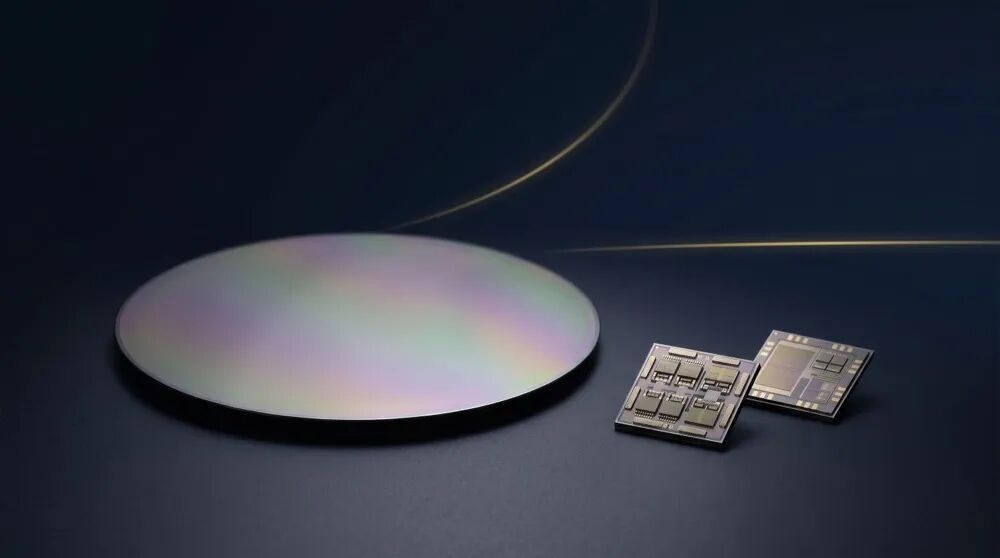
onsemi's second 2026 price hike takes effect Oct 10, driven by AI demand and rising costs. Power semiconductor prices climb industry-wide.
Power Semiconductor Price Hikes: onsemi's October Adjustment Takes Effect

Nothing spins off CMF as an India-controlled company, retaining a stake amid market exits and memory hikes.
Nothing Spins Off Sub-Brand CMF