Understanding Logic ICs: Basics and Future Trends
2024-10-16
In today's highly digitized world, digital devices are ubiquitous, forming the cornerstone of our lives, ranging from smartphones to supercomputers, communication networks to smart homes. The heart of these devices lies in the unsung yet crucial components—Logic Integrated Circuit (Logic ICs). Logic ICs are not only the basic building blocks of digital circuits and systems but also the key factors in enabling complex functionalities, driving technological innovation, and promoting industry development.
Logic IC Definition and Function
Logic IC, is an electronic component that integrates multiple logic gates capable of performing Boolean logic operations, serving as the foundation of digital circuit design. They process binary signals to realize various logic functions, thereby supporting the operation of the entire digital world. Whether it's the computational unit in processors or data routing in communication devices, Logic ICs are indispensable key components.
Classification of Logic IC
Logic ICs can be classified into various types based on their functions and structures. Among them, gate circuits (such as AND, OR, and NOT gates) are the basic units for constructing complex logic circuits; flip-flops (such as RS, D, and JK flip-flops) are used for storing and remembering binary information; decoders and encoders are responsible for converting binary codes into corresponding output signals and multiple input signals into a single binary code, respectively; and multiplexers are used to select one output from multiple input signals, enabling flexible data selection and switching.
Furthermore, based on manufacturing processes and performance characteristics, Logic ICs can be categorized into TTL series, CMOS series, ECL series, and FPGAs. The TTL series offers low power consumption and high speed but relatively low integration; the CMOS series boasts even lower power consumption, low noise, and high integration, suitable for large-scale digital logic circuits; the ECL series is extremely fast but consumes more power and generates higher noise; and FPGAs offer high flexibility and reconfigurability, suitable for applications requiring frequent modification or updating of logic functions.
Key Parameters and Characteristics
The performance and characteristics of Logic ICs are measured through a series of parameters, including power supply voltage, power consumption, input impedance, output drive capability, and propagation delay. The power supply voltage determines the operating range of Logic ICs, while power consumption reflects their energy consumption during operation. Input impedance and output drive capability determine the Logic IC's ability to receive input signals and drive loads, respectively. Propagation delay is a crucial indicator for measuring the response speed of Logic ICs.
- Power Supply Voltage: The operating voltage range of Logic ICs, typically determined by their manufacturing process and design requirements.
- Power Consumption: The electrical energy consumed by Logic ICs during operation, related to their internal circuit structure and operating frequency.
- Input Impedance: The impedance at the input terminal of Logic ICs, usually high to reduce input signal attenuation.
- Output Drive Capability: The ability of Logic ICs' output terminals to drive loads, often expressed in terms of the current or voltage they can drive.
- Propagation Delay: The time required for Logic ICs to stabilize from an input signal change to an output signal, related to internal circuit structure and manufacturing process.
Usage Precautions and Application Fields
When using Logic ICs, attention should be paid to common issues such as handling unused input pins, input signal specifications, output load matching, and preventing shorts and conflicts. These precautions are crucial for ensuring the stable operation and reliable transmission of Logic ICs.
- Handling Unused Input Pins: Unused input pins should be connected to VCC (positive power supply) or GND (negative power supply) to avoid unnecessary current flow and potential logic errors.
- Input Signal Specifications: Ensure that the rise and fall times of input signals meet the specifications of Logic ICs to avoid output oscillation or logic errors.
- Output Load Matching: When selecting Logic ICs, consider the matching between their output drive capability and the driven load to ensure stable and reliable signal transmission.
- Preventing Shorts and Conflicts: Avoid directly connecting multiple output terminals or enabling them simultaneously to prevent current conflicts and IC damage.
Logic ICs are widely used in various digital circuits and systems, such as computers, communication devices, consumer electronics, and industrial automation. They are the key components for realizing digital signal processing, data storage, and transmission functions. In computers, Logic ICs form the core of processors, responsible for executing various arithmetic and logic operations; in communication devices, they handle data routing, selection, and encoding; in consumer electronics and industrial automation, Logic ICs are used to implement various control logic and automation functions.
Selection of Logic IC
When selecting and designing Logic ICs, we need to determine the required logic functions and gate circuit types based on the system's functional and performance requirements, and choose suitable Logic IC series and models. At the same time, factors such as the power supply voltage, interface standards, cost, and reliability of Logic ICs must be considered to ensure compatibility with the system's power supply and interface, and to meet the system's cost and reliability requirements.
Trends and Challenges in Logic IC
With the continuous development of semiconductor technology and manufacturing processes, the performance and reliability of Logic ICs have continuously improved, power consumption has been reduced, and prices have become more affordable. In the future, Logic ICs will continue to develop towards higher speeds, lower power consumption, smaller sizes, and higher integration to meet the growing demands of digital circuits and systems. However, the Logic IC industry also faces numerous challenges, such as increased process complexity due to shrinking technology sizes, intense global market competition, and a shortage of high-end talent.
Despite these challenges, the Logic IC industry remains full of opportunities. With the continuous development of emerging technologies such as artificial intelligence, the Internet of Things, 5G communications, and autonomous driving, the demand for Logic ICs will continue to grow, bringing new application scenarios and market demands. At the same time, the Chinese government highly values the development of the integrated circuit industry and has issued a series of policies and measures to promote its localization process, providing unprecedented development opportunities for the Logic IC industry.
Conclusion
As the core components of digital circuits and systems, Logic ICs play a significant role in modern electronic devices. By understanding their types, parameters, usage precautions, application fields, and development trends, we can better understand and apply these key components. Facing industry challenges and opportunities, the Logic IC industry needs to continuously innovate and progress to meet market demands and drive the development of the entire industry. In the future, with the continuous advancement of technology and the expansion of application scenarios, Logic ICs will continue to play a pivotal role in the digital world.
Buy chips models at Semicone Store
- The 74LVT16543ADGGS is a 16-bit bi-directional bus transceiver designed for high-speed operation with 3-state outputs, featuring a low voltage operation range of 2.7V to 3.6V and a TSSOP-56 package.
- The SN74ABT651DWQ is an octal bus transceiver with 3-state outputs, designed for high-speed operation and registered bus transceivers with advanced BiCMOS technology.
- The 74FCT16244CTPAG is a 16-bit Buffer/Line Driver designed for bus interface or signal buffering applications, featuring independent 4-bit, 8-bit, or combined 16-bit operation, and is capable of driving high capacitance loads with high-speed, low-power CMOS technology.
Email: info@semicone.com
Analysis of ASML's Performance Decline: Factors and Future Prospects
Xilinx: Leader in FPGAs And PLDS, Shaping Intelligent Future
Related Article
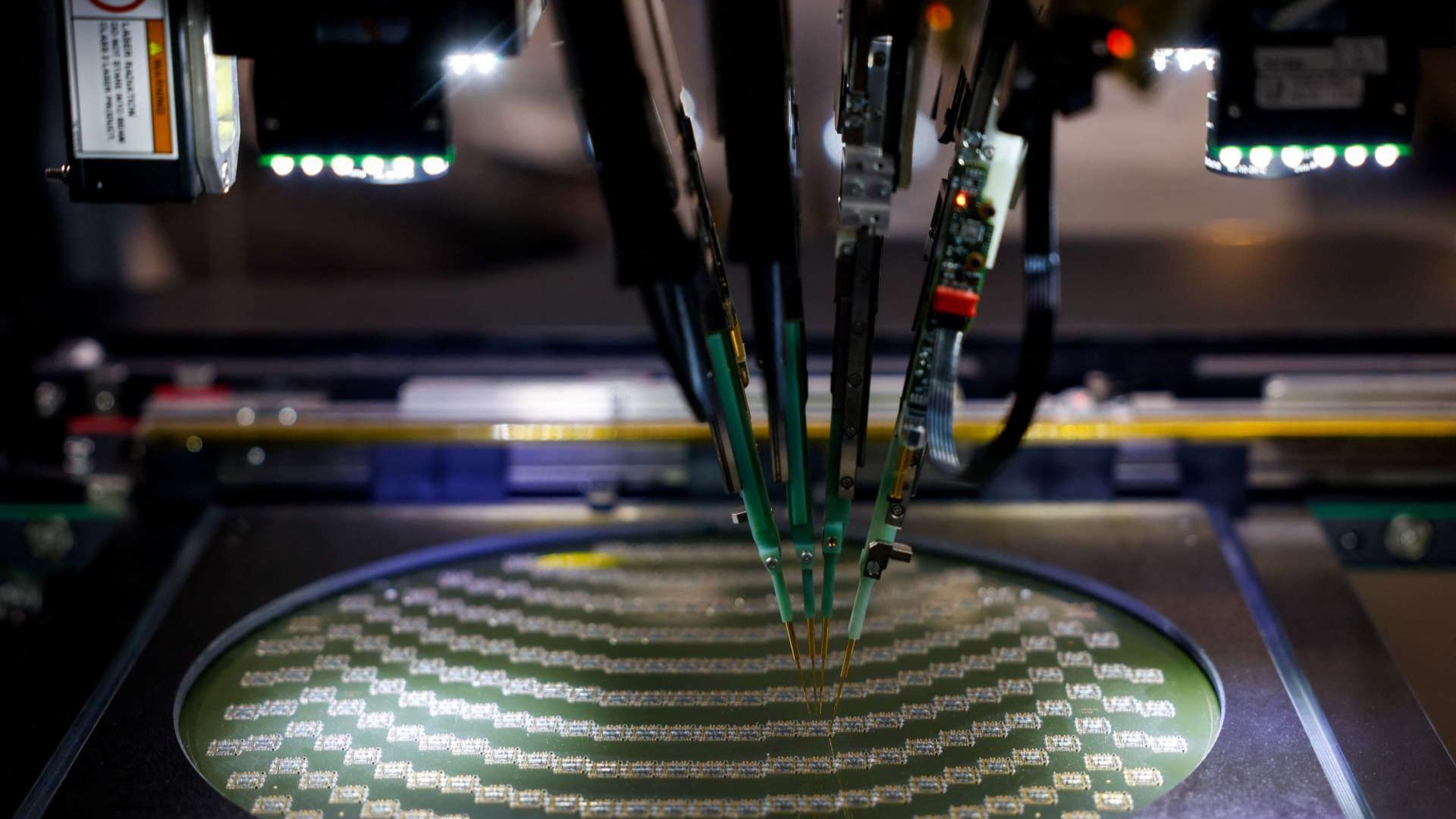
NVIDIA prepays KYEC to secure US testing capacity. KYEC and its AeternZ subsidiary will build the capacity, repayment offsets future service fees.
NVIDIA Prepayment Lock KYEC's US Testing Capacity
Microchip acquired VORAGO and Hailo. VORAGO adds HARDSIL tech, Hailo brings 26 TOPS processors. Both deals closed in 2026.
Microchip's Two Acquisitions: Aerospace & Defense and Edge AI

