What Is Passive Components | Comprehensive Overview
2024-10-10
I. Basic Information
Passive components, also known as passive elements, are electronic components that do not require an external power source to perform their specific functions. They typically do not actively provide functions such as starting, switching, speed control, or functional control related to electronics but rely on external signals to operate. The primary functions of passive components include regulating current and voltage, storing static electricity, preventing electromagnetic interference, and filtering current noise. Common passive components include resistors, capacitors, inductors, and transformers.
Compared to active components (such as transistors and diodes), passive components have relatively simpler production processes and smaller investment scales. Active components possess active functions like amplification and switching and require an external power source to operate. Passive components, on the other hand, primarily rely on their physical properties to perform their functions and do not require an external power source.
II. Classification
Passive components can be classified based on their different physical properties and functions, primarily including the following categories:
- Resistors: Resistors are one of the most commonly used passive components in electronic circuits. Their primary function is to limit the magnitude of current, achieving functions such as voltage reduction and voltage division. Depending on the material and process, resistors can be divided into carbon film resistors, metal film resistors, and wire-wound resistors.
- Capacitors: A capacitor is an electronic component capable of storing electric charge. Its primary functions are to store and release electrical energy and to filter noise. Capacitors can be classified into electrolytic capacitors, ceramic capacitors, tantalum capacitors, and other types based on their dielectric material.
- Inductors: An inductor is an electronic component capable of storing magnetic field energy. Its primary functions are to stabilize current and voltage and filter high-frequency noise. Inductors can be classified into wound inductors, thin-film inductors, ferrite inductors, and other types based on their structure and material.
- Transformers: A transformer is an electronic component that can change the voltage and current of alternating current. It is widely used in power systems and electronic equipment. Transformers can be classified into power transformers and electronic transformers based on their application and structure.
III. Working Principle of Passive Components
The working principles of passive components are primarily based on their physical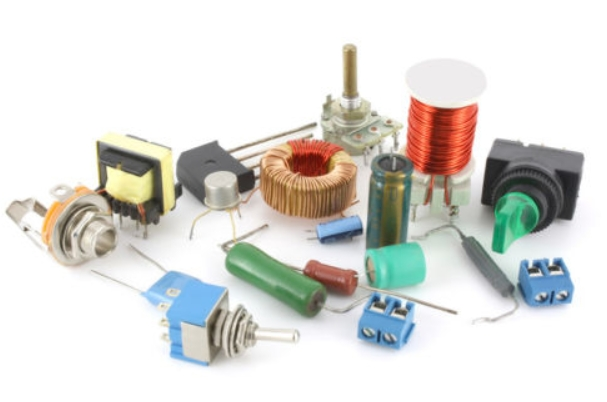 properties and electromagnetic principles. Taking resistors as an example, the working principle of resistors is based on the resistance of conductors to current, i.e., the resistance effect. When a current passes through a conductor, it encounters resistance from the atoms and molecules within the conductor, resulting in heat generation and a voltage drop. The size and type of resistor determine the degree of resistance to current, thus achieving functions such as voltage reduction and voltage division.
properties and electromagnetic principles. Taking resistors as an example, the working principle of resistors is based on the resistance of conductors to current, i.e., the resistance effect. When a current passes through a conductor, it encounters resistance from the atoms and molecules within the conductor, resulting in heat generation and a voltage drop. The size and type of resistor determine the degree of resistance to current, thus achieving functions such as voltage reduction and voltage division.The working principle of capacitors is based on the storage and release of electric charge. When a voltage is applied across a capacitor, an electric field is formed between its plates, thereby storing electric charge. When the voltage across the capacitor changes, the stored charge in the capacitor is released, forming a current. The energy storage capacity and filtering performance of a capacitor depend on its capacitance value and the characteristics of its dielectric material.
The working principle of inductors is based on the principle of electromagnetic induction. When the current in an inductor changes, a magnetic field is generated around it. This magnetic field changes with the change in current, thereby generating an induced electromotive force. The energy storage capacity and filtering performance of an inductor depend on its inductance value and the characteristics of its magnetic core material.
IV. Practical Applications
Passive components have a wide range of applications in electronic systems, encompassing almost all electronic devices. Here are some examples of passive component applications in typical applications:
- Communication Equipment: In communication equipment, passive components are used to achieve functions such as signal filtering, amplification, and attenuation. For example, in radio frequency circuits, inductors and capacitors are used to construct filters to filter out unwanted frequency components.
- Computer Equipment: In computer equipment, passive components are used to achieve functions such as power stabilization and signal transmission. For example, in power circuits, resistors and capacitors are used to construct voltage regulator circuits to ensure stable operation of the computer.
- Consumer Electronics: In consumer electronics, passive components are used to achieve functions such as audio and video signal amplification and filtering. For example, in audio circuits, inductors and capacitors are used to construct audio filters to improve sound quality.
- Industrial Automation: In industrial automation, passive components are used to achieve functions such as signal transmission and control. For example, in sensor circuits, resistors and capacitors are used to construct signal processing circuits to convert the output signal of the sensor into a readable digital signal.
V. Major Passive Components Manufacturers & Specific Model Chips
There are many well-known manufacturers in the passive component market, offering products of various types and specifications. Here are some of the major passive component manufacturers and their popular specific model chips:
- Murata Manufacturing Co., Ltd.
- Murata Manufacturing Co., Ltd. is one of the world's leading passive component manufacturers. Its products include capacitors, inductors, resistors, and more. Murata's ceramic capacitors and inductors are highly recognized and have a significant market share.
- Popular models: GRM series capacitors, LCM series inductors
- TDK
- TDK is a globally renowned electronic component manufacturer. Its products include capacitors, inductors, filters, and more. TDK's passive components are widely used in automotive electronics, communication equipment, and other fields.
- Popular models: MMK series capacitors, MHF series filters
- Yageo Corporation
- Yageo Corporation is the world's largest resistor manufacturer. Its products include resistors, capacitors, inductors, and more. Yageo's passive components are widely used in communication, computer, consumer electronics, and other fields.
- Popular models: RC series resistors, 0603 series capacitors
- Samsung Electro-Mechanics:
- Samsung Electro-Mechanics is a subsidiary of Samsung Electronics, specializing in the production and sales of electronic components. Its products include capacitors, inductors, filters, and more, widely used in smartphones, tablets, and other consumer electronics.
- Popular models: CL series capacitors, MLCC series multilayer ceramic capacitors
VI. Development Trends of Embedded ICs
With the continuous development of electronic technology and the increasing popularity of electronic products, the passive component industry is facing multiple development trends, including miniaturization, high performance, integration, and greenness. Only through continuous innovation and development can they adapt to the changing market demands and maintain a competitive advantage.
- Miniaturization: As electronic products move towards a thinner, lighter, and smaller direction, passive components are also constantly reducing in size to adapt to smaller installation spaces and higher integration requirements.
- High Performance: As electronic systems demand higher signal quality and power management, the performance of passive components is also continuously improving to meet higher precision, lower loss, and stronger stability requirements.
- Integration: With the continuous development of integrated circuit technology, passive components are also moving towards integration, integrating multiple components onto a single chip to improve performance and reduce costs.
- Greenness: With the increasing environmental awareness, passive components are also moving towards greenness, using environmentally friendly materials and processes to reduce their impact on the environment.
VII. Conclusion
Passive components are indispensable and crucial components in electronic systems. They provide reliable guarantees for the stable operation of electronic systems through their functions of regulating current and voltage, storing static electricity, preventing electromagnetic interference, and more. As electronic technology continues to develop, passive components are also constantly innovating and improving. From traditional resistors, capacitors, and inductors to modern embedded integrated circuits, the types and application fields of passive components are constantly expanding. In the future, with the continuous development of emerging technologies such as the Internet of Things and artificial intelligence, passive components will have even broader development prospects.
Email: info@semicone.com
Upgrade of Mechanical Arms: Intellectualization and Miniaturization of Motors as Trends
Embedded IC: In-depth Analysis and Application Exploration
Related Article

Ericsson will merge Northeast Asia with Southeast Asia, Oceania and India into one APAC unit and dissolve its enterprise wireless division, effective Jan 1, 2027.
Ericsson Merges Asia-Pacific Regions, Dissolves Enterprise Wireless Division
NVIDIA prepays KYEC to secure US testing capacity. KYEC and its AeternZ subsidiary will build the capacity, repayment offsets future service fees.
NVIDIA Prepayment Lock KYEC's US Testing Capacity