What are Inductors in Energy Storage?
2024-06-14
In the rapid development of electronic technology, energy storage technology plays a crucial role at its core. Inductors, as one of the three major passive components, have an irreplaceable role in this field with their unique energy storage characteristics. This article will delve into the importance of inductors in energy storage applications, analyze their working principles, and look forward to their future development trends.

Busic Principle of Inductor Engery Storage
Inductors can convert electrical energy into magnetic energy and store it in the magnetic field generated by the coil. This conversion process is based on Faraday's law of electromagnetic induction, which states that when current flows through an inductor, it generates a magnetic field around it, thereby storing energy. The energy storage capacity of an inductor is directly proportional to its inductance value (L) and the square of the current (I) flowing through it, expressed as E=LI2/2.
Applications of Inductors in Engery Storage
DC-DC converters and switch-mode power supplies: In DC-DC converters and switch-mode power supplies, inductors are used to smooth the current, reduce ripple, and improve the quality of the output voltage or current. By working in conjunction with capacitors, they form an LC filter that effectively suppresses high-frequency noise, ensuring the stability and reliability of the power supply.
Wireless charging technology: In wireless charging technology, inductors play a vital role by transferring energy between the transmitter and receiver through electromagnetic induction, enabling wireless energy transfer.
Motor control and pulse power technology: In the field of motor control, inductors are used to precisely control the current to achieve precise control of motor speed and torque. In pulse power technology, inductors are used to store and quickly release large amounts of energy, supporting high-energy applications such as lasers and particle accelerators.
Current limiting protection and electromagnetic isolation: In supercapacitor or battery pack management systems, inductors can act as current limiting protection components to prevent transient currents from damaging sensitive components, extending the system's lifespan.
Development History of Inductors
The development of inductors began with Hans Christian Ørsted's discovery in 1820 that electric currents create magnetic fields, followed by Michael Faraday's discovery of electromagnetic induction in 1831, which laid the theoretical foundation for the invention of inductors. From the late 20th century to the early 21st century, the growth of information technology and the demand for miniaturized, high-frequency, and low-loss inductors have driven the development of new materials and automated production technologies.
Future Trends of Inductors
With the development of emerging fields such as new energy, smart grids, and electric vehicles, inductors are evolving towards higher performance, miniaturization, and environmental friendliness. New types of inductors, such as Surface Mount Technology (SMT) inductors, thin-film inductors, and integrated inductors, continue to emerge to meet the needs of modern electronic devices for thinness, high frequency, and multifunctionality.
The design of modern inductors increasingly focuses on the use of high-performance magnetic materials, such as metal powder cores, ferrite, amorphous, and nanocrystalline materials, which significantly reduce hysteresis and eddy current losses, enhancing the performance of inductors under high frequency and large current conditions. At the same time, to adapt to the miniaturization trend of electronic devices, inductors are developing towards smaller size and higher power density, using advanced manufacturing technologies such as multilayer ceramic technology and thin-film deposition technology, achieving the dual goals of reducing size while maintaining or even enhancing performance.
In addition, the intelligence and integration of inductors are also important directions for future development. By integrating sensors and control circuits, inductors can not only achieve status monitoring and self-regulation but also significantly improve the level of intelligence and maintenance efficiency of energy storage systems. At the same time, the design of inductors is increasingly focused on system optimization to meet the strict requirements of specific energy storage technologies for rapid response, high reliability, and specific electrical characteristics.
Summary
Inductors have a wide and profound application in the field of energy storage, and their development is moving towards high performance, intelligence, and environmental protection. With the continuous advancement of technology and the growing market demand, inductors will play an even more critical role in future energy storage technology, providing strong support for efficient and reliable energy storage and management.
Email: info@semicone.com
Industry News丨Nvidia Open Up Business; Micron HBM Chip; TSMC wins 3nm order for PC processors from Intel
Technology Frontier News: MediaTek Joins Hands with Meta to Enter AI Market, TSMC 3NM Technology, Intel's Expansion Plan is Suspended
Related Article

Mobileye overhauls strategy: CEO Shashua exits after 30 years, Moovit cuts 60 jobs. The company refocuses on in‑house robotaxi launch in 2027.
Mobileye Strategic Overhaul: Moovit Cuts 30% of Staff, Founder CEO to Step Down
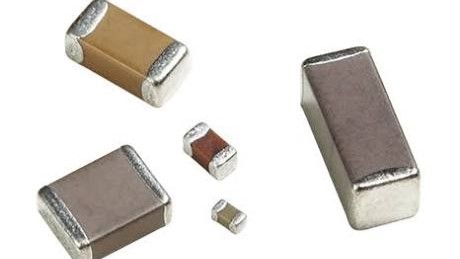
MLCC: compact SMD with stacked layers, high capacitance. Used in auto, AI. Technology Trends: miniaturization, reliability.
What is MLCC: A Comprehensive Guide to Multi-layer Ceramic Capacitors