Nikon's Lithography Strategy Adjustment: Breaking Through with Cost Advantages
2026-06-02
In April 2026, Yasunobu Omura officially assumed the role of President and CEO of Nikon, inheriting what was arguably the worst financial report in the company's history. For the fiscal year ending March 2026, Nikon projected a net loss of approximately 85 billion yen, with its core precision machinery business facing the dual pressures of inventory write-downs and order contraction. During the first half of fiscal year 2025, Nikon sold only nine semiconductor lithography units—a volume incomparable to ASML's shipments. Against this backdrop, a strategic breakthrough for the lithography business became the top priority for the new management team.
Price Differentiation Strategy
Yasunobu Omura recently stated explicitly that Nikon would leverage its cost advantages in component production to offer customers more competitive pricing, thereby engaging in differentiated competition with ASML in the lithography equipment market. Industry estimates suggest that Nikon's ArF lithography systems could be priced 20% to 30% lower than comparable ASML products.
The core source of this confidence lies in Nikon's high in-house production ratio for core components—from optical lenses to key modules—which enables a supply chain cost structure significantly superior to that of competitors relying on globally dispersed procurement. Omura stated directly: "Even if we sell at reduced prices, we can still secure substantial profits."
Customer Expansion
Product Roadmap
Nikon has established a clear product advancement plan. On one hand, the company plans to ship its next-generation dry ArF lithography system, the NSR-S333F, within fiscal year 2026. Launched in September 2025, this model can process over 300 300mm wafers per hour, with an overlay accuracy (MMO) of less than 4nm. On the other hand, Nikon plans to introduce a new immersion ArF lithography system compatible with the ASML-dominated ecosystem by fiscal year 2028, to cover broader advanced process demands.
Conclusion
Nikon's strategic adjustment is not merely a price war, but rather a restructuring of competitive logic based on vertical integration advantages. In a global lithography equipment market where ASML holds over 80% market share, if Nikon can penetrate top-tier customer supply chains with a 20% to 30% price advantage, it will not only open growth space for its own lithography business but may also shake the unilateral pricing system for high-end lithography equipment.
Semicone IC Solutions Distributor
Semicone is a global IC distributor specializing in power management, RF, and signal chain components, offering authentic, hard-to-find parts with fast delivery for industrial, automotive, and consumer electronics. Daily Hot Picks:
● FSAM50SM60A — A 600V/50A Smart Power Module integrating IGBT and driver for motor drive and inverter applications.
● TLV61046ADBVR — A high-efficiency 28V boost converter in a tiny SOT-23 package, ideal for OLED bias supplies and portable devices.
● CM1624-08DE — An 8-channel EMI filter array with ESD protection, designed for high-speed data line noise suppression in mobile and consumer electronics.
● SKY13348-374LF — A high-isolation SPDT RF switch covering 0.1–6GHz, widely used in 5G, Wi-Fi, and LTE front-end modules.
● IRF7862TRPBF — A 100V/17A N-channel HEXFET power MOSFET with ultra-low on-resistance, optimized for DC-DC converters and switching applications.
Email: info@semicone.com
SK Hynix Aims to Double Wafer Capacity Within Five Years
Price Hikes: ST and Infineon Announce Second Round of Increases Within the Year
Related Article
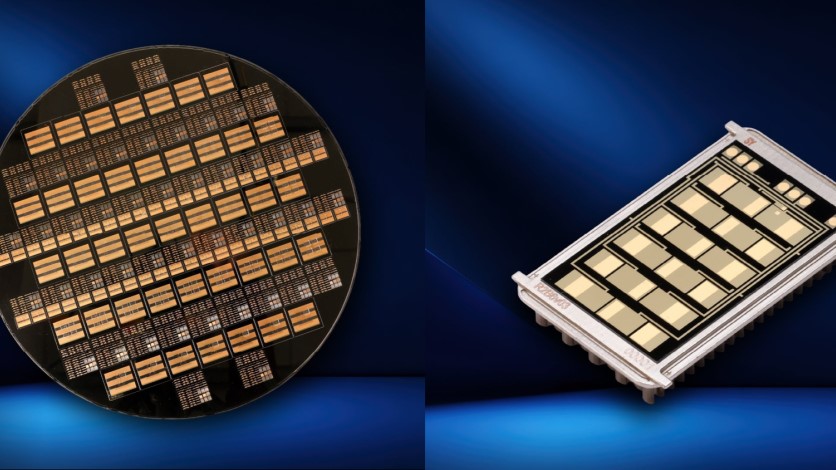
onsemi EPP uses 12-inch silicon wafers to package SiC/GaN power chips, eliminating wire bonding. It cuts AI breaker size 50% and EV loss 15%.
onsemi EPP Platform: Reconstructing Power Packaging Architecture with 12-Inch Silicon Wafers
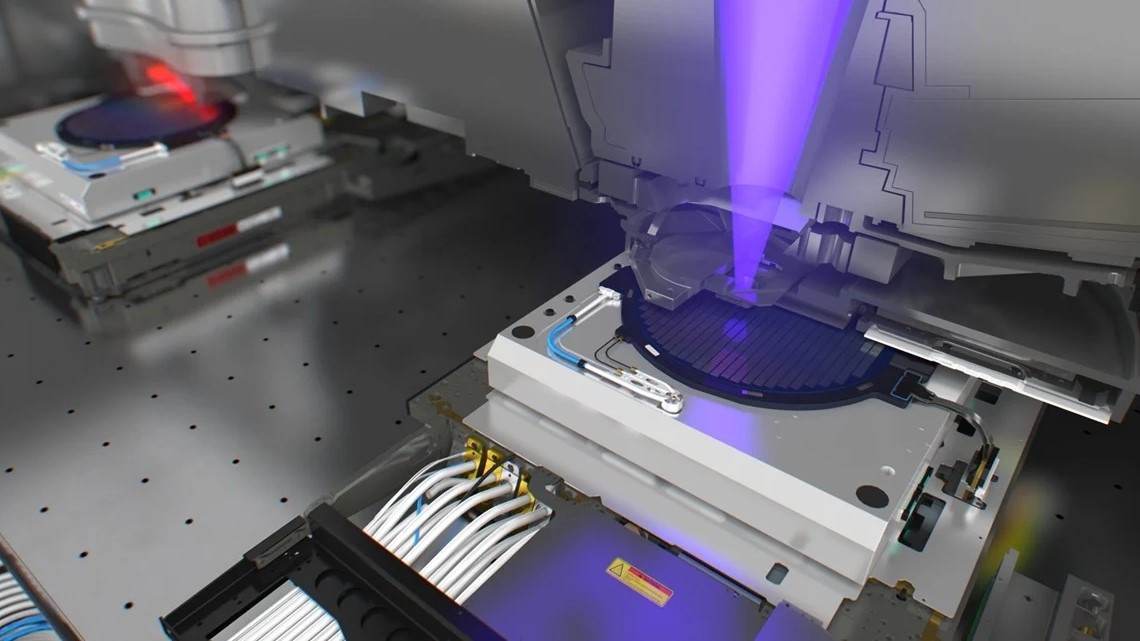
ASML eyes 110 EUV units by 2028; 2027 sold out. AI drives TSMC, Samsung, Intel demand. Tech upgrades boost output.
ASML EUV Lithography Expansion: 2028 Capacity Target of 110 Units