Capacitor Prices Rise Again, Panasonic and KEMET Increases of Up to 65%
2026-05-25
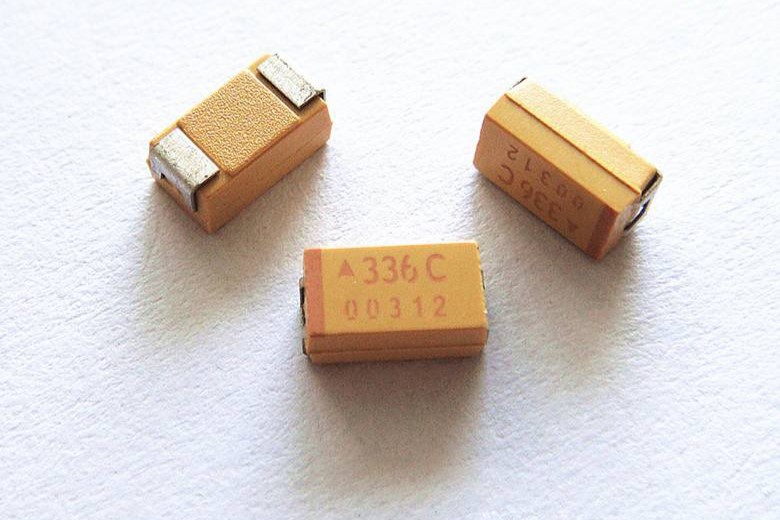
Recently, a new wave of price increases has swept through the global passive components market. Japan's Panasonic and KEMET, a subsidiary of Yageo, have successively announced price hikes for some of their capacitor products, with increases ranging from 5% to 65%. The new prices are scheduled to take effect in June and July, respectively. This round of price adjustments covers categories such as tantalum capacitors and surface-mount solid aluminum capacitors.
 Panasonic's SP-Cap Price Increase
In a notification letter to customers, Panasonic pointed out that the prices of precious metal raw materials like silver and copper have continued to climb. Coupled with simultaneous increases in manufacturing and capital equipment expenditures, the company, despite absorbing costs through various means, is nearing its tolerable limit. Consequently, it has decided to activate a price adjustment mechanism. This increase focuses on the SP-Cap series of surface-mount solid aluminum capacitors, with the new prices applying to orders delivered after July 1st.
Panasonic holds approximately a 10% global market share in tantalum capacitors, ranking fourth. However, it dominates the SP-Cap segment. As AI server rack power increases and new platforms adopt updated power delivery architectures, the advantages of SP-Caps for power stability in compact spaces have become more prominent. Strong demand-side pull has become another key driver for the price hike.
KEMET's Third Tantalum Capacitor Price Hike
KEMET, the global leader in tantalum capacitors with a market share exceeding 40%, is facing severe supply-demand imbalance. This is driven by the extensive adoption of tantalum capacitors in ASIC servers and tightening upstream tantalum ore resources. KEMET has issued a price increase notice, with the new prices expected to take effect from June 1st. Increases for some high-end specifications could reach up to 65%. Notably, this marks KEMET's third price adjustment within nine months, following previous implementations in June and November 2025, resulting in a considerable cumulative increase. Tantalum capacitors, valued for their high-temperature resistance and stability, have expanded from military/aerospace applications to AI server power management. A single high-end server can use thousands of these capacitors, creating demand growth far exceeding traditional applications.
Multiple Drivers Behind the Price Hikes
This round of capacitor price increases is not due to a single factor but rather the result of multiple overlapping pressures:
● Raw Material Costs: The prices of key capacitor manufacturing materials like precious metals silver and copper have remained high. Additionally, special materials like tantalum powder face cost pressures due to supply chain and geopolitical factors.
● High-End Manufacturing and Capacity Investment: To meet the stringent performance and reliability requirements of high-end markets like automotive electronics and AI servers, leading manufacturers are compelled to continuously invest in advanced manufacturing equipment and process R&D. These capital expenditures are ultimately passed on to product costs.
● Structural Demand Imbalance: Explosive growth in demand from specific sectors, represented by AI servers, has created a concentrated and powerful pull for high-end products like tantalum capacitors, intensifying the supply-demand contradiction.
In summary, this round of price adjustments initiated by Panasonic, KEMET, and others may prompt other passive component manufacturers to follow suit and re-evaluate their own cost and pricing strategies. In the short term, capacitor market prices are likely to remain firm. In the long run, driving technological innovation and seeking alternatives for some materials will be the fundamental path for the industry to cope with cost fluctuations.
Semicone ic components distributor
Semicone is a global distributor of electronic components, dedicated to providing engineers and purchasers with a wide range of IC inventories, BOM list management, and efficient logistics solutions. The following are today's selected popular IC chip components.
● LMX2694SRTCTEP (TI): A high-performance wideband PLL radio frequency synthesizer with an output frequency range of 39.3 MHz to 15.1 GHz.
● XCKU060-FFVA1156 (AMD/Xilinx): A mid-to-high-end FPGA based on 16nm UltraScale+ architecture, providing up to approximately 588,000 logic units and 32 high-speed transceivers.
● STM32L4R9ZIY6PTR (ST): An ultra-low power MCU based on a 120 MHz Arm Cortex-M4 core, integrating 2MB Flash and 640KB SRAM.
● 74VHCV541FT (Toshiba): A high-speed CMOS eight-channel in-phase tri-state bus buffer with Schmitt trigger input and a wide voltage operating range (1.8V - 5.5V).
● BTA26-600BRG (ST): A 25A/600V insulated package three-terminal bidirectional thyristor with high surge current tolerance and standard commutation characteristics.
Email: info@semicone.com
What Is an Octal Buffer/Driver?
U.S. Government Invests $2 Billion in Nine Quantum Computing Companies
Related Article

Helium joins the US critical materials list. Supply is constrained by flat US output and export limits in Qatar and Russia.
US Tightens Export of Helium, a Critical Semiconductor Gas

Micron skips 10th-gen NAND, jumping from 276-layer G9 to 400+ layer G11 with wafer-to-wafer bonding, targeting AI and an H2 2027 ramp.
Node Selection: Micron Skips 10th-Generation NAND

