
Humanoid Robot Controllers: The Nerve Center of Intelligent Action
2024-08-26
In the rapid development of artificial intelligence and robotics, humanoid robots, as representatives of the technological frontier, have one of their core components—the controller—playing an essential role. The controller is akin to the robot's "brain," responsible for meticulously planning and controlling every movement of the robot, and is the key system for implementing complex actions and intelligent decision-making. With the continuous advancement of technology, humanoid robot controllers have demonstrated a high degree of complexity and precision at both the hardware and software levels.
Core Role of Humanoid Robot Controllers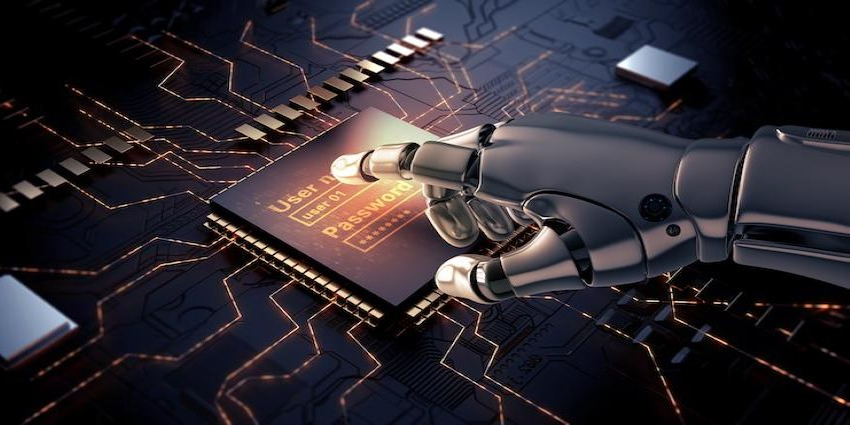
The primary functions of humanoid robot controllers are reflected in motion planning and control, the issuance and transmission of action commands, and data processing and transmission. They ensure that robots move accurately along predetermined trajectories to specific locations, achieving the transformation between operational space and joint space coordinates, completing high-speed servo interpolation calculations, and motion control. Moreover, as the central hub for action commands, controllers convey operator instructions to the robot, ensuring accurate execution. At the same time, they process sensor data, reducing the deviation between actual movement and desired targets, ensuring motion accuracy.
Characteristics of Controllers
Humanoid robot controllers possess characteristics of high real-time performance, high precision, and modular structure:
- High Real-time Performance: Rapid response to processing commands and data to meet the motion performance requirements of robots.
- High Precision: Achieving precise control through algorithms and sensor data, reducing motion deviation.
- Modular Structure: Adapting to rapid technological iteration, facilitating component replacement and the creation of various controller combinations.
Hardware Architecture: Bridge of Perception and Execution
The hardware architecture of humanoid robots typically consists of a perception layer, decision-making layer, and execution layer. The perception layer uses an array of integrated sensors to monitor the robot's status and environmental information in real-time, providing input data for the decision-making layer. The decision-making layer uses advanced algorithms to process and analyze perceptual data, forming decision-making plans. The execution layer drives the robot's actuating mechanisms to perform specific actions according to decision-making instructions.
Controller hardware mainly includes industrial control boards and other components responsible for data collection, processing, and transmission. The chip product, as the core of the hardware, determines the performance and stability of the controller, receiving sensor signals and issuing control commands. Taking Tesla's Optimus as an example, its hardware level integrates multiple linear and rotary actuators as well as dexterous hands, each equipped with precision motors, reducers, sensors, and encoders, ensuring the precision and flexibility of movements.
Controller Technology: Modularization and Iteration
Due to the rapid iteration and undetermined nature of humanoid robot technology solutions, the design of controllers tends towards a modular structure. This structure not only facilitates the replacement and upgrading of components but also simplifies the creation process of different controller combinations, providing flexibility for the development and application of technology.
Software Algorithms: Driving Force of Intelligence
Software algorithms are the core of the intelligence of humanoid robot controllers. They include operating systems and algorithm libraries, responsible for managing hardware resources and providing a running environment. These algorithm libraries include a variety of algorithms such as motion planning, perceptual processing, control execution, and autonomous learning, collectively constituting the robot's intelligent behavior patterns. With the development of technologies like deep learning, the precision and efficiency of algorithms continue to be optimized, enabling robots to handle more complex and variable tasks.
Semiconductor: Synergy of MCU, DSP, and AI Chips
The performance of humanoid robot controller is inseparable from its internal component chip. These chips each perform their own duties and jointly promote the intelligent development of robots.
- Microcontroller unit (MCU) : With its programmable characteristics, integrated CPU, memory, I/O interface, etc., responsible for the basic control logic and sensor signal processing, the implementation of simple control algorithms, to provide flexibility for the robot's control logic.
- Digital signal Processor (DSP) : Using its hardware multiplier and other special hardware, fast processing of digital signals, to meet the real-time requirements, especially suitable for complex motion control and image processing algorithms.
- AI chip: Designed to execute AI algorithms, such as deep learning and machine learning, accelerates the execution of artificial intelligence algorithms through its powerful parallel computing capabilities and provides hardware support for the intelligence of robots.
- Application-specific Integrated circuits (ASIC) : Customized for specific applications, implementing specific control algorithms or functional modules to optimize performance and efficiency.
Conclusion
The development of humanoid robot controllers is closely linked to the iteration of AI technology, from the precise configuration of hardware to the intelligent algorithms of software, and to the efficient collaboration of chips, every link is crucial. As application scenarios expand, controller and chip technology will continue to advance. In the future, controller chips will develop towards higher performance, lower power consumption, more integrated functions, and stronger security, providing stronger technical support for the intelligence and autonomy of humanoid robots. With the integration and innovation of these technologies, humanoid robots will demonstrate their unique value and potential in more fields.
Semicon Microcontroller Component
|
Microchip embedded digital signal processor and controller with 16-bit dsPIC core
Has a wealth of peripheral interfaces, including Universal serial bus (SPI), asynchronous Serial communication interface (USART), I²C bus, analog comparator, etc., and also integrates analog to digital-to-analog converter (ADC).
Application scenarios include communications, computer, consumer electronics, automatic control, military/aviation, and industrial control.
|
|
|
STMicroelectronics ARM966E-S based 16/32-bit flash microcontroller
With a robust set of features such as Ethernet, USB, CAN, AC motor control, equipped with advanced peripherals like 4 timers, ADC, RTC, and DMA.
Suitable for a wide range of applications including industrial automation and communication gateways.
|
|
|
NXP Semiconductors 16/32-bit ARM7TDMI-S™ CPU-based microcontroller
Featuring 8 kB to 32 kB of embedded high-speed flash memory, designed for applications requiring miniaturization and low power consumption.
With capabilities such as multiple UARTs, SPI, SSP, and two I²C-buses.
Suited for communication gateways, protocol converters, and industrial control systems.
|
Email: info@semicone.com
Sustaining Momentum: Global Foundry Industry's 2024 Q2 Revenue Growth Driven by AI Demand
Heart of Digital Age Information Storage: Evolution and Future of Memory Storage Chips
Related Article

Qualcomm will begin performance-driven global layoffs in November after annual reviews, with no headcount disclosed.
Global Performance-Driven Layoffs at Qualcomm
US DHS orders DeepSeek removed from federal civilian IT systems, including third-party products using its models, turning model provenance into a procurement compliance issue.
US Federal Civilian Agencies Ban DeepSeek