Decoding the Chip Technologies Behind Intelligent Computing Centers
2024-07-24
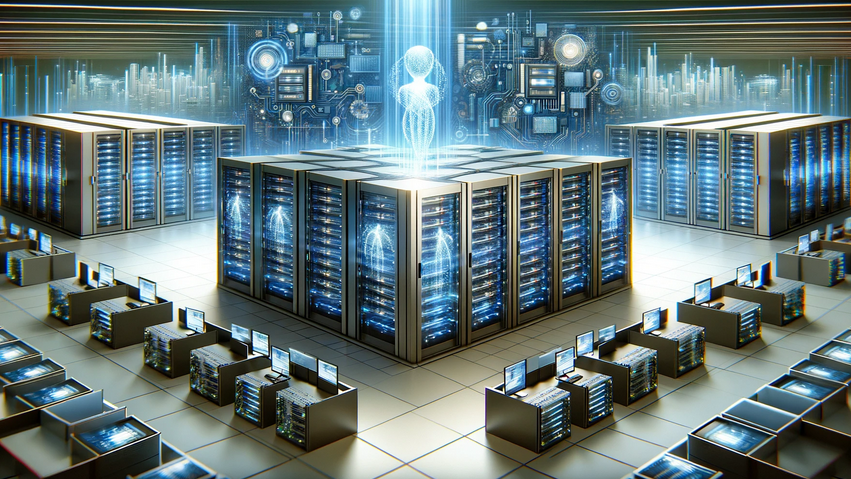 As the infrastructure of the artificial intelligence era, intelligent computing centers are accelerating their global deployment. These centers are specifically designed to handle the massive computational tasks required by AI algorithms and models, focusing more on providing AI computing power compared to traditional data centers and supercomputing centers. With the advancement of digital infrastructure projects across China, intelligent computing centers have become a key focus, with projects starting or being put into use from Beijing to Sichuan, and from Ningxia to Henan. The latest data from the National Bureau of Statistics shows that China's computing infrastructure construction has reached a world-leading level, with the scale of intelligent computing power accounting for more than 30%.
Technical Architecture of Intelligent Computing Centers
- The technical architecture of intelligent computing centers typically includes multiple layers, from the underlying hardware infrastructure to the upper-level software platforms and algorithm services, forming a complete computing ecosystem. The hardware infrastructure layer mainly includes computing devices, storage systems, and network facilities. Computing devices such as high-performance servers, computing nodes, and GPU accelerator cards provide powerful computing capabilities and parallel processing capabilities. Storage systems include high-speed disk arrays, distributed file systems, and object storage systems for storing and managing massive amounts of data. Network infrastructure includes high-speed Ethernet, fiber optic networks, switches, routers, etc., supporting data transmission and communication.
- The software platform layer includes algorithms and artificial intelligence technologies, big data processing platforms, AI-enabled software and development frameworks, and cloud platform management and scheduling systems. Algorithms and artificial intelligence technologies include machine learning algorithms, neural networks, image processing, and natural language processing, used for data processing, machine learning, deep learning, and model training tasks. Big data processing platforms such as Hadoop and Spark provide distributed and parallel computing capabilities, efficiently handling large-scale datasets. AI-enabled software and development frameworks such as CANN (Huawei Ascend AI Computing Architecture) and MindSpore (Huawei's all-scenario AI framework) provide a convenient development environment and toolchain for AI developers. Cloud platform management and scheduling systems such as ModelArts (Huawei Cloud AI development platform) provide unified management and scheduling services for computing resources.
Computing Chips
Intelligent computing centers, primarily focused on artificial intelligence computing tasks, are the core infrastructure of AI computing power. They use specialized AI computing hardware such as GPUs, NPUs, and TPUs, which are adept at parallel computing and can efficiently handle the large number of simple matrix operations in AI algorithms. Intelligent computing servers, as the main computing hardware of intelligent computing centers, typically adopt a heterogeneous computing architecture of "CPU+GPU" or "CPU+NPU" to fully leverage the advantages of different computing chips in performance, cost, and energy consumption. Huawei, Tensil AI, Moore Threads, Sugon, Xilinx, NVIDIA, Intel, AMD, and others have all launched relevant chips.
Storage Chips
Intelligent computing centers need to store massive amounts of data, including structured and unstructured data. These data are the foundation for AI algorithm training and inference. Therefore, intelligent computing centers require high-capacity, high-reliability, and high-availability features in storage. Storage devices typically use high-performance hard drives or solid-state drives, equipped with redundant storage architectures to ensure data security and accessibility. Samsung, Micron, SK Hynix, and others have relevant chips widely used in data centers and cloud computing, providing high-performance storage solutions for intelligent computing centers.
Interconnect Chips
The interconnection of devices in intelligent computing centers first relies on hardware infrastructure, including high-performance switches, routers, wireless products, and other network devices, as well as physical media such as fiber optics and network cables used to connect servers and storage devices. To achieve efficient interconnection between devices, intelligent computing centers often use high-speed interconnect technologies such as InfiniBand and RoCE (RDMA over Converged Ethernet). These technologies provide low-latency, high-bandwidth data transmission capab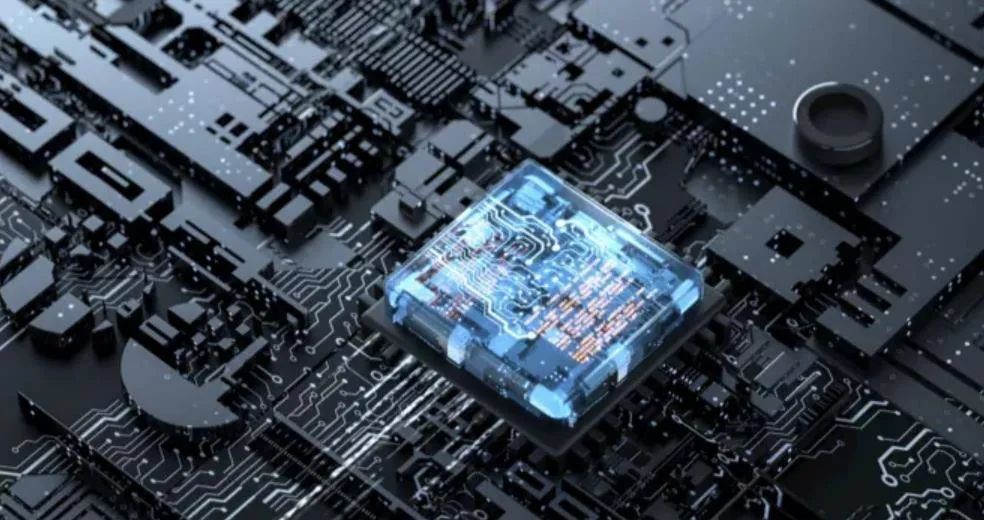 ilities to meet the computing power requirements of AI algorithms. In intelligent computing centers, GPUs are the core computing units. To achieve efficient interconnection between GPUs, special communication protocols such as NVLink are often used to achieve high-speed P2P (point-to-point) interconnect bandwidth.
ilities to meet the computing power requirements of AI algorithms. In intelligent computing centers, GPUs are the core computing units. To achieve efficient interconnection between GPUs, special communication protocols such as NVLink are often used to achieve high-speed P2P (point-to-point) interconnect bandwidth.Computing-in-Memory Technology
Computing-in-Memory (CIM) technology embeds computing capabilities within the storage device, performing two-dimensional and three-dimensional matrix multiplication/addition operations with a new computing architecture, aiming to break the bottleneck of the von Neumann computing architecture and reduce the latency and power consumption of data movement. This technology is particularly suitable for large-scale parallel applications such as deep learning neural networks. The core advantage of CIM technology is to reduce unnecessary data movement, lower energy consumption, and use storage units to enhance computing power. This technology can provide greater computing power (over 1000 TOPS) and higher energy efficiency (over 10-100 TOPS/W) in specific fields, significantly surpassing existing ASIC computing chips. The classification of CIM technology includes processing with memory and computing near memory, with CIM technology evolving along a historical route. The storage media for CIM technology include NOR FLASH, SRAM, DRAM, RRAM, MRAM, and other NVRAMs. Among them, the resistive RAM (RRAM) has a particular advantage in neural network computing and is a mainstream research direction for the next generation of CIM media.
Conclusion
As the infrastructure of the intelligent era, intelligent computing centers will play an increasingly important role in the future economic and social development. With the continuous advancement of technology and the expansion of application scenarios, intelligent computing centers will usher in a broader development prospect. The upstream industry chain provides the necessary hardware and software support for intelligent computing centers. The joint efforts and collaboration of these industry participants have promoted the continuous improvement and development of the computing capabilities of intelligent computing centers.
IC Electronic Components Parts
- LM2596S-5.0 is a high conversion, low energy loss step-down switching regulator from Texas Instruments. With built-in current limiting and thermal protection, this regulator chip can be used in a wide range of battery-powered applications, such as portable devices and wireless sensors. It can be used in various consumer electronics products, such as smart phones, tablets, digital cameras, etc.
- LM1875T is an audio power amplifier chip, capable of providing large power output, suitable for driving speakers or other audio loads. Built-in overheat protection function to prevent the chip from being damaged due to overheating. This excellent audio chip can be used as a pre-amplifier or post-amplifier to increase the power and quality of the audio signal. It can also be used to build a variety of audio amplification systems, such as audio, power amplifier, etc.
- OPA2604AU is TI's operational amplifier, which can be used in audio circuits such as preamplifiers and power amplifiers, as well as in precision measurement and signal conditioning applications, to build various types of filters, and for signal amplification and conditioning in industrial automation and process control.
Email: info@semicone.com
Hitachi Transforming: Exiting Home AC and Focusing on Commercial Sector
NVIDIA's China-Exclusive Chip H20 Faces Another Ban by the US Government
Related Article

Qualcomm will begin performance-driven global layoffs in November after annual reviews, with no headcount disclosed.
Global Performance-Driven Layoffs at Qualcomm

US DHS orders DeepSeek removed from federal civilian IT systems, including third-party products using its models, turning model provenance into a procurement compliance issue.
US Federal Civilian Agencies Ban DeepSeek