Hot-Selling IC Component Selection and Application Guide
2026-03-09
In modern electronic system design, the selection of ic components directly impacts product performance, reliability, and cost. With the rapid development of automotive electronics, industrial control, IoT, and consumer electronics markets, engineers face multidimensional challenges in device selection ranging from power management and signal processing to logic control. This article systematically reviews ten popular IC components on the market, covering core categories including power management, microcontrollers, logic devices, signal conditioning, and programmable logic, providing practical references for hardware design.
1. Power Management
● LM317KTTR (TI) — Classic Linear Voltage Regulator
Packaged in TO-263 (DDPAK-3), this adjustable three-terminal positive voltage regulator offers an output voltage range of 1.25V to 37V with a maximum output current of 1.5A. Requiring only two external resistors to set the output voltage, it features overcurrent protection, thermal overload protection, and safe operating area protection, making it suitable for local on-board regulation and battery charging applications.
● TPS54302DDCR (TI) — High-Efficiency Synchronous Buck Converter
In SOT-23-6 package, this device features an input voltage range of 3.5V to 60V, output current up to 3A, and a switching frequency of 1.5MHz. With integrated high-side and low-side MOSFETs and a quiescent current of only 100μA, it maintains high efficiency under light load conditions, making it particularly suitable for battery-powered equipment and industrial power applications.
● MP28200GG-Z (MPS) — Ultra-Low Power PMIC
Packaged in 2×2mm QFN-12, this device operates with input voltage from 2V to 5.5V, delivers 200mA output current, and features an ultra-low quiescent current of 500nA. The 1.5MHz switching frequency enables compact inductor designs, making it ideal for power-sensitive applications such as wearable devices and IoT sensor nodes.
● BTS724GXUMA1 (Infineon) — Smart High-Side Power Switch
In DSO-20 package, this four-channel device features only 70mΩ on-resistance per channel and supports 3A output current. With overtemperature, overcurrent, and short-circuit protection, and AEC-Q100 automotive qualification, it is widely used in body control modules and industrial load driving.
2. Microcontrollers
● S9S12G48AMLH (NXP) — Automotive-Grade 16-bit MCU
Based on the HCS12 core in 64-LQFP package, this microcontroller operates at 25MHz and integrates 48KB Flash, 4KB RAM, and 1.5KB EEPROM. Supporting multiple communication interfaces including CAN, LIN, SPI, and SCI, with an operating temperature range of -40°C to 125°C, it is suitable for automotive body control, motor drive, and industrial automation.
● STM32L431CCT6 (ST) — Ultra-Low Power ARM MCU
In LQFP-48 package, this device is based on the Cortex-M4 core (80MHz) with 256KB Flash and FPU floating-point unit. As a member of the STM32L4 series, its outstanding advantage lies in ultra-low power design with multiple low-power modes, making it suitable for portable medical devices, smart metering, and environmental monitoring terminals.
3. Logic and Interface
● 74LVC1G57GW-Q100 (Nexperia) — Configurable Multi-Function Gate
In TSSOP-6 package, this single-channel low-power CMOS device operates from 1.65V to 5.5V. With 5V tolerant inputs and configurable logic functions including AND, OR, and XOR, it is AEC-Q100 qualified for signal routing and level translation in automotive electronics.
● TXB0104PWR (TI) — Bidirectional Level Shifter
In TSSOP-14 package, this 4-bit bidirectional voltage level translator supports voltage ranges from 1.2V to 3.6V with data rates up to 100Mbps. Featuring automatic direction detection without requiring direction control signals, it is particularly suitable for multi-voltage system interconnection of I2C, SPI, and GPIO interfaces.
4. Analog Signal Conditioning
● ADA4522-2ARZ-R7 (ADI) — High-Precision Zero-Drift Op-Amp
In SOIC-8 package, this dual-channel device operates from ±2.25V to ±27.5V supply. With input offset voltage drift of only 0.3μV/°C, noise density of 6.9nV/√Hz at 10Hz, and gain bandwidth product of 2.7MHz, it is suitable for high-precision sensor signal conditioning such as strain gauges and RTDs, as well as industrial measurement systems.
5. Programmable Logic
● XC7A100T-2FGG484I (AMD/Xilinx) — Artix-7 FPGA
In FBGA-484 package using 28nm process technology, this device integrates 101,440 logic cells, 240 DSP Slices, and 285 I/O ports. As a cost-optimized FPGA in the 7 series, it supports 628MHz clock frequency and MMCM/PLL clock management, suitable for communication infrastructure, machine vision, and industrial control.
Conclusion
In practical selection, engineers should establish an evaluation framework of "application scenario → key parameters → certification standards → supply chain stability," prioritize industrial-grade or automotive-qualified devices, and fully utilize manufacturer reference design resources to ensure optimal balance between performance, reliability, and cost. As semiconductor processes continue to evolve, it is recommended to closely monitor next-generation replacement products from various manufacturers, such as TI's evolution from LM317 toward integrated PMICs and ST's performance upgrade from STM32L4 to STM32U5 series, to ensure the forward-looking sustainability of design solutions.
Email: info@semicone.com
Japanese Government Proposes JDI Build Display Panel Factory in the U.S.
From Signal to Spectrum: Comprehensive Analysis of RF Chips
Related Article

Mobileye overhauls strategy: CEO Shashua exits after 30 years, Moovit cuts 60 jobs. The company refocuses on in‑house robotaxi launch in 2027.
Mobileye Strategic Overhaul: Moovit Cuts 30% of Staff, Founder CEO to Step Down
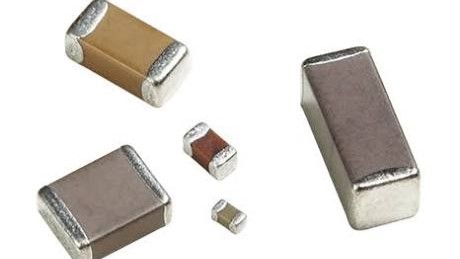
MLCC: compact SMD with stacked layers, high capacitance. Used in auto, AI. Technology Trends: miniaturization, reliability.
What is MLCC: A Comprehensive Guide to Multi-layer Ceramic Capacitors