Codec IC: Technical Core and Market Overview
2025-10-13
In modern electronic devices, the transmission and processing of information often require conversion between analog and digital signals. The Codec IC, as a key component for such conversion, is widely used across multiple fields including audio, video, and communication. Whether it's audio processing in smartphones or the transmission of high-definition video, the Codec IC plays an indispensable role.
Detailed Explanation of Codecs
A codec (Coder-Decoder) is a device or software that can both encode (Encoder) and decode (Decoder) signals. It plays a crucial role in communication, audio processing, video processing, and more, converting analog signals to digital ones and vice versa. Widely used in audio, video, and data transmission, the codec is an essential component in modern electronic devices.
The encoder and decoder are two critical components in signal processing. The encoder converts analog signals to digital ones, while the decoder restores digital signals to analog ones. This process typically involves three steps: sampling, quantization, and encoding. Sampling discretizes continuous analog signals, quantization assigns these discrete signals to a finite number of digital values, and encoding converts the quantized signals into binary code. The decoding process is the reverse of encoding, involving decoding, dequantization, and reconstruction to restore digital signals to analog ones.
Main Highlights
● High-Precision Conversion: Modern Codec ICs usually come with high-resolution ADCs (Analog-to-Digital Converters) and DACs (Digital-to-Analog Converters) to achieve high-quality signal conversion.
● Low-Power Design: To cater to power-sensitive applications like mobile devices, Codec ICs employ advanced low-power design techniques to extend battery life.
● Multi-Function Integration: In addition to basic encoding and decoding functions, many Codec ICs integrate multiple features, such as audio processing, noise suppression, and automatic gain control, to enhance overall performance.
● High Compatibility: Supporting various communication protocols and standards ensures compatibility across different devices and systems.
Types of Codecs
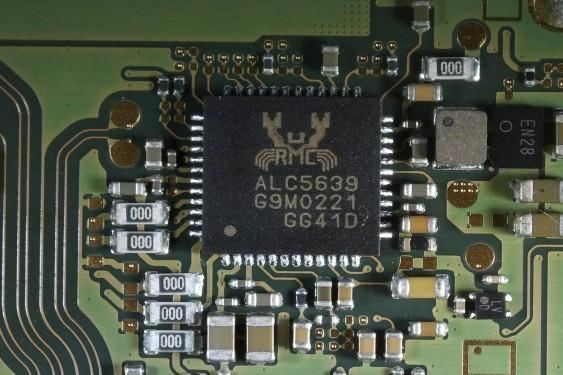 Codec ICs can be categorized based on their application fields and functional characteristics, with each type having its unique features and suitable applications.
1. Audio Codec: Mainly used for processing audio signals, such as music playback and voice calls. Audio Codecs are typically characterized by high fidelity and low distortion.
2. Video Codec: Used for encoding and decoding video signals, supporting various video formats and resolutions. Video Codecs need to handle large amounts of data and thus usually have high data processing capabilities and compression efficiency.
3. Communication Codec: Applied in communication systems, such as modems, for signal modulation and demodulation.
4. Data Codec: Used for data transmission and storage, such as the read/write channels in hard disk drives.
Codec Selection Guide and Popular Codec Chips
When selecting a codec, it is essential to consider the specific project requirements and make a comprehensive evaluation from multiple aspects, including performance, power consumption, and application, to choose the most suitable codec.
● Application Requirements: Choose the appropriate Codec type based on the specific application scenario. For example, audio applications require high-fidelity Audio Codecs, while video applications need Video Codecs that support high resolutions and high frame rates.
● Performance Indicators: Pay attention to the performance indicators of the Codec, such as sampling rate, resolution, and signal-to-noise ratio, to ensure they meet the application requirements.
● Power Consumption: For power-sensitive applications like mobile devices, select low-power Codec ICs.
● Interface Compatibility: Ensure that the Codec IC supports the required interface standards and communication protocols, such as I2S and SPI.
● Cost: Considering cost factors, choose a Codec IC with high cost-effectiveness while meeting performance and functionality requirements.
In the codec market, some well-known codec manufacturers have taken the lead with their advanced technology and extensive product lines. These manufacturers' products excel in performance, functionality, and reliability and are widely used in various electronic devices. Below are some popular Codec IC models and their main features:
|
Manufacturer
|
Model
|
Application Field
|
Main Features
|
|
Texas Instruments
|
PCM1864
|
Audio
|
24-bit ADC, up to 192kHz sampling rate, low power consumption
|
|
Analog Devices
|
ADAU1761
|
Audio
|
SigmaDSP technology, supports various audio formats
|
|
NXP Semiconductors
|
SAA7117
|
Video
|
8-channel video decoder, supports various video formats
|
|
STMicroelectronics
|
Audio
|
High-fidelity audio decoder, supports various audio formats
|
|
|
Qualcomm
|
WCD9340
|
Audio
|
High-performance audio Codec, supports various audio processing functions
|
Conclusion
Codec ICs play a vital role in modern electronic devices. With high-precision signal conversion and multi-function integration, Codec ICs can meet the demands of audio, video, communication, and data processing applications. When selecting a Codec IC, a comprehensive evaluation of application scenarios, performance indicators, power consumption, interface compatibility, and cost is necessary. As technology continues to advance, Codec ICs will remain an essential component in electronic devices, driving the development and application of related technologies.
Email: info@semicone.com
Kioxia and Sandisk's K2 Fab in Japan Commences Operations
UMC Demands 15% Price Cut from Suppliers: A Strategy for Cost Control
Related Article

Bosch splits its Mobility business into four independent units, transferring 62,500 staff. It stays wholly owned, not listed or sold.
Bosch Separates Mobility Business, Transfers 62,500 Employees
Helium joins the US critical materials list. Supply is constrained by flat US output and export limits in Qatar and Russia.
US Tightens Export of Helium, a Critical Semiconductor Gas