Voltage Regulator IC: Principles, Types, and Application Guide
Overview of Voltage Regulator IC
Main Types and Technical Comparison
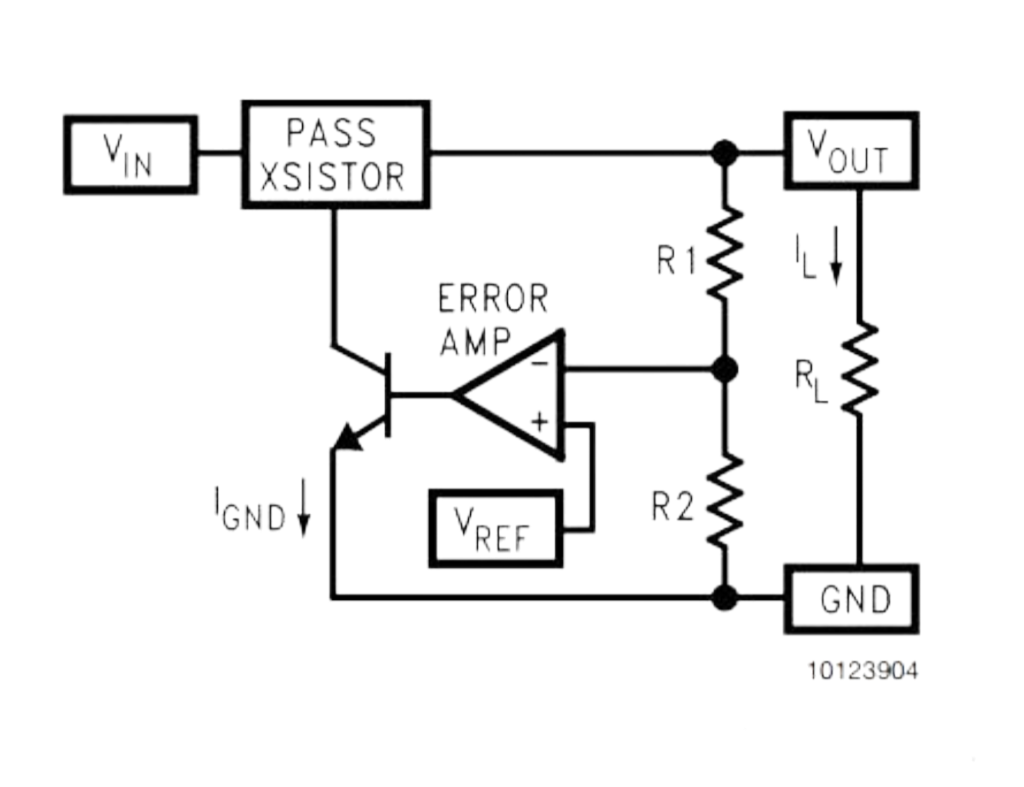
- Linear Regulators: Named for their linear relationship between input and output during operation, these regulators have a control element in series between the input and output, also known as series regulators. Their advantages include simple circuitry, fewer external components, and low noise. However, they have lower efficiency and generate more heat, making them suitable only for low-power applications.
- Switching Regulators: These regulators achieve voltage conversion by controlling the on-off state of switching elements. They offer high efficiency, low heat generation, and the ability to perform step-up, step-down, and negative voltage conversions. However, they have more external components, a more complex design, and relatively higher noise levels.
- LDO Regulators: A special type of linear regulator with a small input-output voltage difference, typically less than 1V. This design allows LDOs to operate efficiently at low input voltages, making them suitable for applications with strict input voltage range requirements.
Technical Comparison Table
|
Parameter
|
Linear Regulator
|
Switching Regulator
|
LDO
|
|
Efficiency
|
30-60%
|
70-95%
|
50-75%
|
|
Noise Level
|
<100μVrms
|
>10mVpp
|
<50μVrms
|
|
Typical Dropout Voltage
|
2V (LM7805)
|
N/A
|
0.2V (ADP150)
|
|
Cost
|
$0.1-0.5
|
$1-5
|
$0.3-2
|
Key Parameter Analysis of Voltage Regulator IC
-
Load Regulation: Voltage stability when load current changes; high-end models can achieve 0.01%/A (e.g., LT3045).
-
Line Regulation: Output variation with input voltage changes; typical value is 0.05%/V.
-
Temperature Coefficient: Industrial-grade devices require <±100ppm/°C (e.g., REF50xx series).
-
Transient Response: Recovery time after a load step change; switching regulators typically <1ms (e.g., LTC3633).
Industry Application Cases
Selection Guide for Voltage Regulator IC
Popular Regulator Typical Models
|
Model |
Type |
Input Range (V) |
Output Voltage (V/A Accuracy) |
Maximum Current |
Efficiency/Dropout Voltage |
Special Features |
Typical Applications |
|
AMS1117 |
Linear Regulator |
1.1-5.5 |
1.5-5.0 (±2%) |
1.0A |
Dropout 1.1V@1A |
Low noise (50μVrms) |
|
|
TPS74301 |
LDO |
1.5-6.0 |
0.8-5.0 (±1.5%) |
1.5A |
Dropout 150mV@1A |
Quiescent current 6μA |
IoT sensor battery power supply |
|
Switching Buck |
4.5-40 |
1.23-37 (±3%) |
3.0A |
Efficiency 88%@12V→5V |
Integrated over-temperature protection |
Industrial power module |
|
|
MP2315 |
Synchronous Buck |
2.5-6.0 |
1.2-5.0 (±1%) |
1.5A |
Efficiency 95%@3.3V |
1.2MHz switching frequency |
Portable device space-limited design |
|
Linear Regulator |
7-25 |
5.0 (±4%) |
1.5A |
Dropout 2V@1A |
No external components required |
Basic power supply design |
|
|
TPS5430 |
Asynchronous Buck |
3.5-28 |
0.9-25 (±1.5%) |
3.0A |
Efficiency 90%@24V→5V |
Integrated 110mΩ MOSFET |
Automotive electronics 12V/24V bus conversion |
|
LT3080 |
LDO |
1.2-36 |
0.4-34.5 (±1%) |
1.1A |
Dropout 350mV@1A |
Parallel operation for current sharing |
High-precision laboratory equipment |
|
ADP2386 |
Synchronous Buck |
4.5-20 |
0.6-18 (±0.8%) |
6.0A |
Efficiency 97%@12V→5V |
External clock synchronization support |
Server/GPU auxiliary power supply |
Development Trends and Latest Technological Advances
Conclusion
STMicroelectronics: Navigating Layoffs and Strategic Transformation
Marvell Sells Automotive Networking Business: Infineon's $2.5 Billion Acquisition
Related Article