STM32 Popular Chip Models Analysis and Selection Guide
2025-03-24
Introduction: STMicroelectronics and the STM32 Series
STMicroelectronics is a global leader in the semiconductor industry, specializing in providing advanced semiconductor solutions for a wide range of electronic applications. As a top player in the microcontroller field, STMicroelectronics' STM32 series of 32-bit Flash microcontrollers (MCUs) has garnered widespread favor among developers worldwide, thanks to their high performance, low power consumption, rich peripheral interfaces, and robust ecosystem support. The STM32 series spans a variety of models, ranging from entry-level to high-performance options, and is widely used in consumer electronics, industrial control, automotive electronics, the Internet of Things (IoT), and many other fields.
Overview of the STM32 Series 32-bit Flash MCUs
The STM32 series of 32-bit Flash MCUs is a family of high-performance microcontrollers introduced by STMicroelectronics, designed around the ARM Cortex-M core. These MCUs feature excellent processing capabilities, low power consumption, and a high degree of integration. They integrate large-capacity Flash memory and SRAM, support a variety of communication interfaces (such as I²C, SPI, USART, etc.), and offer multiple low-power modes to meet the needs of different application scenarios. The STM32 series MCUs also come with strong development tool support, including a free integrated development environment (IDE), graphical configuration tools, and a wealth of reference designs, which greatly simplify the development process and shorten time-to-market for products.
Popular STM32 Flash MCU Models
The STM32F103C8T6 is the classic "Blue Pill" model in the STM32 series, widely used in education, hobbyist projects, and small-scale applications. It features a Cortex-M3 core with a maximum clock speed of 72 MHz, providing 64 KB of Flash memory and 20 KB of SRAM. This model is equipped with a rich set of peripheral interfaces, including three timers, two I²C interfaces, three USART interfaces, and two SPI interfaces, meeting the basic needs of embedded development. Its low-power design and compact packaging make it an ideal choice for entry-level development.
The STM32F407VET6 is a high-performance 32-bit Flash MCU based on the Cortex-M4 core, supporting floating-point operations and offering a maximum clock speed of 168 MHz. It provides up to 1 MB of Flash memory and 192 KB of SRAM, capable of meeting the storage requirements of complex applications. This model integrates a variety of advanced peripherals, such as Ethernet MAC, USB OTG, SDIO interface, and multiple timers and communication interfaces. Its high performance and rich peripherals make it suitable for applications such as industrial automation, smart meters, and IoT gateways.
The STM32F103RCT6 is a high-performance model in the STM32F1 series, based on the Cortex-M3 core with a maximum clock speed of 72 MHz. It offers 256 KB of Flash memory and 48 KB of SRAM, providing strong processing capabilities and ample storage space. This model supports a variety of peripheral interfaces, including three SPI interfaces, three USART interfaces, two I²C interfaces, and multiple timers, meeting complex communication and control needs. Its high cost-effectiveness and powerful features make it popular in industrial control and consumer electronics.
The STM32F405RGT6 is a high-performance 32-bit Flash MCU based on the Cortex-M4 core, with a maximum clock speed of 168 MHz. It provides 512 KB of Flash memory and 128 KB of SRAM, offering excellent processing capabilities and significant storage capacity. This model integrates a variety of advanced peripherals, such as USB OTG and SDIO interfaces, as well as multiple timers and communication interfaces. Its high performance and rich peripherals make it suitable for applications requiring high data processing capabilities and complex communication functions, such as smart meters and high-end consumer electronics.
- STM32F407ZET6
The STM32F407ZET6 is a flagship model in the STM32F4 series, based on the Cortex-M4 core and supporting floating-point operations with a maximum clock speed of 168 MHz. It provides up to 1 MB of Flash memory and 192 KB of SRAM, capable of meeting the storage and processing requirements of complex applications. This model integrates Ethernet MAC, USB OTG, SDIO interfaces, and multiple timers and communication interfaces, supporting a wide range of peripheral functions. Its high performance and rich peripherals make it suitable for complex application scenarios such as industrial automation, smart meters, IoT gateways, and high-end consumer electronics.
The STM32F030C8T6 is an entry-level 32-bit Flash MCU in the STM32F0 series, based on the Cortex-M0 core with a maximum clock speed of 48 MHz. It provides 32 KB of Flash memory and 6 KB of SRAM, offering basic processing capabilities and storage capacity. This model supports a variety of peripheral interfaces, including two I²C interfaces, two USART interfaces, and one SPI interface, meeting the needs of simple embedded development. Its low-power design and compact packaging make it an ideal entry-level development platform, suitable for small sensor nodes and low-power applications.
The STM32F407VGT6 is a high-performance model in the STM32F4 series, based on the Cortex-M4 core and supporting floating-point operations with a maximum clock speed of 168 MHz. It provides up to 1 MB of Flash memory and 192 KB of SRAM, offering excellent processing capabilities and significant storage capacity. This model integrates a variety of advanced peripherals, such as USB OTG and SDIO interfaces, as well as multiple timers and communication interfaces. Its high performance and rich peripherals make it suitable for applications requiring high data processing capabilities and complex communication functions, such as smart meters and high-end consumer electronics.
Reasons for the Popularity of STM32 Flash MCUs
- Balance of High Performance and Low Power Consumption
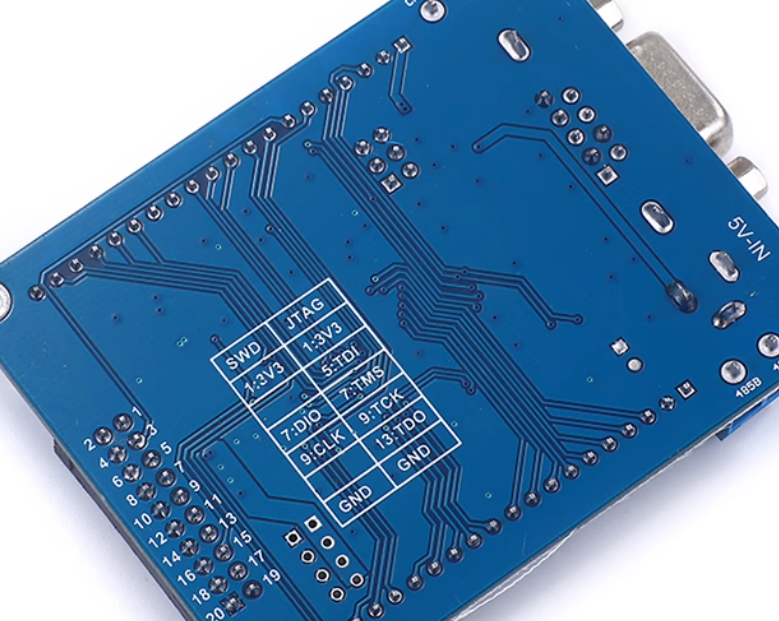
The STM32 series MCUs strike a good balance between high performance and low power consumption. Offering a range of core options from the entry-level Cortex-M0 to the high-performance Cortex-M4, the STM32 series meets the needs of various application scenarios. High-performance models can support complex computational tasks, while low-power designs ensure energy efficiency during long-term operation, making them particularly suitable for battery-powered portable devices and IoT nodes.
- Rich Peripheral Interfaces
The STM32 series MCUs integrate a wide range of peripheral interfaces, including various communication interfaces (such as I²C, SPI, USART, USB, Ethernet, etc.), timers, ADCs, DACs, and more. These peripheral interfaces can meet complex application needs, allowing STM32 MCUs to easily connect with external devices such as sensors, displays, and communication modules to achieve diverse functionalities.
- Robust Ecosystem Support
STMicroelectronics provides strong ecosystem support for the STM32 series MCUs, including a free integrated development environment (IDE), graphical configuration tools (STM32CubeMX), a wealth of reference designs, and development boards. These tools and resources greatly simplify the development process, reduce development difficulty, and shorten time-to-market. Additionally, the STM32 series has a large developer community where developers can obtain technical support and share experiences.
- High Cost-Effectiveness
The STM32 series MCUs achieve a good balance between performance and price. Offering a variety of models ranging from entry-level to high-performance options, the STM32 series meets the needs of different development projects with varying budgets and performance requirements. Its high cost-effectiveness makes it a popular choice for many developers, especially small and medium-sized enterprises, startups, and hobbyists.
- Wide Range of Application Fields
The STM32 series MCUs are widely used in consumer electronics, industrial control, automotive electronics, IoT, and many other fields. From simple sensor nodes to complex industrial automation equipment, the STM32 series MCUs can provide suitable solutions. Their diverse models and functionalities enable them to meet the needs of various application scenarios.
Considerations for Selecting STM32 MCUs and Models
- Determine Application Requirements
When selecting an STM32 MCU, it is essential to first clarify the application requirements, including processing capabilities, storage needs, types and quantities of peripheral interfaces, power consumption requirements, etc. Choose the appropriate core type (such as Cortex-M0, Cortex-M3, Cortex-M4) and model based on the specific needs of the application.
- Consider Development Resources and Tool Support
The STM32 series MCUs offer strong development tool support, including a free IDE, graphical configuration tools, and reference designs. When selecting a model, ensure that it can fully utilize these development tools to simplify the development process and shorten the development cycle.
- Focus on Power Consumption Characteristics
For applications that require long-term operation or are battery-powered, power consumption is an important consideration. The STM32 series MCUs offer various low-power modes and energy-saving features. When selecting a model, choose the appropriate low-power model based on the application's power consumption requirements and fully utilize its energy-saving features.
- Reserve Expansion Capabilities
It is recommended to reserve some expansion capabilities when selecting a model to meet potential future functional upgrades or expansion needs. Choosing a model with sufficient storage capacity and peripheral interfaces can avoid the need to replace the MCU model during future upgrades, thereby reducing development costs and risks.
Summary and Outlook
The STM32 series MCUs have become benchmark products in the embedded development field, thanks to their outstanding performance, rich peripheral options, and robust ecosystem support. From the entry-level STM32F0 to the high-performance STM32H7, ST offers comprehensive ic solutions covering various application scenarios. For developers, understanding the characteristics of each series and selecting the appropriate model based on actual needs is crucial. Popular models such as the F103C8T6 and F407VET6 are widely favored for their balanced performance and rich resources, but the specific selection still needs to be considered comprehensively based on project requirements.
Looking ahead, with the rapid development of the Internet of Things, artificial intelligence, and edge computing, the STM32 series will continue to evolve, providing stronger computing capabilities, more efficient energy efficiency, and richer connectivity options to meet the needs of next-generation smart devices.
Email: info@semicone.com
TSMC's 2nm Mass Production: Orders Accepted Next Month, Cost Reaches $30,000
FPGA vs. DSP: How to Choose the Best Digital Signal Processing Solution?
Related Article

Micron skips 10th-gen NAND, jumping from 276-layer G9 to 400+ layer G11 with wafer-to-wafer bonding, targeting AI and an H2 2027 ramp.
Node Selection: Micron Skips 10th-Generation NAND

A guide covers how clock generators work, eight representative ICs compared, sourcing pitfalls and where to buy.
Clock Generator: From PLL Fundamentals to Selection and Procurement