Exploring Microchip: A Comprehensive Analysis of Development History and Product Lines
2024-11-20
Introduction
In the semiconductor industry, Microchip Technology Inc. is renowned for its exceptional microcontrollers (MCU) and a suite of other semiconductor products. From its origins as the microelectronics division of General Instrument Inc. to becoming a multinational semiconductor company with a market capitalization of over $49 billion, Microchip's development journey is filled with innovation and challenges.
Brand Introduction
Established in 1989 and headquartered in Chandler, Arizona, Microchip Technology Incorporated is one of the world's leading suppliers of microcontrollers and analog semiconductors. The company initially spun off from General Instrument's microelectronics division and, through a series of mergers and acquisitions, gradually evolved into a leader in the semiconductor industry. Microchip is committed to providing low-risk product development, lower system total costs, and faster time-to-market for thousands of consumer products worldwide. In the fiscal year of 2024, Microchip achieved revenue of $7.634 billion with a gross margin as high as 65.4%, demonstrating its strong profitability and market competitiveness.
Development History and Key Milestones
The story of Microchip dates back to 1923 when General Instrument was founded in New York. In the 1950s, the company's president, Moses Shapiro, initiated an acquisition plan, focusing on companies on the East Coast. In 1960, General Instrument acquired General Transistor Company, entering the semiconductor market. In 1965, Frank Wanlass, the inventor of CMOS technology, joined, setting the direction for MOS integrated circuits in General Instrument's semiconductor division.
In 1975, General Instrument collaborated with Honeywell to launch the CP1600 microprocessor. In 1976, General Instrument introduced the PIC1650 microcontroller (MCU). By the 1980s, due to the challenging semiconductor business and rapid technological updates, General Instrument decided to spin off its microelectronics division into a wholly-owned subsidiary, named Microchip Technology.
In 1989, an investor consortium led by Sequoia Capital acquired Microchip and provided $12 million in Series A funding. In 1990, Steve Sanghi joined Microchip as Senior Vice President of Operations and was promoted to CEO in 1991. Under his leadership, Microchip focused on the microcontroller market and launched the industry's first field-programmable MCU with on-chip EEPROM memory, the PIC16C84, in 1993.
Entering the 21st century, Microchip welcomed new development opportunities. With the rapid development of digital technology, the market demand for high-performance, low-power MCUs surged. Microchip keenly captured this market demand, increased investment in technology research and development, and launched the PIC18 series MCUs and MPLAB Integrated Development Environment (IDE), further consolidating its technological advantage in the embedded systems market.
Main Product Lines
Microchip's product lines are extensive, including MCUs, MPUs, FPGAs, analog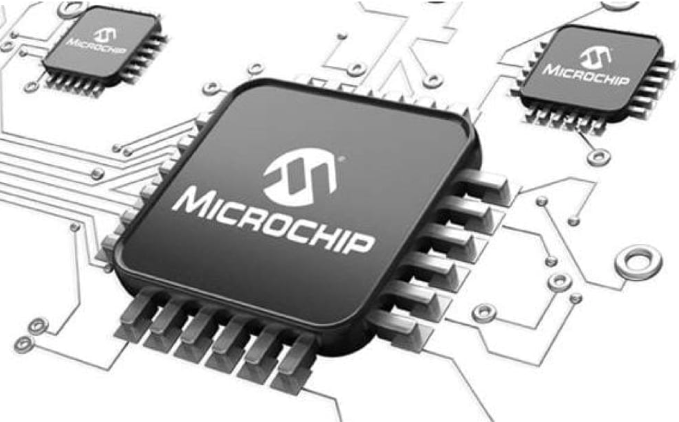 and interface products, memory products, and timing products. These products are widely used in industrial, automotive, consumer, aerospace and defense, communication, and computing market sectors, serving over 125,000 customers.
and interface products, memory products, and timing products. These products are widely used in industrial, automotive, consumer, aerospace and defense, communication, and computing market sectors, serving over 125,000 customers.1. MCUs: Microchip's MCU product line includes PIC, AVR, dsPIC, and PIC32 series, covering 8-bit, 16-bit, and 32-bit microcontrollers, as well as the latest 64-bit MPUs, catering to a variety of application needs from entry-level to high-performance.
2. FPGAs: Microchip offers a range of programmable logic devices (FPGAs) to meet customers' customized needs.
Analog and Interface Products: Including power management, linear, mixed-signal, high-voltage, thermal management, discrete diodes and MOSFETs, RF, drivers, and other product series.
3. Memory Products: Microchip provides various storage solutions, including EEPROM and Flash memory.
4. Timing Products: Offering high-precision timing solutions to meet various application needs.
Microchip Popular Product Models
01. PIC16F Series: Entry-level microcontrollers, affordable and easy to use, suitable for a variety of simple control applications. PIC16F877A, PIC16F688, characterized by low power consumption, high performance, and ease of programming, suitable for various control applications.
02. PIC18F Series: Mid-range microcontrollers with higher performance and richer features, suitable for industrial control and consumer electronics. PIC18F4520 and PIC18F25K22 MCUs feature low power consumption, high-speed computing, and a wealth of peripheral modules, suitable for industrial automation and automotive electronics.
03. PIC24F Series: High-end microcontrollers with faster speeds and stronger features, suitable for high-end control systems and data acquisition processing systems. For example, PIC24FJ128GB106 with a high-performance 16-bit CPU, 128K bytes of Flash program memory, 16K bytes of SRAM, and a wealth of peripheral interfaces, as well as PIC24FJ64GB002 with integrated CAN bus controller and high-speed ADC.
04. dsPIC30F Series: Digital Signal Controllers (DSC) with high-speed digital signal processing capabilities and a wealth of peripheral modules, suitable for audio processing and motor control. dsPIC30F4011 and dsPIC30F6014A are suitable for audio signal processing and control applications.
05. PIC32MX Series: High-performance microcontrollers using the MIPS architecture, with high-speed computing capabilities and a wealth of peripheral modules, suitable for high-end control systems and data acquisition processing systems. Such as PIC32MX795F512L and PIC32MX270F256B, suitable for network communication and embedded system applications.
Market Position and Development Trends
Microchip holds an important position in the semiconductor industry, especially in the MCU market. Microchip's PIC series MCUs are highly regarded in the market and widely used in various embedded systems. Microchip not only provides high-quality products but also offers customers comprehensive system solutions, including hardware, software, and services, helping customers to develop products quickly and shorten time-to-market.
Looking ahead, Microchip will continue to focus on trend-setting fields such as AI and 5G, providing relevant products and solutions to help customers develop products for these new technologies. At the same time, Microchip will continue to strengthen its sales network in North America, Europe, and Asia, especially in emerging markets like China and India. With the continuous advancement of digital technology and changes in market demand, Microchip will continue to innovate and expand its product lines to meet the diverse needs of its customers.
Email: info@semicone.com

Connector Giant Molex: Acquiring AirBorn to Expand Aviation Business
The New Era of Global Semiconductors: Huge Investments and Strategic Layouts
Related Article

Qualcomm will begin performance-driven global layoffs in November after annual reviews, with no headcount disclosed.
Global Performance-Driven Layoffs at Qualcomm

US DHS orders DeepSeek removed from federal civilian IT systems, including third-party products using its models, turning model provenance into a procurement compliance issue.
US Federal Civilian Agencies Ban DeepSeek