Apple Considers Adopting Memory chips from CXMT and YMTC
2026-02-26
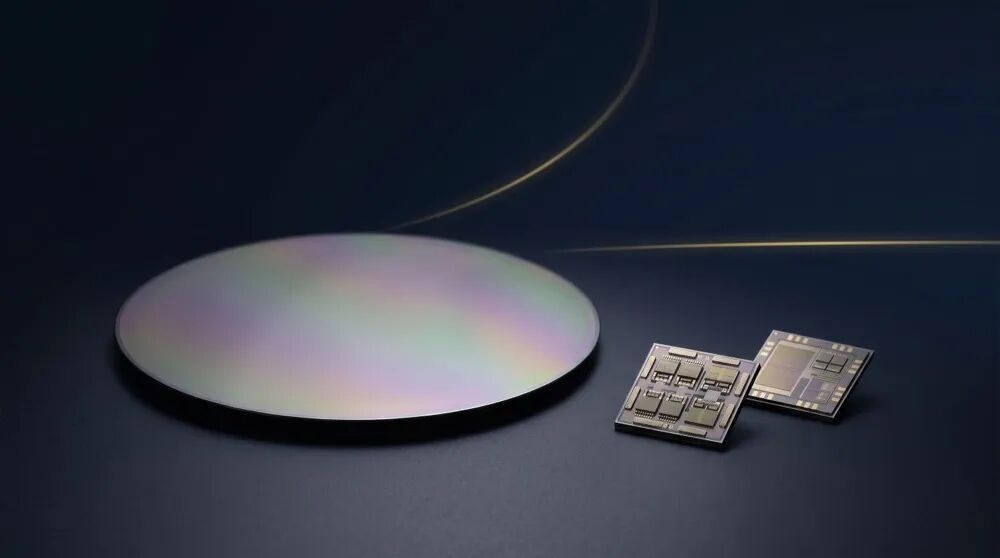
In February 2026, Apple was reported to be evaluating a significant supply chain adjustment—considering the inclusion of Chinese semiconductor companies ChangXin Memory Technologies (CXMT) and Yangtze Memory Technologies Corporation (YMTC) into its core supply system to provide DRAM memory and NAND flash chips for upcoming products including the iPhone 18 series, MacBook, and desktop Mac computers.
For a long time, Apple has heavily relied on Japanese and Korean suppliers such as KIOXIA, Samsung, and SK Hynix in the storage sector. Data shows that approximately 60% of DRAM resources for the iPhone 17 series are supplied by Samsung, with the remainder filled by SK Hynix and Micron. NAND flash is primarily controlled by Samsung, SK Hynix, and KIOXIA. However, this highly concentrated supply structure is becoming a bottleneck constraining Apple's profit margins amid industry-wide supply tightness and surging prices.
Supply Chain Restructuring Amid Price Surge
The direct catalyst for Apple's strategic adjustment is the dramatic fluctuation in the memory chip market. Recently, the global memory industry has shifted from oversupply to supply tightness, with chip prices rebounding significantly. According to industry sources, KIOXIA has doubled its NAND chip quotations and insists on renegotiating prices quarterly rather than semi-annually, placing enormous pressure on Apple's profits as it maintains unchanged manufacturer suggested retail prices (MSRP).
In the latest earnings call, although Apple CEO Tim Cook stated that the company has "arranged" for the required memory resources, industry-wide price increases still pose a significant threat to gross margins. Against this backdrop, introducing Chinese suppliers with competitive pricing has become an important leverage point for Apple to diversify risks and enhance bargaining power.
Technical Capabilities of Domestic Memory Manufacturers
YMTC has achieved even more remarkable technical breakthroughs in the NAND sector. According to TechInsights teardown analysis, its mass-produced fifth-generation 3D NAND flash chips are based on the new-generation Xtacking 4.0 architecture, with a total stack of 294 layers (of which 232 are active memory layers) and bit density approaching 19.8Gb per square millimeter, bringing area efficiency close to global leading levels.
Reshaping the Market Landscape
Apple's consideration of introducing domestic Chinese memory chips reflects profound changes in the global semiconductor landscape. According to TrendForce forecasts, YMTC's NAND Flash market share in 2025 is approximately 12%, while CXMT's DRAM market share is about 4.5%, with both companies rapidly expanding production. CXMT's monthly production capacity has reached 300,000 wafers and is planned to expand to 500,000, while YMTC's monthly capacity stands at 400,000 wafers, with global market share expected to further increase after expansion. For end consumers, intensified competition is expected to deliver more cost-effective products. For the global technology industry, supply chain diversification will enhance overall resilience.
Cost Advantages and Supply Chain Security
If the cooperation formally materializes, it will create a win-win situation. For Apple, CXMT and YMTC's quotations are 10% to 15% lower than those of Samsung and SK Hynix, which can significantly alleviate cost pressures. Meanwhile, diversifying the supply chain layout helps mitigate risks of supply disruption from geopolitical tensions and natural disasters. For China's semiconductor industry, Apple orders represent not only a market breakthrough but also formal recognition of technical capabilities, which will drive coordinated upgrades in upstream equipment, materials, and other industry chain segments.
Semicone Chips Distributor and Popular IC Components
Semicone is dedicated to providing one-stop IC component purchasing solutions for global customers. Semicone's products cover MCUs, power management ICs, interface and isolation devices, RF components, sensors, and storage, and are widely used in industrial automation, automotive electronics, communication equipment, consumer electronics, and IoT terminals, etc. The following are some of the popularly selected IC chips.
● MCP14E5T-E/SN: High-speed MOSFET gate driver with 4.5A peak output current and low transmission delay characteristics.
● DP83640TVV/NOPB: Industrial-grade Ethernet PHY transceiver, integrating precise time protocol (PTP) hardware timestamp function.
● INA220BIDGSR: Bidirectional current/power monitoring chip, supporting 26V common-mode voltage range and I²C interface, capable of achieving high-precision bus voltage and current detection.
● SBR10E45P5-13: Ultra-barrier rectifier, using an innovative MOSFET structure to achieve 10A forward current and 45V reverse withstand voltage.
Email: info@semicone.com
Meta Abandons In-House AI Chips, Embraces Google TPU
Western Digital Capacity Alert: 2026 Hard Drive Production Fully Sold Out
Related Article
ITC launches 337-TA-1523 into DDR5 DRAM, targeting Micron, HPE, Lenovo, Supermicro over Netlist patents. Exclusion orders could block US imports.
ITC Opens Section 337 Investigation into DRAM: Sparked by Netlist

Qualcomm acquires PickNik to integrate MoveIt with Dragonwing, advancing physical AI and targeting $40B non-handset revenue by 2029.
Qualcomm Expands Robotics Footprint with PickNik Acquisition