
Unlocking the Power of Popular IC Chips: A Comprehensive Guide
2025-12-04
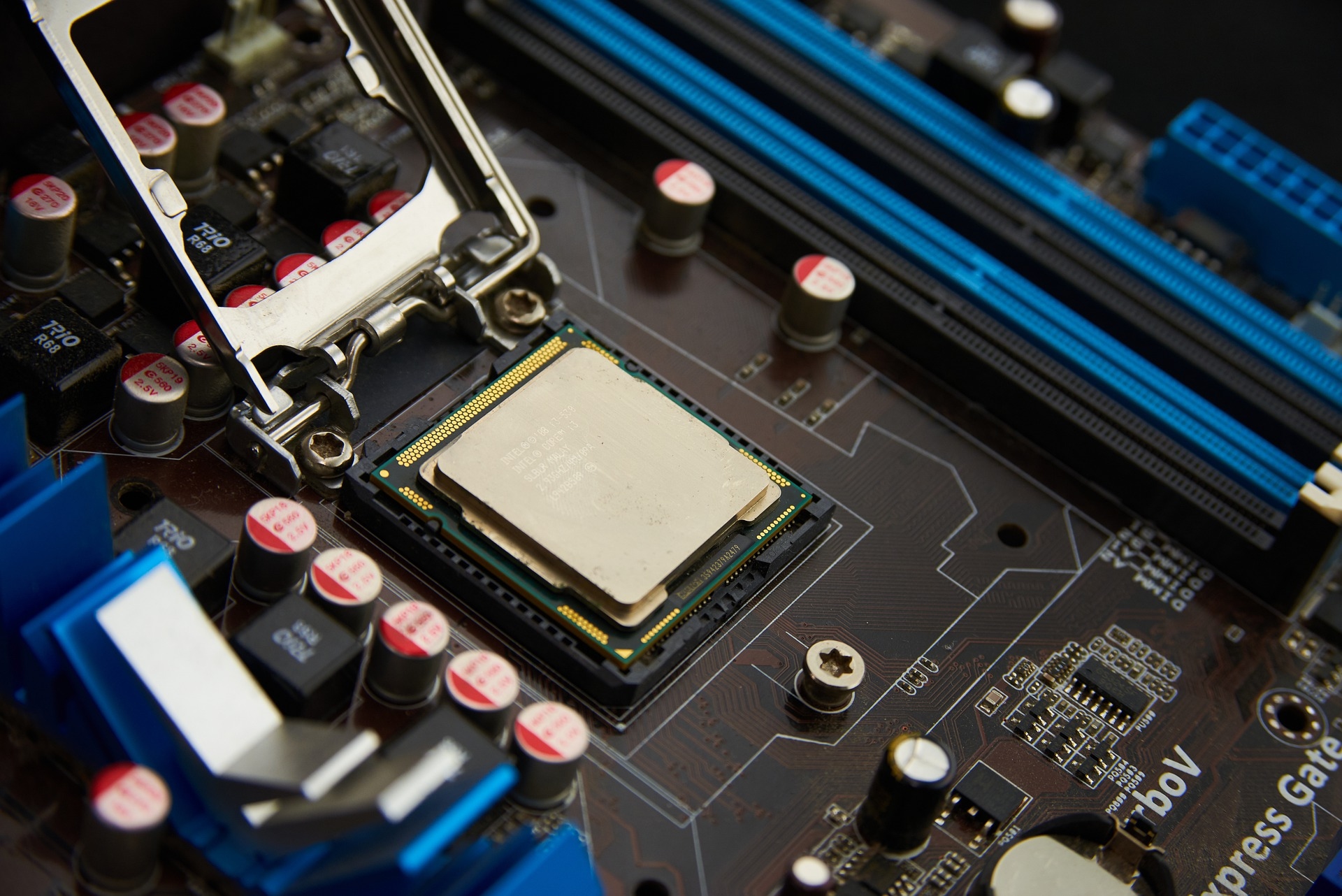 In the field of electronic design and development, integrated circuit (IC) chips are the core components for building various functional modules. Different IC chips play a key role in consumer electronics, communications, industrial control, and automotive electronics due to their unique features and working principles. Selecting the right IC chip is a crucial step for project success. It needs to meet functional requirements while considering performance, cost, power consumption, and supply stability. From high-speed logic gates to complex programmable logic devices, from low-power microcontrollers to dedicated RF and audio processors, each chip is a solution for specific application scenarios.
1. 74LVC1G14GW-Q100: Single Schmitt Trigger Inverter
The 74LVC1G14GW-Q100 is a low-voltage CMOS inverter suitable for a variety of digital circuit designs. Based on CMOS technology, this chip achieves signal inversion through its internal circuitry. Its Schmitt trigger characteristic effectively suppresses noise, ensuring signal stability. Additionally, it supports a wide voltage range and high noise tolerance, making it suitable for complex environments. It features low power consumption, high speed, and strong noise suppression, and is widely used in waveform and pulse shaping, astable multivibrators, monostable triggers, and other applications.
-
74HC14: A general-purpose Schmitt trigger inverter with lower cost but not automotive grade.
-
SN74LVC1G14: An industrial-grade version with the same functionality but a narrower operating temperature range.
-
NC7WZ14: An ultra-small package dual Schmitt trigger inverter, suitable for space-constrained applications.
2. DSPIC30F6014A-30I/PF: 16-bit Digital Signal Controller
The DSPIC30F6014A-30I/PF is a 16-bit DSC introduced by Microchip, integrating the high computational power of a DSP with the control functions of a microcontroller. It features an enhanced Harvard architecture, supporting a 30 MIPS operating speed with 144KB of Flash and 8KB of RAM. The chip performs single-cycle multiply-accumulate operations through a hardware multiplier and barrel shifter, efficiently handling complex algorithms such as digital filtering and FFT. Its peripherals include PWM, ADC, and various communication interfaces, making it suitable for high real-time requirements in motor control, power management, and digital power applications. Other similar alternatives include:
-
TMS320F28035: TI's 32-bit C2000 series DSC with stronger performance.
-
STM32F334: STMicroelectronics' ARM Cortex-M4 core MCU with integrated high-resolution timers.
-
ADSP-CM408: ADI's mixed-signal control processor with integrated precision ADC.
3. CC2541F256RHAR: Bluetooth 4.0 Low-Energy System-on-Chip
The CC2541F256RHAR is a SoC designed by TI for Bluetooth low-energy applications, integrating an 8051 core and a 2.4GHz RF transceiver. The chip's operation is divided into RF and baseband sections. The RF section handles signal transmission and reception through modulation and demodulation. The baseband section processes data and performs modulation and demodulation, supporting various data rates (e.g., 250kbps, 1Mbps). Its low-power design is achieved through multiple operating modes and rapid mode transitions.
-
DA14580: Dialog's ultra-low-power BLE SoC with better power consumption characteristics.
-
EFR32BG13: Silicon Labs' multi-protocol wireless SoC supporting Bluetooth 5.1.
4. XCR3256XL-10TQG144I: CPLD Programmable Logic Device
The XCR3256XL-10TQG144I is a 320-macrocell CPLD introduced by Cypress, using advanced 0.35μm CMOS technology, suitable for complex logic control and signal processing. This chip implements complex logic functions through programmable logic units and supports various input/output configurations. Its internal structure includes multiple configurable logic blocks and rich interconnection resources, enabling flexible digital circuit design.
-
EPM3064A: Altera's MAX 3000A series CPLD with similar resources.
-
LC4256: Lattice Semiconductor's ispMACH 4000ZE series, a low-power version.
-
XC9536: Xilinx's small CPLD, suitable for simple logic integration.
5. TEF6638HW/V106ZY: Automotive Audio DSP Processor
The TEF6638HW/V106ZY is a high-integration audio processor designed by NXP for automotive audio systems. It supports various audio formats, featuring high signal-to-noise ratio and low distortion. The chip processes and converts audio signals through an internal digital signal processor. It supports multiple audio input/output interfaces and can be flexibly applied to different audio devices.
-
ADAU1452: ADI's SigmaDSP audio processor with more flexible programming.
-
TAS6424: TI's digital input automotive audio amplifier with integrated DSP functionality.
-
STA8090: STMicroelectronics' automotive audio processor supporting multi-zone processing.
IC Selection Considerations
Selecting the right IC chip is a crucial step for project success. It needs to meet functional requirements while considering performance, cost, power consumption, and supply stability. When selecting an IC chip, the following points can help you make a more suitable choice:
-
Clarify Requirements: Before selecting an IC, clarify the project's requirements, including functionality, performance, power consumption, operating voltage range, etc. For example, for low-power applications, prioritize low-power chips.
-
Compatibility: Ensure that the selected chip is compatible with the existing system or circuit, including electrical characteristics and physical interfaces.
-
Cost and Supply: Consider the cost and supply situation of the chip, especially for large-scale production projects.
-
Technical Support: Choose chips with good technical support and documentation to get help during the development process.
-
Future Expandability: Consider whether the chip supports future functional expansion or upgrades to adapt to project development.
Email: info@semicone.com
TP-Link Faces FTC Inquiry: Security Concerns and Market Tactics
Unlocking the Efficient Memory Chip: A Comprehensive Guide
Related Article

Micron skips 10th-gen NAND, jumping from 276-layer G9 to 400+ layer G11 with wafer-to-wafer bonding, targeting AI and an H2 2027 ramp.
Node Selection: Micron Skips 10th-Generation NAND

A guide covers how clock generators work, eight representative ICs compared, sourcing pitfalls and where to buy.
Clock Generator: From PLL Fundamentals to Selection and Procurement