
Analysis and Selection Guide for Digital Potentiometer ICs
2025-04-30
In analog circuit design, traditional mechanical potentiometers are gradually being replaced by Digital Potentiometer / Digipot ICs due to their large size, susceptibility to wear, and low precision. Digital Potentiometer ICs, with their programmability, high precision, and long lifespan, have become a key component in modern electronic systems, such as consumer electronics, industrial control, and automotive electronics. This article will provide a comprehensive analysis of this critical device, covering its technical principles, selection criteria, and future trends.
Introduction to Digital Potentiometer ICs
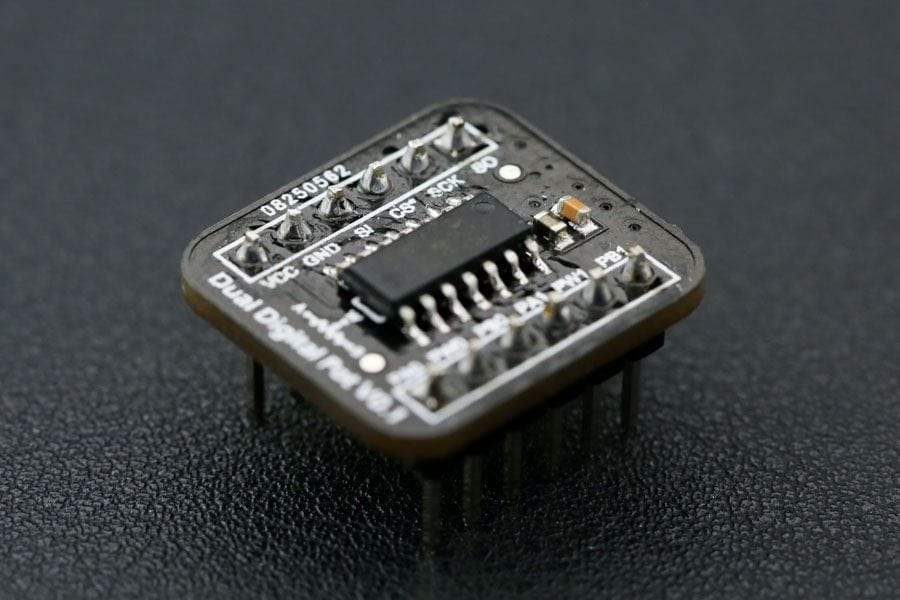 A Digital Potentiometer IC is a three-terminal variable resistor device that controls resistance values through digital signals. It can simulate the voltage division or resistance variation functions of a traditional potentiometer. Typically composed of a resistor array, digital control circuit, and analog switch, it can be controlled via digital interfaces (such as SPI, I²C, or simple up/down pulses) to adjust resistance values. Digital potentiometers come in various configurations, including potentiometer mode (voltage divider) and rheostat mode.
The internal structure of a digital potentiometer includes a resistor array made up of multiple resistors of the same value connected in series, as well as analog switches composed of MOSFETs. By using digital control signals, a specific point in the resistor array can be selectively connected to the wiper terminal to adjust the resistance value. The digital control section includes an up/down counter, decoding circuit, and memory, which can store the current resistance setting and restore it after power loss. In simple terms, the working principle of a Digital Potentiometer Chip is as follows:
- Resistor Array: Composed of multiple precision resistors connected in series, with switchable tap positions.
- Digital Control: A microcontroller sends commands to change the tap position, adjusting the equivalent resistance value (e.g., a 10kΩ device may provide 256 steps).
- Non-Volatile Memory: Some models integrate EEPROM to save configurations even after power loss.
Digital potentiometers are widely used in various electronic devices, including:
|
Field
|
Typical Applications
|
|
Consumer Electronics
|
Display brightness adjustment, audio equipment volume control
|
|
Industrial Control
|
Sensor calibration, fine-tuning of motor drive parameters
|
|
Automotive Electronics
|
Cabin ambient light adaptation, Battery Management System (BMS) voltage monitoring
|
|
Medical Devices
|
Sensitivity adjustment of portable monitors, power optimization for wearable devices
|
Popular Digital Potentiometer Series and Models
The following are some popular digital potentiometer series and models from well-known manufacturers. These products vary in terms of precision, power consumption, interface type, and package size, making them suitable for different application scenarios.
-
Mainstream Digital Potentiometer Manufacturers
- Analog Devices (ADI): Leader in high-precision, low-noise solutions.
- Texas Instruments (TI): Notable for wide voltage range and multi-interface compatibility.
- Maxim Integrated (now part of ADI): Known for ultra-low power designs.
- Microchip: Offers high cost-effectiveness, suitable for small and medium-sized projects.
- Renesas: Representative of automotive-grade and industrial-grade high-reliability solutions.
|
Manufacturer
|
Series/Model
|
Resolution
|
Interface
|
Voltage Range
|
Key Features
|
|
1024 (10-bit)
|
I²C
|
2.7V-5.5V
|
Dual-channel, ±1% end-to-end tolerance, non-volatile memory
|
||
|
256 (8-bit)
|
SPI
|
1.8V-5.5V
|
Single-channel, 50ppm/°C low temperature drift, 1.8V logic level compatibility
|
||
|
256 (8-bit)
|
SPI
|
5.5V-36V
|
High-voltage support, industrial-grade temperature (-40°C to 125°C)
|
||
|
Renesas
|
256 (8-bit)
|
I²C
|
2.7V-5.5V
|
Ultra-low power consumption (0.1μA in standby), AEC-Q100 automotive-grade certification
|
|
|
Maxim/ADI
|
1024 (10-bit)
|
SPI
|
2.7V-5.5V
|
Dual-channel, programmable power-on reset value, optimized for medical devices
|
Selection Guide for Digital Potentiometer ICs
1. Resistance Range and Step Size: Choose the appropriate resistance range and step resolution based on application requirements.
2. Interface Type: Select SPI, I²C, or other interfaces according to system design.
3. Memory Type: Choose non-volatile memory if settings need to be saved.
4. Power Consumption and Voltage Range: Select models suitable for low-power or low-voltage applications.
5. Package Size: Choose the appropriate package based on PCB space.
Latest Technology and Trends in Digital Potentiometers
With the increasing demand for intelligent electronic systems, Digital Potentiometer ICs are undergoing technological innovation and deep integration with industry applications.
-
AI-Driven Adaptive Adjustment: Integration of machine learning algorithms to achieve self-compensation for environmental parameters (temperature, humidity).
-
3D Heterogeneous Integration: Using Through-Silicon Via (TSV) technology to integrate Digital Potentiometers with MCUs and ADCs in a single package.
-
Ultra-Low Power Design: Adoption of FD-SOI process to reduce standby current to the 10nA level (e.g., ADI's AD5147 series).
Digital Potentiometer ICs are evolving from simple resistance adjustment devices to intelligent, highly integrated components. Selection should balance precision, power consumption, and cost, while also paying attention to emerging needs such as automotive-grade and AIoT integration. With advancements in manufacturing processes (e.g., 7nm FinFET applied to analog circuits), Digital Potentiometers will continue to break through in miniaturization and functional diversity, becoming an important electronic component in ubiquitous electronic systems.
Email: info@semicone.com
Storage Breakthrough: New Glass Hard Drives Can Last Up to 5,000 Years
Analysis of TI's Five Popular IC Components: Features, Applications, and Precautions
Related Article

Qualcomm will begin performance-driven global layoffs in November after annual reviews, with no headcount disclosed.
Global Performance-Driven Layoffs at Qualcomm

US DHS orders DeepSeek removed from federal civilian IT systems, including third-party products using its models, turning model provenance into a procurement compliance issue.
US Federal Civilian Agencies Ban DeepSeek