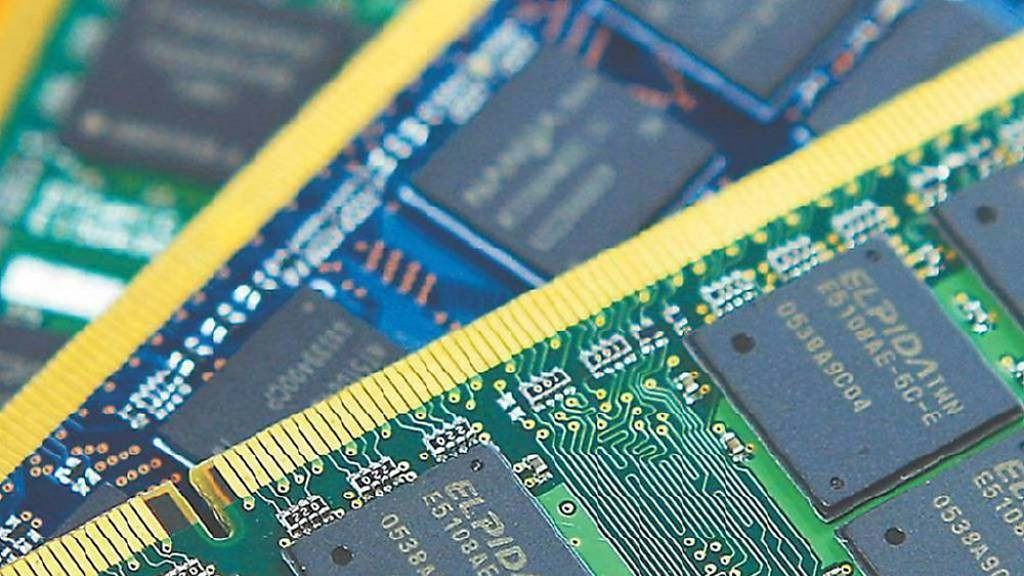
Detailed Explanation and Development Trends of Motor Drivers Chips
2025-02-11
In today's era of rapid technological development, motor driver chips play a crucial role in numerous fields as key components in the electronics sector. From smart home appliances to advanced industrial control systems, from convenient electric vehicles to complex AI robots, motor driver chips are omnipresent. They are not only responsible for converting control signals into instructions that motors can understand but also undertake the important duties of monitoring and protecting motors.
Motor Drivers ICs
Motor driver chips, in simple terms, are integrated circuits used to control and drive motors. As core components of motion control systems, they integrate CMOS control circuits and DMOS power devices, enabling collaborative work with main processors, motors, and incremental encoders to drive inductive loads such as DC motors, stepper motors, and relays. These chips play an indispensable role in multiple industries such as electronic information manufacturing and electromechanical engineering, driving the intelligent and automated development of various devices.
Their principle is based on the working principle of motors. Motors convert electrical energy into mechanical energy through the principle of electromagnetic induction, and motor driver chips are the key to controlling this conversion process. Through internal logic circuits and power drive circuits, they convert received digital signals into appropriate analog signals to drive the current in motor windings, thereby generating the required torque and rotational speed. For example, in DC motor control, chips can precisely adjust armature winding voltage to achieve smooth speed regulation of motors; in stepper motor control, chips can output suitable pulse signals at specific frequencies and timings to control precise stepping of stepper motors.
Popular Manufacturers and Representative Product Models
In the market, there are many excellent motor driver chip manufacturers, 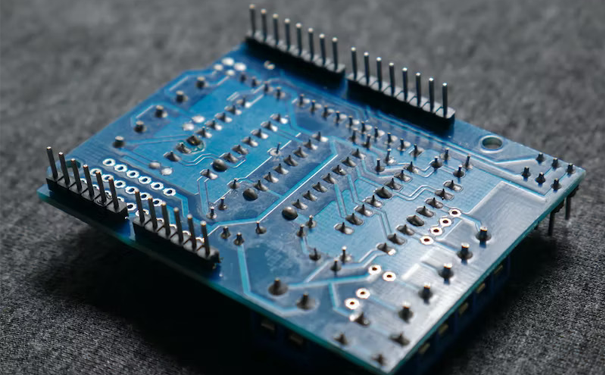 including Texas Instruments (TI), STMicroelectronics, ON Semiconductor, etc.
Texas Instruments (TI), one of the giants in the industry, has launched DRV8833, DRV8848, and other series of chips characterized by high performance, high reliability, and high integration, widely used in various fields. For instance, the DRV8833 chip integrates two H-bridge drivers internally, enabling simultaneous driving of two motors, suitable for small household appliances, smart toys, and other products; the DRV8848 chip features higher drive current and a wider voltage adaptation range, suitable for driving motors with higher power. Infineon is another noteworthy manufacturer, with its Intelligent Power Module (IPM) series products, such as IHR602G, integrating power devices, drive circuits, and protection functions to achieve precise motor control and efficient protection, exhibiting outstanding performance in electric vehicles, industrial motors, and other fields.
Among domestic brands, companies like Fitipower, Fine Made Microelectronics, and Fortior are actively entering the motor driver chip market, launching multiple competitive products. For example, Fitipower's FP5530, FP5532, and FP5533 dual-channel H-bridge motor driver series are widely used in POS printers, office automation machines, video surveillance cameras, gaming machines, robotics, battery-powered toys, and other devices.
Development Trends of Motor Drivers
From the perspective of development trends, motor driver chips are moving towards high integration, high energy efficiency, miniaturization, and intelligence. As electronic devices face increasingly stringent space and power consumption constraints, high-integration chips can integrate multiple functional modules onto a single chip, reducing PCB board area, power consumption, and costs. For example, TI's MPQ6600L-AEC1 is a highly integrated stepper motor driver that integrates two internal full-bridge drivers into one QFN-packaged chip, offering excellent performance and low power consumption. High energy efficiency aims to meet the growing demand for energy conservation and emission reduction, with chips continuously optimizing circuit design and control algorithms to improve motor operating efficiency. Miniaturization enables chips to be used in more micro-devices. In terms of intelligence, chips can adaptively adjust based on the motor's operating state and environmental parameters, achieving more precise and efficient control. For example, some smart motor driver chips can feedback the motor's load condition through sensors, automatically adjusting the output current to prevent motor overload and energy waste.
Conclusion
As one of the core technologies of modern industry, the performance and technical solutions of motor driver chips directly relate to the operating efficiency, stability, and reliability of devices. With continuous technological advancements, the functions of motor driver chips will be continuously optimized, and their performance will be continuously improved, providing strong support for the development of more fields and driving the entire electronics industry towards intelligence, efficiency, and environmental friendliness.
Intelligent Chip Semiconductor Parts
Semicone Electronics is a dedicated distributor of electronic IC semiconductors. Now we are pleased to share with some popular intelligent IC components that could enhance your electronic design project.
 |
The LC4064ZE-5TN48C is a low-power, complex programmable logic device (CPLD) from Lattice Semiconductor, featuring 64 macrocells, 32 I/Os, a maximum propagation delay of 5.8 ns, and a 48-pin TQFP package.
|
|
 |
The TMS320VC5509AZAY is a high-performance, low-power fixed-point digital signal processor (DSP) from Texas Instruments, based on the TMS320C55x architecture, featuring a clock rate of up to 200 MHz, dual multipliers capable of 400 million multiply-accumulates per second, and extensive on-chip memory including 128K x 16-bit RAM and 64K x 16-bit ROM, making it suitable for various digital signal processing applications .
|
|
 |
The AMD XC6SLX9-2TQG144C is a high-performance Field Programmable Gate Array (FPGA) from the Spartan-6 family, featuring 9,152 logic cells, 102 I/Os, 16 DSP slices, and 576 KB of on-chip distributed RAM, housed in a 144-pin TQFP package.
|
|
 |
The MCIMX280DVM4B is a low-power, high-performance application processor from NXP Semiconductors, featuring a 32-bit ARM926EJ-S core with a maximum clock speed of 454 MHz, 128 KB of RAM, and a 289-pin BGA package. It is designed for multimedia applications and includes interfaces such as keypad and 10/100 Mbps Ethernet, making it suitable for consumer and industrial applications.
|
Email: info@semicone.com
From Diversification to Vertical Integration: Honeywell’s Plan to Split Up
Humanoid Robots on the Rise: A New Catalyst for the Semiconductor Sector
Related Article

Current sense amplifiers turn tiny shunt-resistor drops into precise voltage outputs. Learn high/low-side sensing, key specs, and top CSA models.
Current Sense Amplifier: A Complete Guide from Principles to Selection
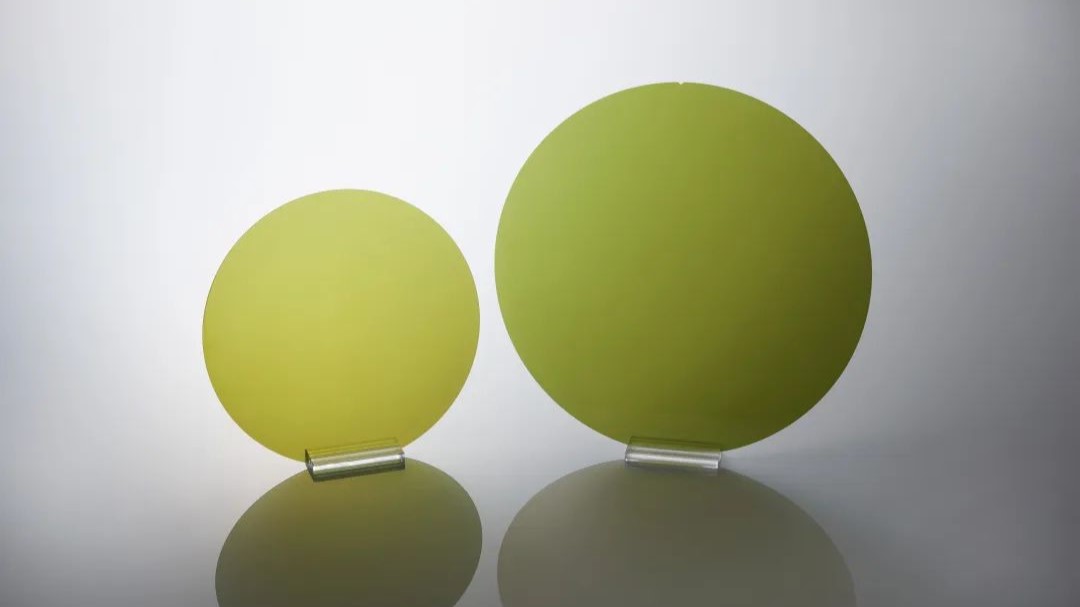
Resonac unveils Japan's first 12-inch SiC substrate, delivering 4x the chip output of 6-inch wafers. AI server cooling and AR waveguides are key targets.
Power Semiconductor Materials: Resonac's 12-Inch SiC Substrate