South Korean Chip Makers Cut LPDDR4 Production: Market Shifts & Strategic Adjustments
2024-11-27
Global Semiconductor Industry Technology Breakthroughs and Market Trends
Amidst the ever-changing global semiconductor market, South Korean chip manufacturers are facing unprecedented challenges and opportunities. Recently, South Korean memory suppliers are considering a significant reduction in LPDDR4 chip production, a decision that not only reflects profound changes in market demand but also reveals the strategic adjustment direction of South Korean chip makers. In the global semiconductor industry, technological breakthroughs are becoming a key driver for market development. For instance, Micron Technology's 9550 NVMe SSD, with its exceptional performance, has become an ideal storage solution for AI applications. At the same time, the development of China's semiconductor industry cannot be ignored, with the domestic computing chip market size expected to exceed 260 billion yuan, highlighting the importance of domestic substitution.
Development of China's Semiconductor Industry
In the global semiconductor supply chain, China is gradually enhancing its position. Despite the significant gap in technical strength, business and revenue scale, and product quality compared to overseas giants, Chinese companies are catching up through rapid iteration of R&D equipment, while achieving localization of the supply chain and independent control of components. China's semiconductor white paper points out that semiconductor chips are the core of the digital economy, and China has introduced a series of related industrial development policies, with the entire industry facing unprecedented development opportunities.
Importance of Advanced Packaging Technologies
Advanced packaging technologies such as Chiplet and HBM play a crucial role in enhancing system performance and addressing memory rate bottlenecks. Chiplet technology effectively reduces costs and improves yield by packaging multiple module chips together with the underlying base chip to form a system chip. HBM technology, on the other hand, stacks multiple DRAMs vertically through 3D packaging technology, addressing the high memory rate requirements of high-performance computing applications. The development of these technologies not only aids the continuous progress of AI computing chips but also brings new development opportunities to the entire semiconductor industry.
Strategic Adjustments of South Korean Chip Makers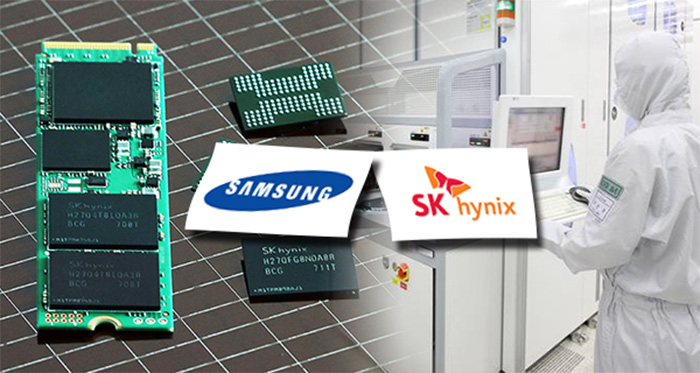
In response to changes in the market landscape, South Korean chip makers such as Samsung Electronics and SK Hynix plan to concentrate more available capacity on high-yield products while reducing the production of DDR4 and LPDDR4 chips. By reallocating capacity, they hope to shift outdated process lines to advanced processes to maintain profitability and cope with competitive pressure from Chinese manufacturers. Samsung Electronics has already made early-year-end personnel changes, focusing on restoring Samsung's competitiveness, especially in the Device Solutions (DS) division responsible for semiconductor business, which is expected to undergo a large-scale personnel and organizational restructuring.
Conclusion
The decision of South Korean chip makers to reduce LPDDR4 production is not only a response to market changes but also an adaptation to technological breakthroughs and market trends in the global semiconductor industry. As LPDDR5 gradually becomes popular and market demand changes, South Korean chip makers will face more challenges and opportunities. They will continue to strive for innovation and development to cope with the ever-changing market and competitive pressures. At the same time, through strategic adjustments, capacity optimization, and personnel reforms, South Korean chip makers are expected to maintain a leading position in the global semiconductor market and achieve sustainable development.
Semicone Memory ics, Find in Semicone Distributor
Semicone is a leading company focused on the distribution of IC electronic components, dedicated to providing high-quality products and excellent service. Its main products include memory storage, sensors, PMICs, mcus and etc.
- The K4B2G1646F-BYMA is an integrated circuit developed by Samsung, specifically a DDR3 DRAM (Dynamic random access memory). The chip is designed as a 16Mbit x16 I/O x8 bank device, which is capable of high-speed double data rate transfer rates up to 1866Mbc/pin (DDR3-1866). Its high performance and stability make it the preferred flash solution for the best cost performance.
- The MB85RS64PNF-G-JNERE1 is a ferroelectric Random access memory (FRAM) integrated circuit manufactured by Fujitsu Semiconductor that features non-volatility, high read/write speed and high durability. MB85RS64PNF-G-JNERE1 is mainly used in smart card and RFID, security systems, industrial control, medical equipment, automotive electronics and other fields.
- The W25Q128JVSIQ is a flash memory chip produced by Winbond, with a capacity of 128 megabits (Mb), using SPI (serial peripheral interface) for communication, operating voltage between 2.7V and 3.6V, operating temperature between -40°C and +85°C, supporting fast erase and programming operations. In standby mode, it has low-power characteristics that help extend battery life or save energy, suitable for storage needs in a variety of embedded systems and digital devices.
Email: info@semicone.com
Responses and Supply Chain Adjustments of U.S. Tech Giants Amid Trump's Tariff Threat
STMicroelectronics MCU Sales Hit a Cold Spell: Market Challenges and Recovery Signs Amid Multiple Factors
Related Article
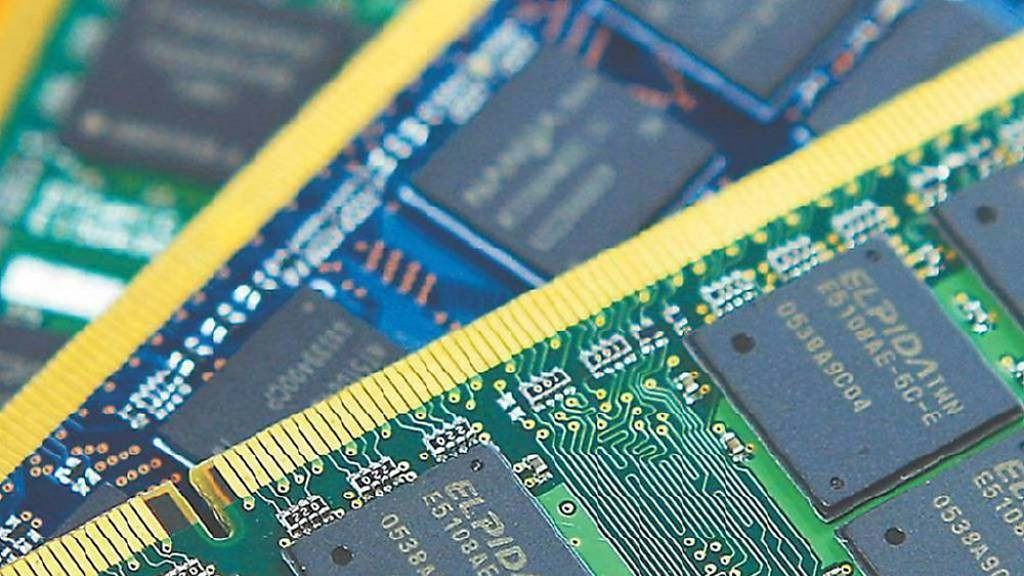
ITC launches 337-TA-1523 into DDR5 DRAM, targeting Micron, HPE, Lenovo, Supermicro over Netlist patents. Exclusion orders could block US imports.
ITC Opens Section 337 Investigation into DRAM: Sparked by Netlist

Qualcomm acquires PickNik to integrate MoveIt with Dragonwing, advancing physical AI and targeting $40B non-handset revenue by 2029.
Qualcomm Expands Robotics Footprint with PickNik Acquisition