Capacity Trade-offs: Skyworks Integrates Qorvo's Manufacturing Network
2026-11-10
On October 5, 2026, Skyworks completed its merger with Qorvo, with an enterprise value of approximately US$22 billion, combined revenue of about US$7.7 billion, roughly 8,000 engineers in total, and more than 12,000 patents. After closing, Qorvo's legal entity was deregistered, and its capacity, patents, customers, and R&D systems were fully integrated into the new company. As scale continued to expand, a more practical question came to the fore: how much overlap exists between the two companies' original manufacturing networks.
Cost Synergies and Manufacturing Integration
 Skyworks management set a clear direction: improve post-merger margins by consolidating manufacturing plants and reducing staff, but did not disclose a specific closure list. The company aims to achieve at least US$500 million in annual cost synergies within 24 to 36 months after closing, about two-thirds from operating expenses and one-third from cost of sales.
CEO Phil Brace mentioned adjustment measures related to headcount, while CFO Philip Carter said plant integration would proceed "gradually over time." This indicates that the merged manufacturing network needs to be re-sequenced.
GaAs Capacity Overlap
The most closely watched is the chip plant in Hillsboro, Oregon, formerly owned by Qorvo. The Hillsboro facility dates back to TriQuint Semiconductor in the late 1990s and later became an important Qorvo site after the merger of TriQuint and RFMD. It has historically employed about 800 people and has gallium arsenide (GaAs) chip manufacturing capability, with products covering industrial, consumer electronics, and Apple iPhone-related chips.
The issue is capacity overlap. Skyworks acquired six manufacturing sites from Qorvo, while its own plants in California and Massachusetts also have GaAs capability; its Woburn, Massachusetts plant has already been slated for closure in 2027. About two years ago, Qorvo transferred GaAs capacity from Greensboro, North Carolina, to Hillsboro and closed that plant. Hillsboro therefore carries capacity transferred from Greensboro while also facing functional overlap with Skyworks' own GaAs plants.
Note that compound semiconductor capacity cannot be migrated as quickly as ordinary production lines. GaAs processes involve specialized equipment, process parameters, and customer product qualification; closing one plant does not mean another can immediately take over its capacity.
SEMICONE IC Component Supply
The concentration of the RF front-end supply landscape makes downstream customers more sensitive to the source stability and delivery certainty of key components. As an in-stock electronic component distributor, SEMICONE is supported by large-volume procurement pricing and lead-time conditions, rapid sample support, genuine products, and in-stock inventory, helping customers shorten sourcing paths during procurement and reduce the risk of acquiring key devices. Today's hot-selling components:
● IRS21867STRPBF (Infineon) — 600V half-bridge gate driver, SOIC-8 package
● ATMEGA164P-A15AZ (Microchip) — 8-bit AVR MCU, 16KB Flash, TQFP-44 package
● STM32L433VCT6 (ST) — ARM Cortex-M4 MCU, 80MHz, 256KB Flash, LQFP-100 package
● RB751S40 (onsemi) — Schottky diode, 30V/30mA, SOD-523 package
● CC0603MRX5R6BB106 (Yageo) — 10μF MLCC, X5R dielectric, 6.3V, 0603 package
Email: info@semicone.com
IBM HRL's New IMU: A Navigation Path Beyond GPS
Related Article
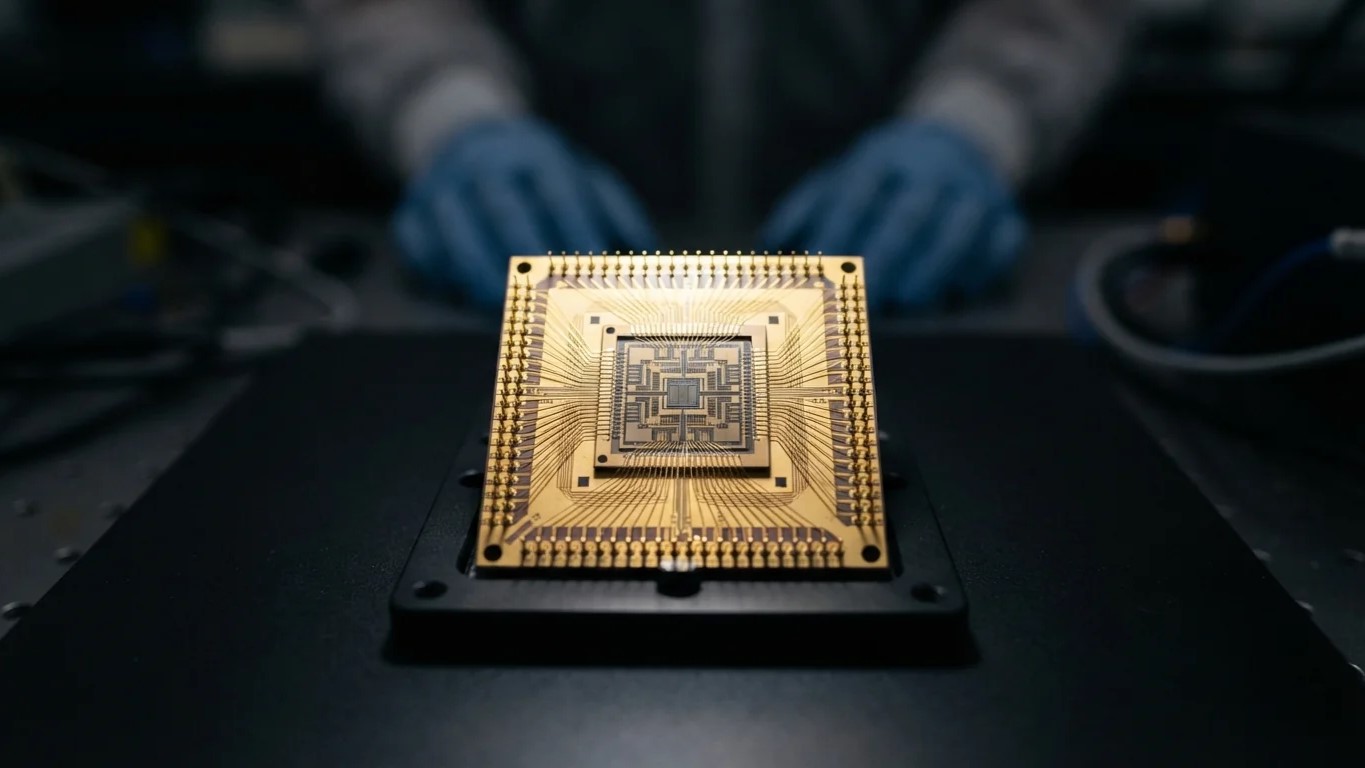
IBM's HRL Lab unveils a MEMS IMU with AutoCal self-calibration that removes bias drift, offering a GPS-independent navigation path for drones and defense systems.
IBM HRL's New IMU: A Navigation Path Beyond GPS

Korea's Supreme Court upholds a KRW 18.66B fine on Broadcom for abusing its market position and forcing Samsung into a long-term chip supply deal through cutoffs.
Broadcom's Korean Case Ends in Final Ruling: Supply Leverage Cannot Become a Tool of Coercion