NXP's Three Price Rounds in 2026: Increases, Part Numbers, and Cost Pressure
2026-11-05
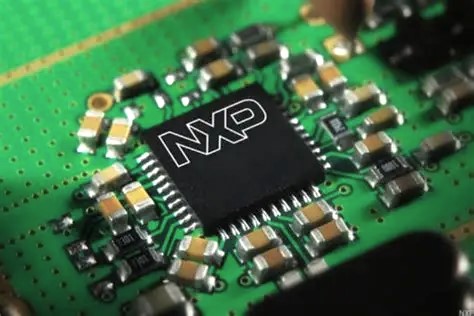 On November 2, NXP issued a price adjustment notice to distributors and direct customers, with new prices applying from January 1, 2027 to selected distribution and direct-supply product lines. This is the third price adjustment in 2026 and the only one of the three that did not disclose specific increases or attach a part-number list; specific prices are being communicated case by case by account managers.
The first two rounds were notified in March and effective April 1, and notified in May and effective June 1. According to distributor channel estimates, the first two rounds raised prices for core automotive-grade parts by roughly 5% to 15%, though this figure is not an official manufacturer disclosure.
What Sets the Third Round Apart
Leaving pricing flexibility on the manufacturer's side means the size of the increase depends on part attributes, customer volume, and negotiating position. For suppliers with a concentration of NXP part numbers in their BOM, the latest round is harder to budget for.
This arrangement is related to NXP's current supply-demand situation. Q3 total revenue was $3.786 billion, and automotive revenue was $2.070 billion, up 13% year on year. Channel inventory held at 11 weeks, above 9 weeks a year earlier and flat versus Q2. Meanwhile, about 80% of orders have lead times exceeding 16 weeks, and order visibility extends into 2027. Revenue and gross margin are improving, yet lead times are lengthening and inventory buffer is narrowing—industry observers judge that the driver is not across-the-board shortages but selective pass-through of cost pressure on specific part numbers.
Industry-Wide Synchronized Adjustments
Since 2026, Infineon, Texas Instruments, STMicroelectronics, Renesas, onsemi, and ADI have all raised prices for automotive MCUs, power devices, and analog chips; mature-node foundry quotes from UMC, Nexchip, SMIC, and Hua Hong are also rising. Costs cascade through foundry—chipmaker—Tier 1—vehicle OEM, and room to avoid increases by switching suppliers has narrowed.
With about two months before the new prices take effect, procurement priorities should focus on single-source part numbers, those with long qualification cycles, and those without short-term pin-compatible alternatives. For projects already designed in, costs should be locked according to allocation rather than substituting stockpiling for part-selection evaluation.
Supply of Key Part Numbers
In this industry context, the response speed of spot channels directly affects production line continuity and cost controllability. What procurement really needs is whether part numbers match, whether lead times can be locked, and whether batch sources are traceable. As an independent in-stock distributor of electronic components, SEMICONE provides large-volume procurement channels and BOM list service support for NXP and multi-brand parts, maintains traceable genuine products, helps customers lock key part numbers in advance, and keeps supply risk for key parts within a dispatchable range. Today's hot-selling parts:
● OPA2140AIDGKR (TI) — dual-channel precision operational amplifier, low offset voltage, VSSOP-8
● REF35330QDBVR (TI) — low-noise voltage reference, 3.3V output, SOT-23-6
● STM32F429ZIT6 (ST) — ARM Cortex-M4 MCU, 180MHz, 2MB Flash, LQFP-144
● NCV7718BDQR2G (onsemi) — automotive-grade octal half-bridge driver, SPI interface, SSOP-36
● 5AGXBB1D4F31C5N (Intel/Altera) — Arria V GX series FPGA, FBGA-896
Email: info@semicone.com
onsemi to Acquire Ferric for $775M, Expanding AI Power Management Layout
Related Article
onsemi signs $775M cash deal for Ferric, adding IVR tech to bring AI power delivery closer to the compute core and lifting its 2030 AI data center target above $3B.
onsemi to Acquire Ferric for $775M, Expanding AI Power Management Layout

Marvell will acquire Lumentum in a $115B all-stock deal to combine electrical and optical interconnect for AI data centers, targeting 2028 close.
Optical Interconnect: Marvell's $115 Billion Acquisition of Lumentum