Optical Module Restrictions: Microsoft Objects it
2026-11-12
Reuters reported on November 10 that Microsoft is working with ITI to press the White House Office of Science and Technology Policy and the National Security Council to abandon proposed import restrictions on new Chinese-model optical transceivers.
 Microsoft's argument is straightforward: it has 35 data centers under construction and 134 in planning in the United States, and many cloud service providers have already purchased AI chips in advance but lack optical modules to complete interconnection, leaving those chips idle. ITI General Counsel John Miller put it more directly, saying the ban "could literally bring data center construction to a standstill."
Ban May Target Next-Generation Products
The key to the restrictions under discussion at the FCC lies in the technical threshold. Sources say the FCC is considering limiting the scope to Chinese optical modules with transmission rates of 3.2Tbps. Morgan Stanley expects that generation to enter volume production only in 2028 and see broad deployment in 2029. In other words, the 800G and 1.6T products widely used in current US data centers fall outside the ban's reach, pushing the actual impact two to three years into the future.
Another possible exemption path also points to timing: Chinese-made optical modules seeking continued access to the US market may need to meet a condition that US companies account for about 65% of value in the bill of materials.
China's Share and Alternative Capacity
The reason the restrictions are so finely calibrated lies in the supply structure. Counterpoint Research data show China accounts for about two-thirds of the global optical transceiver market, with Innolight and Eoptolink dominating supply. In the 800G-and-above high-end datacom segment, Chinese vendors hold a combined share of more than 70%, and Innolight's 1.6T silicon photonic modules account for 50% to 70%. Although Coherent and Lumentum in the United States have competitive technology, their capacity scale is insufficient to quickly replace Chinese suppliers.
Coherent and Lumentum are not standing still. Coherent has moved its indium phosphide capacity doubling target from the end of 2026 to the third quarter, and some Lumentum optical device capacity is booked through early 2029. But capacity construction, customer qualification, and yield ramp cannot be completed simultaneously. Network equipment suppliers judge that rebuilding a complete optical module manufacturing ecosystem in the United States would take two to three years even if rushed, and five to ten years for a full rebuild.
Between the pace of AI data center construction and the pace of supply chain restructuring, the latter temporarily cannot keep up. Policy can draw future boundaries, but it cannot conjure current capacity out of thin air. For downstream manufacturers, this means procurement of key optoelectronic devices needs to lock in dispatchable sources before the supply structure changes.
SEMICONE In-stock Chips Supplier
As an in-stock electronic component distributor, SEMICONE leverages the price and lead-time advantages of large-volume procurement, rapid sample validation, traceable genuine-product assurance, and in-stock inventory to provide customers with a dispatchable, verifiable, and efficient supply path for urgent component needs. Hot-selling parts this week:
● TLC6C598QPWRQ1 (TI): automotive-grade 8-bit shift register LED driver, TSSOP-16 package
● LMT86QDCKRQ1 (TI): automotive-grade analog temperature sensor, ±0.4°C accuracy, SC70-5 package
● MAX395EAG+ (ADI/Maxim): octal SPST analog switch, low on-resistance, SSOP-24 package
● AD8227BRMZ (ADI): low-noise instrumentation amplifier, gain range 5 to 1000, MSOP-8 package
● ECMF2-40A100M6Y (ST): common-mode filter and ESD protection combo, DFN package
Email: info@semicone.com
Mitsui Kinzoku to Invest ¥190 Billion in Copper Foil Expansion
Related Article
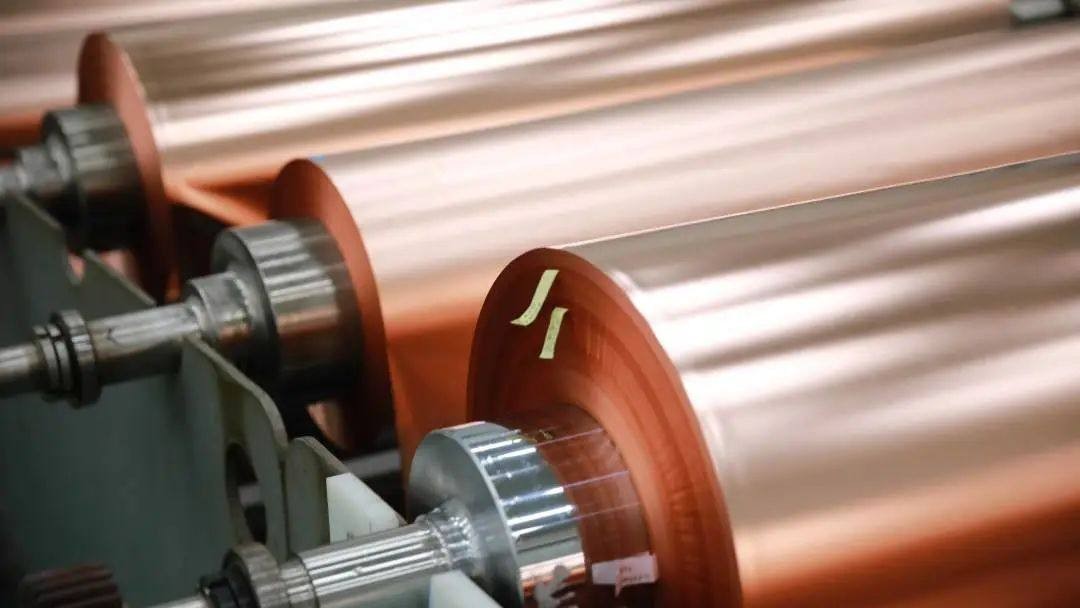
Mitsui Kinzoku invests ¥190B in a new Malaysian copper foil plant, targeting MicroThin and VSP output from April 2031 to meet AI infrastructure demand.
Mitsui Kinzoku to Invest ¥190 Billion in Copper Foil Expansion

After completing the Qorvo merger, Skyworks targets $500M in cost synergies via plant consolidation, with the Hillsboro GaAs fab's future still undecided.
Capacity Trade-offs: Skyworks Integrates Qorvo's Manufacturing Network