NPU IP: The Core Power That Drives MCU & Edge AI
2024-11-12
Edge AI technology is a strategy that pushes artificial intelligence to terminal devices, placing AI algorithms and computing capabilities close to the data source rather than traditionally concentrating them on cloud servers. This approach enables data to be processed and analyzed in real-time at the device end, achieving faster responses and lower latency. In edge AI technology, NPU (Neural Processing Unit) IP tailored for MCUs (Microcontrollers) plays a vital role.
Overview of NPU IP
An NPU, or Neural Processing Unit, is a hardware accelerator specifically designed for processing neural network operations. Compared to CPUs and GPUs, NPUs exhibit higher efficiency and lower power consumption when handling neural network algorithms. In edge AI applications, NPU IP is often integrated into MCUs to provide efficient AI computing capabilities.
NPU IP and MCUs
NPU IP plays a crucial role in MCUs, leading the innovation in edge computing. This integration greatly enhances the intelligent processing capabilities of devices while significantly optimizing power consumption and performance. As a hardware accelerator designed for neural network operations, NPU IP demonstrates higher efficiency and lower power consumption compared to traditional CPUs or GPUs when processing AI algorithms. This not only enables MCUs to process complex neural networks in real-time, quickly analyzing and recognizing data such as images and sounds, but also allows edge devices to maintain high performance while significantly reducing power consumption, thereby extending operating time. Additionally, NPU IP is usually equipped with mature software development toolkits and neural network libraries, greatly simplifying the development process of AI applications, lowering the development threshold, and promoting the popularization of AI technology. More importantly, the introduction of NPU IP enhances device security and privacy protection, enabling sensitive data to be processed locally, reducing the dependency on cloud servers. In terms of driving edge AI development, optimizing device performance and power consumption, promoting AI application diversification, lowering AI application thresholds, and enhancing device market competitiveness, NPU IP plays an irreplaceable role. With continuous technological advancements and the in-depth development of AI technology, the application prospects of NPU IP in MCUs will become even broader, providing strong support for the intelligence and efficient operation of edge devices.
NPU IP Providers for MCUs
Integrating AI accelerators, NPUs, into MCUs can better meet the needs of dif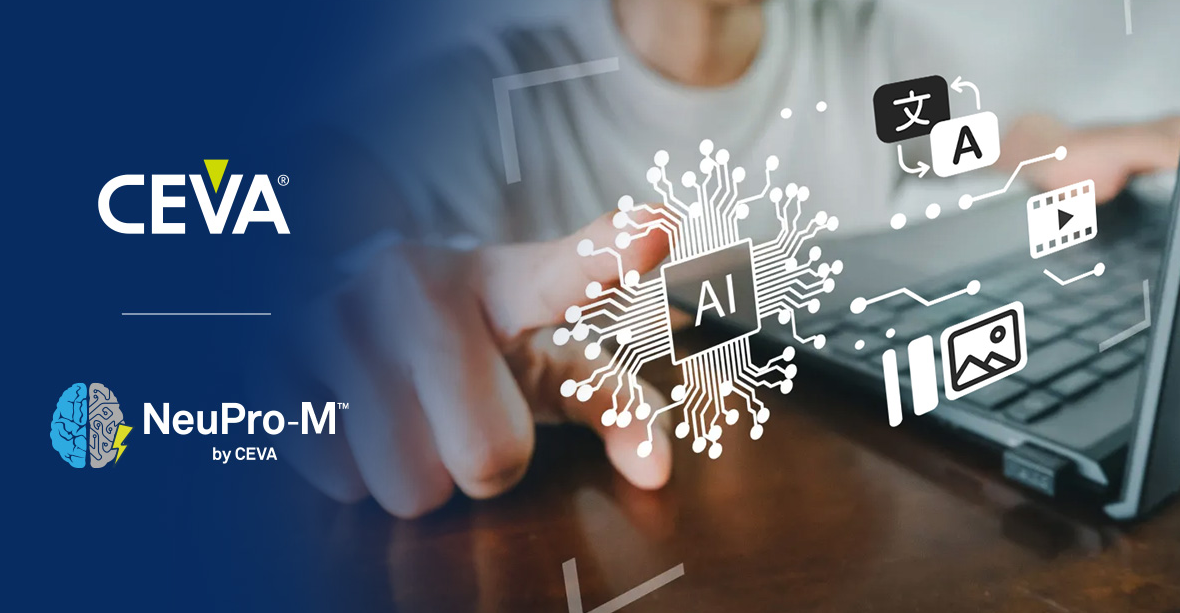 ferent application scenarios. Some mainstream MCU manufacturers have integrated NPU cores into their products, such as ST and NXP, which have integrated their self-developed NPU IP cores with MCUs. Additionally, there are other NPU IP providers that offer NPU IP products for MCU manufacturers to use, with representative players including Arm, Anmou Technology, Ceva, and Cadence.
- Arm Ethos NPU: Arm was one of the early companies to notice the market demand for edge AI and officially launched the Micro Neural Network Processing Unit, Ethos-U55, in early 2020, officially ushering in the MCU AI era. As of now, Arm's NPU products have gone through three generations: Ethos-U55, Ethos-U65, and Ethos-U85. Arm's Ethos NPU series has more than 20 licensed partners, including ALIF, Himax, Nuvoton, and Infineon.
- Anmou Technology Zhouyi NPU Series: Anmou Technology is a Chinese AI processor design company, and its self-developed Zhouyi NPU series is highly renowned in the edge AI field. The Zhouyi NPU series includes multiple products such as the X2 and Z series. The Zhouyi X2 NPU adopts the third-generation Zhouyi architecture, supporting multi-core clusters with a maximum of 320 TOPS subsystems. The Zhouyi Z series NPU uses a dedicated instruction set designed for neural network operations and corresponding pre- and post-processing, offering balanced programmability and optimized standard processing capabilities.
- Ceva NPU: Ceva is a provider of scalable processor solutions focusing on edge AI and sensing applications. Its Ceva-NeuPro series NPU has a high market share in the edge AI field. The Ceva-NeuPro-Nano is an efficient, self-sufficient edge NPU specifically designed for TinyML applications and suitable for AIoT devices.
- Cadence Tensilica Neo NPU IP: Tensilica Neo NPU is a high-performance, low-power neural processing unit designed for embedded AI applications. It provides high-performance AI processing capabilities for various applications, including sensors, audio, speech/speech recognition, vision, and radar.
Application of NPU IP in Edge AI
 NPU IP plays a pivotal role in edge AI applications. It provides efficient neural network computing capabilities, enabling low-power, high-performance MCUs to process and analyze complex AI algorithms in real-time, significantly improving response speed and accuracy. Compared to traditional CPUs and GPUs, NPU IP consumes less power and is more cost-effective when processing neural networks, contributing to more energy-efficient and environmentally friendly operation of edge devices while reducing overall system costs. Furthermore, as the core hardware accelerator in edge devices, NPU IP enhances data security and privacy protection by running AI algorithms locally. It supports a wide range of application scenarios, including smartphones, smart home devices, and wearable devices, providing strong support for the popularization and development of edge AI.
Controller Electronic Chip Solution, Find in Semicone
- The EP3C10F256C8N is a Field Programmable Gate Array (FPGA) from the Cyclone III family by Intel/Altera, featuring 10320 logic elements, 645 logic array blocks (LABs), and 182 I/Os. It operates at a maximum frequency of 402MHz, is manufactured with 65nm technology, and operates at 1.2V.
- The OPA1688IDR is a 36-V, single-supply, low-noise SoundPlus™ audio operational amplifier capable of operating on supplies ranging from 4.5 V (±2.25 V) to 36 V (±18 V). It offers a wide bandwidth of 10 MHz, fast slew rate, and high output current drive capability. The device features low offset voltage of ±0.25 mV, low drift of ±0.5 µV/°C, and low input bias current of ±10 pA. It is available in a WSON micropackage and provides EMI- and RFI-filtered inputs, rail-to-rail output, and high common-mode rejection of 120 dB. The OPA1688 is suitable for a variety of audio applications and is specified to operate from –40°C to +85°C.
- The STM32F407VET6 is a high-performance 32-bit microcontroller based on the ARM Cortex-M4 core, developed by ST Microelectronics. It operates at a frequency of up to 168 MHz and includes advanced peripherals such as an Ethernet MAC and a camera interface for CMOS sensors. This MCU features a floating-point unit (FPU), digital signal processing (DSP) instructions, and a memory protection unit (MPU) for enhanced application security. It also includes a crypto/hash processor that provides hardware acceleration for AES 128, 192, 256, Triple DES, and hash functions (MD5, SHA-1). With 512KB of Flash memory and 192KB of SRAM, It operates over a voltage range of 1.8V to 3.6V and offers a wide range of communication interfaces.
Email: info@semicone.com
Unveiling the Power of Linear Integrated Circuits: A Comprehensive Guide
ADI Strategically Acquires Flex Logix, Accelerate Digital Innovation
Related Article

TI issues its fourth price hike in twelve months, with increases ranging 15%–85% on analog, MCU, and power management lines.
Analog Chip Leader TI Issues Another Price Increase Notice
Trump administration advances second-phase chip tariffs. Invest in U.S. production for exemptions,overseas makers face heavy duties on American-bound semiconductors.
U.S. to Implement Targeted Semiconductor Tariffs