China Imposes Temporary Helium Export Ban
2026-07-13
On July 10, China's Ministry of Commerce and General Administration of Customs jointly issued Announcement No. 29 of 2026. In accordance with the relevant provisions of the Foreign Trade Law of the People's Republic of China, a temporary ban on helium exports was formally implemented, effective immediately upon issuance.
Policy Context
By the end of June 2026, the average price of domestically produced high-purity tube-trailer helium had reached 158.8 yuan per cubic meter, an increase of 145.4% compared to pre-war levels. The average price of imported helium stood at 189 yuan per cubic meter, representing a rise of 130.5%.
Domestic Priority
The underlying logic of China's export ban lies in its special role within the global helium supply chain. In 2025, China's domestic helium production was only 905 tons, while imports reached 4,913 tons, with an external dependence exceeding 84%. Of the 445 tons of helium exported, a considerable portion came from the processing and re-export of helium originally from Qatar and Russia.
The ban's invocation of the Foreign Trade Law indicates that the primary motivation is defensive: to prioritize the helium needs of key domestic sectors such as semiconductors, healthcare, and aerospace. The announcement sets no expiration date for the ban, meaning it may remain in effect for the long term, with any adjustments entirely at Beijing's discretion.
Supply Chain Restructuring and Price Impact
Following the ban's entry into force, global helium circulation and supply will tighten further. Markets that imported significant quantities of helium from China in 2024 include the European Union, Japan, France, South Korea, and the United States. The ban means these economies must seek alternative sources, facing more severe cost pressures in the short term.
It is worth noting that China is not a major global helium producer—the United States, Qatar, and Russia together control over 85% of global production capacity. China's export ban is essentially a "retention" of limited imported resources, rather than the use of resource advantages to exert strategic leverage. However, against a backdrop of highly oligopolistic global supply and frequent geopolitical conflicts, export restrictions by any major consuming country will intensify market panic and drive up costs across the global semiconductor supply chain.
Supply Chain Service - SEMICONE Distributor
As a high-quality distributor specializing in the field of chip distribution, SEMICONE focuses on providing supply solutions for global customers, including Xilinx FPGA, Microchip PolarFire SoC, TI interface chips, and Murata passive components, etc. With genuine product guarantees and efficient delivery, it helps customers cope with market fluctuations. Here are some of the recent popular models.
● XCKU11P-2FFVE1517I, Xilinx Kintex UltraScale+ FPGA, suitable for data centers and communication acceleration
● TCA9535PWR, TI I/O Expander, 16-bit I²C/SMBus interface, low-power GPIO expansion solution
● MPFS250T-FCG1152I, Microchip PolarFire SoC FPGA, integrated RISC-V processor, low-power secure computing platform
● CC0603KRX7R9BB104, Murata Ceramic Capacitor, 100nF/50V high-reliability surface mount capacitor
Email: info@semicone.com
Samsung Electronics and Samsung Display Co-Develop Next-Gen Glass Interposer Tech
Foundry Giants TSMC and Samsung Raise Prices as Advanced Process Costs Surge
Related Article
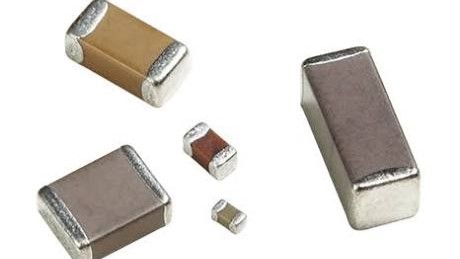
MLCC: compact SMD with stacked layers, high capacitance. Used in auto, AI. Technology Trends: miniaturization, reliability.
What is MLCC: A Comprehensive Guide to Multi-layer Ceramic Capacitors
Intel DCG layoffs 2026. Intel cuts jobs at its Data Center & AI Group despite 22% Q1 revenue growth. CEO Lip-Bu Tan's restructuring aims to boost efficiency.
Intel's DCG Layoffs: Trims Its Fastest-Growing Unit