Unlocking Voltage-Level Translators: A Comprehensive Guide
2025-11-06
In modern electronic systems, different circuit modules often operate at varying voltage levels. For example, a microcontroller might run at 3.3V, while certain peripheral devices may require 5V or 1.8V. To enable signal transmission between these different voltage levels, voltage-level translators have become an essential component.
Overview of Voltage-Level Translators
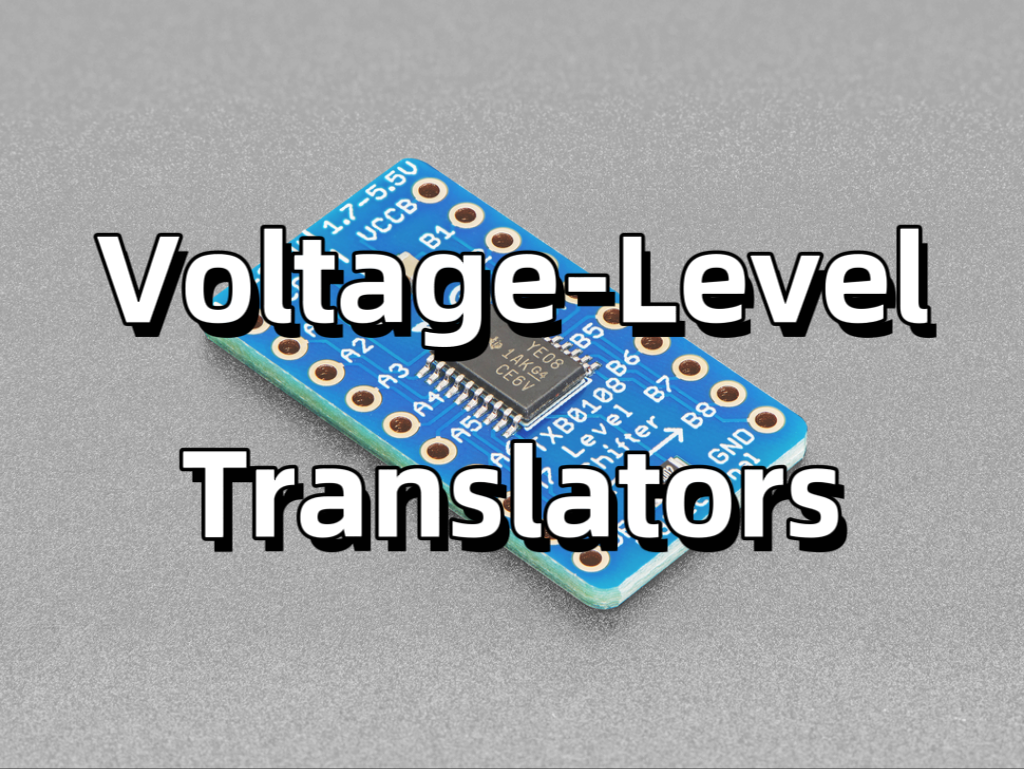 The primary function of a voltage-level translator is to convert the voltage level of an input signal to the desired output voltage level. The basic principle involves internal circuit design to achieve signal conversion between high and low voltages. Common voltage-level translators are designed for bidirectional or multidirectional operation, dynamically adjusting the output based on the input signal voltage.
Voltage-level translators can be categorized based on their functionality and design as follows:
- Unidirectional Voltage-Level Translators: These support voltage conversion in one direction only and are suitable for unidirectional signal transmission.
- Bidirectional Voltage-Level Translators: These support bidirectional signal transmission and are ideal for applications requiring two-way communication.
- Multi-Voltage Support: These can handle multiple input and output voltages and are suitable for complex multi-voltage systems.
- Low-Power Voltage-Level Translators: Designed for low-power applications, these are ideal for battery-powered devices.
Voltage-level translators are widely used in electronic systems that require communication across different voltage domains. Typical applications include:
- Consumer Electronics: Such as smartphones and tablets, used to connect chips and peripheral devices operating at different voltages.
- Automotive Electronics: In automotive electronic systems, used to connect sensors and controllers operating at different voltages.
- Industrial Automation: In industrial control systems, used to connect sensors and actuators operating at different voltages.
- Communication Equipment: In communication base stations and network equipment, used for signal conversion.
Selection Guide for Voltage-Level Translators
Choosing the right voltage-level translator involves considering several factors, including input and output voltage ranges, conversion direction, signal integrity, power consumption, and package type. Here are the key points to consider during selection:
- Voltage Range: Ensure that the translator's input and output voltage ranges match the system requirements.
- Conversion Direction: Select unidirectional or bidirectional translators based on application needs.
- Signal Integrity: Consider the translator's delay and noise characteristics to ensure signal quality.
- Power Consumption: Choose low-power translators to optimize the system’s overall energy consumption.
Below are some popular voltage-level translator IC models from leading international manufacturers and their features:
|
Model
|
Manufacturer
|
Features
|
|
Nexperia
|
16-bit dual-supply voltage translator with three-state outputs
|
|
|
NCA9306DC
|
Nexperia
|
2-bit bidirectional multi-voltage level translator with open-drain/push-pull outputs
|
|
TI
|
4-bit dual-supply voltage translator with configurable voltage translation and three-state outputs
|
|
|
PCA9306DCTR
|
TI
|
Bidirectional I²C bus and SMBus voltage translator
|
|
MAX3379E
|
Maxim
|
8-bit bidirectional voltage translator supporting multiple voltage levels
|
|
ADG3304
|
ADI
|
4-bit dual-supply voltage translator with low-power design
|
Conclusion
Voltage-level translators play an indispensable role in modern electronic systems, effectively addressing signal transmission issues between different voltage levels. By understanding their basic principles, main categories, and applications, engineers can better select suitable voltage-level translators. The popular models from Nexperia, TI, Maxim, and Analog Devices provide important references for the design and development process, helping engineers optimize their system designs.
Email: info@semicone.com
In-Depth Analysis and Application Guide for Popular IC Chips
Samsung Accelerates 1c DRAM Device Integration, Aims to Mass Produce HBM4 by 2026
Related Article

A guide covers how clock generators work, eight representative ICs compared, sourcing pitfalls and where to buy.
Clock Generator: From PLL Fundamentals to Selection and Procurement

Qualcomm will begin performance-driven global layoffs in November after annual reviews, with no headcount disclosed.
Global Performance-Driven Layoffs at Qualcomm