
In-Depth Analysis and Selection Guide for Voltage Reference ICs
2025-06-10
In modern electronic systems, a stable voltage reference is crucial for the proper operation of various analog and digital circuits. As a key electronic component that provides a constant DC output voltage, the Voltage Reference IC is widely used in data acquisition, medical devices, battery management systems, consumer electronics, automotive electronics, and other fields. This article delves into the working principles, key characteristics, popular applications, and selection criteria for Voltage Reference ICs.
Technical Analysis of Voltage Reference ICs
Among them, the Bandgap Reference is currently the most mainstream technical solution. It ingeniously combines the positive and negative temperature coefficients of bipolar transistors. Specifically, the circuit adds the base-emitter voltage difference (ΔVBE, with a positive temperature coefficient) of two transistors with different current densities to a VBE voltage (with a negative temperature coefficient). When the proportions are appropriate, the two temperature effects cancel each other out, producing a reference voltage that is almost temperature-independent, with a typical value of around 1.25V.
Zener Reference is another common technique, utilizing the stable voltage characteristics of a reverse-biased Zener diode in the breakdown region. This type of reference typically provides higher output voltages (5V-7V), but it has relatively higher power consumption and may not be as precise as bandgap references.
Here are some common types of Voltage Reference ICs:
|
Type
|
Working Principle
|
Typical Output Voltage
|
Advantages
|
Disadvantages
|
Applications
|
|
Bandgap Reference
|
Utilizes silicon bandgap characteristics with positive and negative temperature coefficient voltage compensation
|
1.2V, 2.5V, etc.
|
Low power consumption, CMOS process compatibility, good temperature stability
|
Limited output voltage, relatively higher noise
|
Low-power applications, integrated systems, battery-powered devices
|
|
Zener Reference
|
Combination of diode reverse breakdown and forward voltage drop
|
5V, 7V, 10V, etc.
|
High output voltage, good long-term stability
|
Higher power consumption, requires higher supply voltage
|
High-precision instruments, industrial control systems
|
|
Series Reference
|
Three-terminal structure, similar to LDO
|
Adjustable or fixed
|
Low quiescent current, high efficiency
|
Requires input voltage higher than output voltage
|
Battery-powered devices, portable electronics
|
|
Shunt Reference
|
Two-terminal structure, similar to Zener diode
|
Fixed
|
Flexible operating polarity, simple to use
|
Low efficiency, requires current-limiting resistor
|
Simple circuits, high-voltage applications
|
Voltage Reference ICs' Popular Applications
- Data Converters (ADC/DAC): In high-precision ADCs above 16 bits, the noise (typically <10μVrms) and temperature drift of the Voltage Reference IC directly determine the conversion accuracy. For example, medical-grade ECG devices require a long-term stability of the reference voltage of <5ppm/year.
- Power Management Systems: As the reference source for DC-DC converters, its PSRR performance affects the output voltage ripple. In automotive electronics, it must meet the AEC-Q100 standard with an operating temperature range of -40℃ to 125℃.
- Sensor Signal Conditioning: Provides a stable reference for pressure and temperature sensors. For example, in industrial automation, the temperature drift of the reference voltage for pressure sensor calibration must be <3ppm/℃.
- Communication and Aerospace: In 5G base stations, the phase noise of the Voltage Reference IC (typically <-160dBc/Hz@10kHz) affects signal quality. Spacecraft require radiation-hardened (Rad-Hard) models with a total dose tolerance >100krad(Si).
Selection Guide for Voltage Reference ICs
When selecting a suitable Voltage Reference IC, the following key characteristics should be considered:
- Initial Accuracy: This refers to the deviation of the output voltage from the nominal value under standard conditions. High-precision Voltage Reference ICs can provide more accurate reference voltages and are typically used in high-precision measurement and data conversion systems.
- Temperature Coefficient: This indicates the rate of change of the output voltage with temperature, usually expressed in ppm/°C (parts per million per degree Celsius). Low-temperature coefficient Voltage Reference ICs can maintain stable output voltages over a wider temperature range and are suitable for applications in industrial and automotive environments where temperature variations are significant.
- Power Consumption: This is the power consumed by the Voltage Reference IC during operation, usually expressed in milliamps (mA) or microamps (μA). Low-power Voltage Reference ICs are suitable for battery-powered or power-sensitive applications, such as portable devices and wireless sensors.
- Output Current Capability: This refers to the maximum current that the Voltage Reference IC can provide. For applications that require driving larger loads, such as power management circuits, selecting a Voltage Reference IC with higher output current capability is necessary.
- Noise: This is the random fluctuation of the output voltage, usually expressed in microvolts (μV). Low-noise Voltage Reference ICs can provide more stable reference voltages and are suitable for high-precision analog signal processing.
Mainstream Voltage Reference IC Models
Here are some common Voltage Reference IC models and their key characteristics:
|
Manufacturer
|
Accuracy
|
TCR (ppm/℃)
|
Package
|
Quiescent Current (μA)
|
Key Features
|
Typical Applications
|
|
|
|
REF5040
|
±0.02%
|
3
|
SOIC-8
|
100
|
Fixed 4.096V output, high PSRR (80dB@10kHz)
|
High-precision power management, instrumentation
|
|
±0.1%
|
25
|
SOT-23
|
45
|
Ultra-low power (45μA), adjustable output (1.225V~10V)
|
General power management, consumer electronics
|
||
|
ADR452
|
±0.02%
|
0.5
|
SOIC-8
|
120
|
Extremely low temperature drift (0.5ppm/℃), long-term stability <2ppm/1000 hours
|
Aerospace, medical devices, precision instruments
|
|
|
ADR441
|
±0.04%
|
3
|
SOIC-8
|
90
|
Low noise (1μVp-p), wide operating temperature range (-40℃~125℃)
|
Industrial control, sensor calibration
|
|
|
Analog
|
±0.005%
|
0.05
|
TO-5
|
1000
|
Ultra-high precision (0.005%), built-in oven-controlled temperature compensation, requires external heating circuit
|
Laboratory standard sources, metrology equipment
|
|
|
LT6656
|
±0.02%
|
2
|
MSOP-8/SOIC-8
|
120
|
Fast start-up time (<100μs), low output impedance (0.05Ω)
|
High-speed ADC/DAC, communication systems
|
|
|
Maxim
|
MAX6126
|
±0.04%
|
2
|
SOT-23
|
60
|
Ultra-low power (60μA), high PSRR (90dB@1kHz)
|
Portable medical devices, battery-powered systems
|
|
±0.05%
|
5
|
SOT-23
|
80
|
Low cost, wide input voltage range (2.7V~40V)
|
Consumer electronics, sensor interfaces
|
Trends and Conclusion
With the development of the Internet of Things, 5G communication, and artificial intelligence, the demand for Voltage Reference ICs continues to grow. In the future, Voltage Reference ICs will evolve towards lower power consumption, higher precision, and smaller packaging. Research progress in low-power CMOS voltage reference technology indicates that higher performance can be achieved at lower power consumption through optimized circuit design and process improvements.
In summary, Voltage Reference ICs play an indispensable role in modern electronic systems. By gaining a deep understanding of their working principles, key characteristics, and applications, we can better select suitable Voltage Reference ICs to meet the needs of different applications.
Email: info@semicone.com
Honda's Strategic Chip Investment in Rapidus
Broadcom's Super Chip Tomahawk 6: A Single Chip Driving 100,000 GPUs
Related Article

Renesas raises prices again; new rates start Jan 1, 2027. Cost inflation and AI data center buildout boost power chip demand. Secure high-demand parts with SEMICONE.
Renesas Raises Prices Again This Year: New Prices Take Effect in 2027
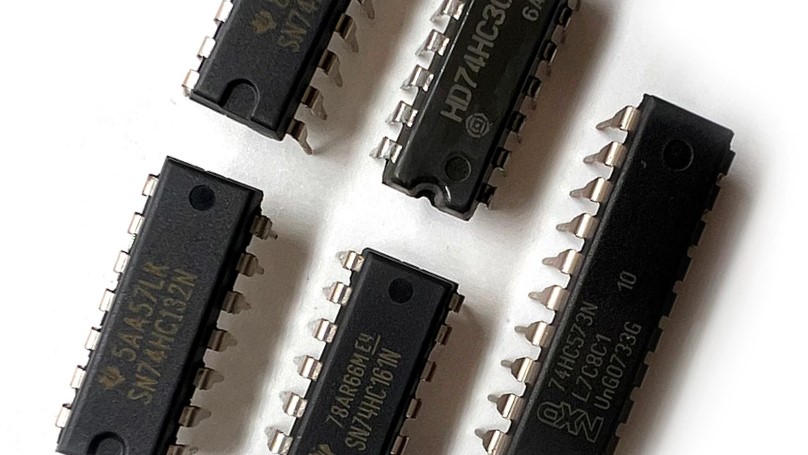
Why do 74-series logic ICs still matter? Spanning TTL to CMOS, this standardized family covers everything from decoders to bus buffers across 2–6V systems.
The 74 Series Logic ICs: A Detailed Guide and Selection Handbook