NVIDIA's Global Price Adjustment: A 25% Uptick in GPU Prices
2025-05-13
NVIDIA has recently been reported to be raising the prices of its GPU products by 25%, a move that has attracted significant attention from the market. This price adjustment is primarily driven by a combination of multiple factors. Firstly, changes in global trade policies have had a notable impact on NVIDIA's business. The semiconductor export restrictions imposed by the Trump administration on China have limited NVIDIA's sales in the Chinese market, resulting in a loss of approximately $5.5 billion in the first quarter of 2025 alone. Secondly, the increase in production costs is also a major factor behind the price hike. NVIDIA's Blackwell chips have been transferred to production at TSMC's factory in Arizona, USA, where the operating costs (including material and logistics costs) are about twice as high as those of the Taiwan factory. Additionally, NVIDIA is also facing challenges in transitioning between old and new chip platforms, which further adds to the costs.
Specifics of the Price Adjustment
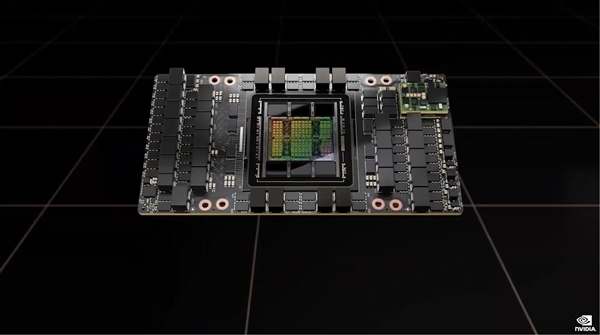
The price increase covers a range of NVIDIA's products, including high-end graphics cards and server modules. For example, the channel price of the ASUS RTX 5090 graphics card has risen from about NT$80,000 at the beginning of the year to NT$100,000, an increase of over 25%. Moreover, the prices of GPU modules and server products, such as the H200 and B200, have also increased by 10% to 15%. NVIDIA has also allowed its distribution partners to raise prices in sync to cope with the rising costs.
Market Reactions and Impacts
The price increase has had a multifaceted impact on the market. On one hand, despite the export restrictions affecting the Chinese market, the demand for AI chips remains strong in other regions globally. The continuous expansion of capital expenditure by US CSP giants has driven NVIDIA's revenue growth. On the other hand, the price increase has also raised concerns in the market. Although NVIDIA's revenue for the first quarter of the 2026 fiscal year is expected to grow compared to the same period last year, the growth rate is significantly lower than that of the previous year, sparking worries about a slowdown in performance. Additionally, NVIDIA's competitors may take advantage of the price increase to further capture market share.
NVIDIA's Response Strategies
Facing a complex market environment, NVIDIA has implemented a series of response measures. Firstly, NVIDIA plans to release a lower-configured version of the H20 chip around July to meet market demand and mitigate the impact of export restrictions. Secondly, NVIDIA's CEO, Jensen Huang, emphasized that the importance of the Chinese market is increasingly prominent, and the company will continue to seek business opportunities in the Chinese market. Additionally, NVIDIA is actively reorganizing its supply chain to reduce production costs and enhance competitiveness.
Conclusion
NVIDIA's decision to raise GPU prices by 25% is a reluctant move to cope with rising costs and changes in trade policies. Although the price increase may have some impact on market demand, the strong global demand for AI chips still provides strong support for NVIDIA's revenue growth. In the future, NVIDIA needs to find a balance between addressing policy challenges, optimizing the supply chain, and expanding the market in order to maintain its leading position in the GPU market.
Semicone wholesale electronics supplier
Semicone is a leading distributor of high-quality ICs, offering a wide range of products from top manufacturers. Here are some poular IC models recommended by Semicone:
- Analog Devices Inc. AD9361BBCZ: A highly integrated RF Agile Transceiver with wide bandwidth and low power consumption, ideal for wireless communication applications.
- AMD XCF04SVOG20C: A compact FPGA with high performance and low power, suitable for embedded systems and IoT devices.
- Analog Devices Inc. ADM3251EARWZ: A high-speed, bidirectional bus switch with low on-resistance, perfect for data communication and signal switching.
- Texas Instruments THVD2410DR: A robust RS-485 transceiver with enhanced ESD protection and long-distance communication capabilities.
Email: info@semicone.com
Inverting Amplifier: Principles, Applications, and Development Trends
Exoskeleton Robots: Technological Breakthroughs and Market Prospects
Related Article

Helium joins the US critical materials list. Supply is constrained by flat US output and export limits in Qatar and Russia.
US Tightens Export of Helium, a Critical Semiconductor Gas

Micron skips 10th-gen NAND, jumping from 276-layer G9 to 400+ layer G11 with wafer-to-wafer bonding, targeting AI and an H2 2027 ramp.
Node Selection: Micron Skips 10th-Generation NAND

