Intel Secures Microsoft 18A Order, with Google Likely to Follow
2025-05-09
Recently, Intel has made significant progress in the chip foundry field, with its advanced 18A process technology gaining favor from tech giants. According to industry sources, Intel has signed a large-scale semiconductor foundry contract with Microsoft, which will utilize Intel's 18A process. In addition, Intel has also held in-depth talks with Google, who is expected to follow Microsoft's lead and sign a similar foundry agreement. Nvidia had already reached out to Intel earlier to explore the possibility of using the 18A process for its gaming GPUs. These developments mark a major breakthrough in Intel's foundry business (IFS) strategy and further solidify its competitiveness in the global semiconductor manufacturing sector.
Breakthrough and Advantages of Intel 18A Process
Intel 18A is Intel's next-generation advanced process node, which was 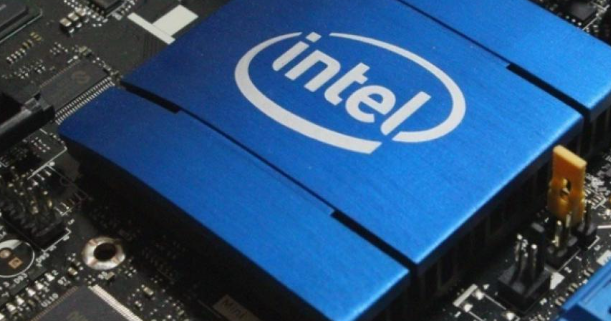 put into mass production in 2025. It features RibbonFET full-gate (GAA) transistor architecture and PowerVia backside power delivery technology. Compared with the previous process, it has significant improvements in performance, energy efficiency, and transistor density. At the Intel Foundry Conference in 2025, Intel announced that the 18A process node has entered the risk production stage and is expected to be officially mass-produced within this year. According to Intel's plan, Intel 18A-P (performance-optimized version) will be launched in 2026, and Intel 18A-PT (further optimized version) is scheduled for 2028. Microsoft's order not only validates the technological maturity of the 18A process but also serves as a demonstration effect to attract more high-end customers for Intel.
The appeal of the 18A process lies not only in its technological advancement but also in Intel’s numerous fabs in the United States. Against the backdrop of the current US implementation of new tariff policies, this provides customers with certain tariff risk advantages. In addition, TSMC's production lines are currently too crowded, and many companies are urgently looking for alternative solutions, which also provides market opportunities for Intel's 18A process.
Geopolitics and Supply Chain Advantages as Key Attractors
Amid the ongoing global semiconductor supply chain reorganization, Intel's extensive wafer fabrication presence in the US (in states like Oregon, Arizona, and New Mexico) has positioned it as a preferred partner for reducing geopolitical risks. With adjustments to the US's semiconductor tariff policies towards China, tech companies reliant on Asian foundries may face higher costs. Intel's localized production capacity can help customers avoid potential tariff shocks. This advantage is particularly attractive to cloud service giants like Microsoft and Google, whose data center chip demands require highly stable supply chains.
Next-Generation Process Layout: Intel 14A and Technological Innovation
In addition to the 18A process, Intel has already sent early versions of the Intel 14A process design kit (PDK) to core customers, paving the way for mass production after 2027. The 14A process will introduce PowerDirect direct contact power supply technology to further optimize the chip's energy efficiency ratio. Compared with the PowerVia technology of the 18A process, PowerDirect reduces resistance loss through more refined contact design, targeting cutting-edge fields such as AI accelerators and high-performance computing.
Industry Impact and Future Outlook
Under the leadership of its new CEO, Lip-Bu Tan, Intel's foundry business is focusing on the development of semiconductor design automation (EDA), packaging, and foundry services. This partnership is crucial for Intel CEO Pat Gelsinger's IDM 2.0 strategy. In addition to the 18A process, Intel is also working with major customers on the Intel 14A process and has sent early versions of the PDK. Unlike the PowerVia backside power delivery technology used in the 18A process, the 14A process will adopt PowerDirect direct contact power supply technology.
By partnering with top tech companies, Intel is accelerating its transformation from a traditional IDM to an open foundry model. Intel's 18A process has not only won a major order from Microsoft but also attracted the attention of Amazon. Intel has confirmed that it will use the 18A process to produce AI Fabric chips for Amazon Web Services (AWS). This indicates that Intel's competitiveness in the foundry market is gradually increasing and it is likely to become a strong competitor to TSMC's 2nm node.
Semicone IC distributor
Semicone IC is a leading distributor of electronic components, committed to delivering top-tier semiconductor solutions to clients worldwide. Our semiconductor covers fields such as industrial control, telecommunications, and consumer electronics. Here are some several popular recommended models:
-
MPC8313CVRAFFB: High-performance PowerQUICC III processor, suitable for network communication devices.
-
STM32L151RET6: Ultra-low power ARM Cortex-M3 MCU, ideal for battery-powered devices.
-
MAX3160EAP+T: Multi-protocol transceiver, supporting RS-232/RS-485/RS-422 standards.
-
PC28F00AP30TFA: High-reliability NOR flash memory, suitable for industrial-grade storage applications.
Email: info@semicone.com
Exoskeleton Robots: Technological Breakthroughs and Market Prospects
AMD: Anticipated Revenue Loss of $1.5 Billion Due to Chip Export Restrictions
Related Article

Current sense amplifiers turn tiny shunt-resistor drops into precise voltage outputs. Learn high/low-side sensing, key specs, and top CSA models.
Current Sense Amplifier: A Complete Guide from Principles to Selection

Resonac unveils Japan's first 12-inch SiC substrate, delivering 4x the chip output of 6-inch wafers. AI server cooling and AR waveguides are key targets.
Power Semiconductor Materials: Resonac's 12-Inch SiC Substrate