Western Digital Spin-off, Sandisk Takes Charge of SSD Market
2025-03-10
In 2025, the storage industry is undergoing significant changes. Western Digital has officially announced the complete spin-off of its NAND Flash business to wholly-owned subsidiary SanDisk, marking Western Digital's complete exit from the solid-state drive (SSD) market to focus on mechanical hard drives (HDD). The NAND Flash and solid-state drive (SSD) business is entirely handled by Sandisk. This strategic adjustment is not only a response to market trends, but also an important watershed after ten years of marriage between Western Digital and Sandisk.
History of Western Digital and Sandisk
In 2016, Western Digital acquired Sandisk for $16 billion, a deal that was seen as a milestone for the storage industry. At the time, Western Digital hoped to expand its share of the SSD market by integrating Sandisk's NAND Flash technology. However, with the rapid development of storage technology and the diversification of market demands, Western Digital gradually realized that operating HDD and NAND Flash business independently can better play the technical advantages of both parties.
In 2023, Western Digital first proposed the spin-off plan and officially completed the spin-off on February 24, 2025. After the split, Western Digital will focus on the HDD business, while Sandisk will operate as a separate brand and fully take over the NAND Flash and SSD business.
Content and Impact of Business Separation
1. Strategic adjustment of Western Digital
After the split, Western Digital will completely exit the SSD market and focus on the research and development and innovation of HDD technology. The company plans to accelerate the development of thermal assisted magnetic recording (HAMR) technology, and expects to launch 36TB CMR versions and 44TB UltraSMR versions of HDD products in 2026 to meet the needs of large-scale AI-driven data storage.
2. Independent operation and future planning of Sandisk
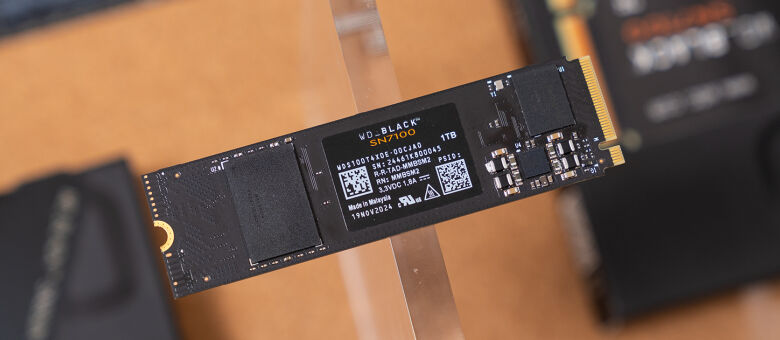
Sandisk will fully take over Western Digital's NAND Flash and SSD business, including the NAND chip manufacturing facility in partnership with Kioxia. In the future, consumers will see more SSD products dominated by the Sandisk brand, while Western Digital's classic WD Black series SSD, such as WD Black SN850X, will no longer appear under the Western Digital brand.
3. Impact on consumers
For existing Western Digital SSD users, after-sales service will be taken care of by Sandisk. As Sandisk is a wholly-owned subsidiary of Western Digital, the continuity and quality of after-sales service will be guaranteed. In addition, Sandisk has a high reputation in the consumer market and is expected to launch more SSD products to meet different needs, further consolidating its market position.
Market and Technology Trend Analysis
With the popularity of generative AI and big data applications, the demand for HDD and SSD markets is clearly differentiated. With its high capacity and low cost advantages, HDD occupies an important position in the field of data center and cloud storage. SSDS, on the other hand, continue to grow in consumer electronics and gaming with their high-speed performance.
Sandisk has deep technology accumulation and brand influence in the SSD field. After the separation, Sandisk will focus on the development of high-speed, high-durability flash memory products, further consolidating its competitiveness in the consumer and enterprise markets. Western Digital will continue to drive HDD technology innovation, including Energy-assisted Vertical Magnetic Recording (ePMR) and HAMR technology, to meet future data storage needs.
 Conclusion
The separation of Western Data and Sandisk is an important change in the storage industry. By operating independently, both parties are able to better leverage their respective technological advantages and respond to market changes. For consumers, Sandisk's independent operation means more innovative SSD products and reliable after-sales service; For Western Digital, focusing on HDD will help it maintain its leading position in the data center and cloud storage markets. In the future, with the continuous progress of technology, the storage industry will usher in more opportunities and challenges.
Shortage IC solutions: Semicon IC Supplier
Semicon is an independent distributor of electronic components, specializing in reliable shortage IC solutions for global customers. Below is a list of the most popular IC components recently. For more information, please visit Semicone or contact info@semicone.com.
- The ADL5367ACPZ-R7 is a high-performance balanced mixer IC designed for cellular down-conversion applications, featuring a frequency range of 500 MHz to 1.7 GHz, a conversion loss of 7.7 dB, and an integrated RF balun and LO buffer.
- The MAX4544EUT+T is a low-voltage, single-supply, single-pole double-throw (SPDT) analog switch designed for sample-and-hold circuits and heads-up displays, featuring a maximum on-resistance of 60Ω, low leakage current of 100pA, and fast switching times of 100ns for turn-on and 75ns for turn-off.
- The MP1605GTF-Z is a monolithic, synchronous step-down DC-DC converter with built-in power MOSFETs, offering up to 2A output current from a 2.3V to 5.5V input range, featuring low quiescent current (11µA), adjustable output voltage down to 0.6V, and a constant-on-time control scheme for fast transient response.
- The NCV20062DTBR2G is a dual low-power operational amplifier with rail-to-rail input and output, featuring a 3 MHz gain-bandwidth product, 125 µA quiescent current per channel, and a supply voltage range of 1.8V to 5.5V.
Digital Isolator Chips: A Deep Dive into Technology and Applications
High-Precision BMS Chips: Driving the Future of Battery Management
Related Article

Micron skips 10th-gen NAND, jumping from 276-layer G9 to 400+ layer G11 with wafer-to-wafer bonding, targeting AI and an H2 2027 ramp.
Node Selection: Micron Skips 10th-Generation NAND

A guide covers how clock generators work, eight representative ICs compared, sourcing pitfalls and where to buy.
Clock Generator: From PLL Fundamentals to Selection and Procurement