DC-DC Converter Analysis: A Comprehensive Guide from Principles to Future Trends
2024-10-08
I. Introduction
A DC-DC converter is an electronic device that transforms a DC voltage into another DC voltage. It finds extensive applications in various electronic systems to meet the diverse voltage and current requirements of different devices. Often referred to as a DC chopper, a DC-DC converter can vary a fixed DC voltage to a variable one. This converter plays a crucial role in electronic circuits, especially when the input DC voltage needs to be converted into the desired DC voltage for the circuit.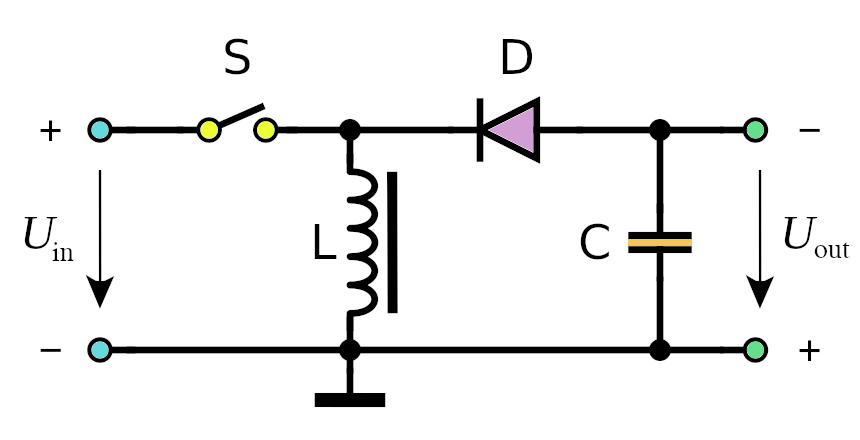
II. Principles and Mechanisms
The operating principle of a DC to DC converter primarily involves controlling the current or the direction of current flow to achieve voltage conversion. From input to output, electrical energy is regulated through charging and discharging by switching devices, and is filtered and adjusted by components like capacitors, inductors, and filter circuits to obtain the desired voltage output. While this process involves complex electronic principles such as electromagnetic induction and capacitor charging and discharging, its core lies in efficiently and stably managing the flow of energy.
Specifically, the operation of a DC to DC converter can be divided into the following steps:
- Input power: The voltage output is applied to one side of the transformer.
- Current inflow: When the input power is turned on, current flows into one side of the transformer. In the transformer, the current undergoes magnetic resonance, transferring energy to another induction coil.
- Current generation: The other induction coil generates a current, producing a voltage at the output interface. The output voltage is controlled by the resistance and voltage of the selected electronic components (such as a constant current source).
- Voltage detection: The output voltage is transmitted back to the input of the DC-DC converter for detection. This process repeats until the desired voltage output is obtained.
The structure of a DC to DC converter includes key components such as switching devices, inductors, capacitors, and control circuits. When the switching device conducts, the inductor stores energy, and when it is disconnected, the stored energy in the inductor is released to the output circuit to provide the required voltage. The capacitor is used to smooth the output voltage and reduce voltage ripple. The control circuit is responsible for monitoring the input/output voltage and load conditions, and adjusting the operation of the switching device to maintain the desired output voltage level.
III. Classification Overview
DC / DC Converters come in various types, each suited for different application scenarios. Some common classifications include:
- Buck converter: Skilled at reducing higher voltages to lower ones, widely used in battery-powered devices.
- Boost converter: Can increase the input voltage, suitable for applications requiring high output voltage.
- Buck-boost converter: Combines both buck and boost functions, offering high flexibility.
- Flyback converter: Isolated design, suitable for applications requiring electrical isolation.
- Step-up/step-down converter: Achieves more precise voltage adjustment through multi-stage conversion.
Additionally, there are other types of DC-DC converters such as multi-level DC/DC converters, synchronous rectifiers, and resonant converters with more complex topologies. These converter types are selected based on different input-output relationships, topologies, and operating principles to meet various power requirements, efficiency requirements, and cost requirements.
IV. Major Manufacturers and Selected Chip Models
The market is teeming with manufacturers of DC-DC converters. Here are some prominent ones and their key model chips:
| Texas Instruments | LM2675: A synchronous buck converter renowned for its maximum output current of 3A and low-noise design, making it ideal for mobile devices demanding high-quality power supplies. |
| LM5110: A high-performance synchronous boost converter characterized by high efficiency, low noise, and low static current. With a maximum output current of 5A, it suits a variety of power conversion applications. | |
| TPS61040: A synchronous buck-boost converter integrating advanced current limiting and over-temperature protection. Offering a maximum output current of 4.5A, it ensures stable operation under complex load conditions and is well-suited for high-reliability applications like communication base stations. | |
| Maxim Integrated | MAX1773: A high-performance boost converter that excels not only in efficiency but also in extremely low static current, making it an excellent choice for extending battery life in portable medical devices. |
| Linear Technology | LT3652: A highly efficient synchronous buck converter supporting a maximum output current of 6A, particularly suitable for industrial control systems requiring large current supply. |
| LT8628: A synchronous buck-boost converter with a remarkable 12A maximum output current and low-noise design, making it a preferred choice for data center server power management. | |
| MPS (Monolithic Power Systems) | MP2307: A versatile boost converter specifically designed for LED lighting and automotive infotainment systems, providing precise current control and thermal protection. |
| Diodes Incorporated | AP34063: An economical boost converter with a maximum output current of 1.5A, though its low cost and ease of use make it widely applicable in small home appliances and consumer electronics. |
V. Practical Applications and Trends
DC-DC converters play an indispensable role in numerous fields, including consumer electronics, industrial control, automotive electronics, medical devices, and communication systems. With the rapid development of emerging technologies like IoT, 5G communication, and electric vehicles, the demands on DC-DC converters are steadily increasing, manifested in the following trends:
- High efficiency: The need for energy conservation and emission reduction drives the continuous improvement of converter efficiency to minimize energy loss.
- Miniaturization: As electronic devices become increasingly compact, converter sizes are also shrinking.
- Intelligence: Integration of more intelligent control functions, such as adaptive voltage regulation and fault prediction, enhances overall system performance.
- Modularity: Facilitates rapid deployment and maintenance, reducing design costs.
- Greenness: Adoption of environmentally friendly materials and processes to minimize carbon footprint during production.
VI. Conclusion
As a crucial electronic component, DC-DC converters play an irreplaceable role in modern electronic devices. They achieve voltage conversion by controlling current or current flow, and are characterized by high efficiency, low noise, and low static current. With advancements in electronic technology, DC-DC converters are evolving towards higher efficiency, smaller size, intelligence, modularity, and green practices. In the future, DC-DC converters will continue to make significant contributions to the stable operation and energy efficiency of electronic devices in various fields.
Also, when selecting a DC-DC converter, it's essential to consider factors such as input voltage range, output voltage and current, efficiency, static current, noise, thermal performance, size, cost, and manufacturer support based on specific application needs and performance requirements. By making informed choices and utilizing DC-DC converters effectively, you can ensure the stable operation and efficient energy conversion of your electronic devices.
Email: info@semicone.com
Embedded IC: In-depth Analysis and Application Exploration
Micron Technology: A History of Innovation and Growth
Related Article

Micron skips 10th-gen NAND, jumping from 276-layer G9 to 400+ layer G11 with wafer-to-wafer bonding, targeting AI and an H2 2027 ramp.
Node Selection: Micron Skips 10th-Generation NAND

A guide covers how clock generators work, eight representative ICs compared, sourcing pitfalls and where to buy.
Clock Generator: From PLL Fundamentals to Selection and Procurement