Ceramic Resonator Selection and Procurement: A Practical Guide
2026-11-13
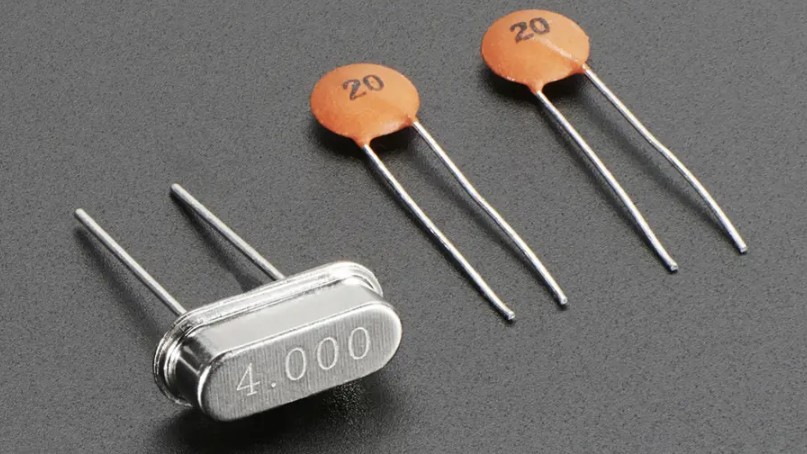
In MCU clock-source selection, quartz crystals and ceramic resonators each have distinct trade-offs: quartz offers high accuracy (ppm level) but higher cost; ceramic resonators offer lower cost, fast startup, and strong shock resistance, but weaker frequency accuracy and temperature drift. Typical frequency tolerance for ceramic resonators is ±0.1% to ±1.1%, making them unsuitable for high-precision timing or high-frequency communication synchronization (such as USB or Ethernet). However, in consumer electronics, home appliances, toys, remote controls, and most embedded applications with moderate clock-accuracy requirements, they are an economical and reliable choice.
Start with Frequency and Accuracy
First, confirm the clock frequency and tolerance required by the MCU or peripheral. Common frequencies include 4MHz, 8MHz, 10MHz, 12MHz, 16MHz, and 20MHz, covering most 8-bit and 32-bit MCU needs. If the system has strict bit-error-rate or timing-accuracy requirements (such as USB, Ethernet, or high-precision UART), quartz crystals are recommended; for GPIO control, display driving, or low-speed serial ports, ceramic resonators are usually sufficient.
Beyond tolerance, temperature characteristics are equally important: frequency deviation across the full temperature range (–40°C to +125°C) can reach ±0.3%, while automotive-grade models can tighten initial tolerance to ±0.25% to ±0.3%. For wide-temperature applications, prioritize parts rated for automotive or industrial temperature ranges rather than relying only on room-temperature specifications.
Built-in vs. External Capacitance
Ceramic resonators come in two forms: with built-in load capacitance and with external capacitance.
Built-in capacitance types (such as the Murata CSTLS series) integrate matching capacitance inside the device, eliminating the need for external load capacitors. This saves two 0402/0603 SMD capacitors, corresponding BOM lines, and layout space, significantly reducing mass-production cost. However, the load capacitance value is fixed (commonly 10pF, 15pF, or 33pF), so selection must ensure compatibility with the MCU oscillator circuit design; do not add large capacitors in parallel, as this can cause frequency shift or start-up failure.
External capacitance types allow flexible load-capacitance adjustment for fine-tuning frequency deviation, but require additional components and PCB area. For space-constrained products or those pursuing an extremely lean BOM, built-in capacitance types are often the better choice.
Package and Reliability
Packages range from through-hole to SMD types (such as 3213, 3215, and 4520), with ultra-thin models reaching 2.5×2.0×0.8mm for wearables and portable devices. Smaller size saves space but is more sensitive to PCB layout precision and soldering stress; in environments with severe vibration or thermal cycling, mechanical reliability must be evaluated alongside electrical parameters. Shock and vibration resistance is one of the core advantages of ceramic resonators over quartz crystals.
Ceramic Resonator Part Number Reference
The following models cover mainstream brands including Murata, TDK, Kyocera, and AVX, spanning consumer, industrial, and automotive-grade applications for selection reference:
| Mfr | Series/Model | Frequency | Tolerance | Built-in Load Capacitance | Package/Size |
|
Murata
|
CSTCE8M00G55-R0
|
8MHz
|
±0.5%
|
33pF
|
3213 SMD
|
|
Murata
|
CSTCE10M0G55-B0
|
10MHz
|
±0.5%
|
33pF
|
3213 SMD
|
|
Murata
|
CSTCE20M0V13C99-R0
|
20MHz
|
±0.10%
|
15pF
|
3213 SMD
|
|
Murata
|
CSTLS8M00G53Z-B0
|
8MHz
|
±0.5%
|
15pF
|
Through-hole/SMD
|
|
Murata
|
CSTNE12M0G550000R0
|
12MHz
|
±0.5%
|
15pF
|
3213 SMD
|
|
TDK
|
CCR8.0MXC8T
|
8MHz
|
±0.5%
|
8pF
|
3213 SMD
|
|
TDK
|
CCR16.0MXC7
|
16MHz
|
±0.5%
|
10pF
|
2520 SMD
|
|
TDK
|
CCR30.0MXC7T
|
30MHz
|
±0.5%
|
8pF
|
2520 SMD
|
|
Kyocera
|
CX3225GA series
|
8–40MHz
|
±50ppm-class
|
External matching required
|
3225 SMD
|
|
AVX
|
PBRV8.00MR10Y000
|
8MHz
|
±0.1%
|
—
|
Automotive 3-pin
|
Note: Different suffix versions within the same series may differ in capacitance value, temperature range, and tolerance grade. Actual selection should be based on the datasheet of the specific part number.
Procurement and Lead Times — SEMICONE
Selection ultimately must be executed through procurement. BOM simplification from built-in capacitance, wide-temperature capability of automotive-grade parts, and layout benefits of small packages all depend on choosing the correct part number. As a low-unit-price, high-volume passive component, a single part-number supply interruption can easily affect production line delivery—a risk that is often underestimated.
As an in-stock electronic component distributor, SEMICONE specializes in piezoelectric ceramic resonators, quartz crystals, and ICs. With rapid sample response, genuine-product assurance, and stable in-stock inventory, it helps customers efficiently lock in part numbers and bring passive-component supply risk into a controllable scheduling range.
Email: info@semicone.com
Optical Module Restrictions: Microsoft Objects it
Related Article
Microsoft pushes back against US limits on Chinese optical modules, warning that missing modules could stall US data center construction and idle AI chips.
Optical Module Restrictions: Microsoft Objects it
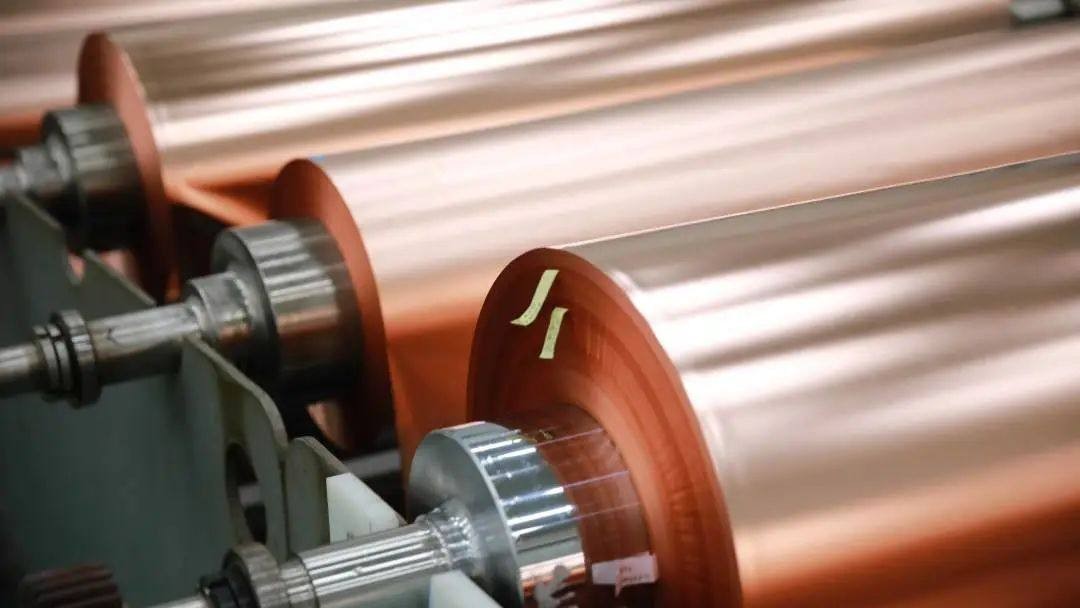
Mitsui Kinzoku invests ¥190B in a new Malaysian copper foil plant, targeting MicroThin and VSP output from April 2031 to meet AI infrastructure demand.
Mitsui Kinzoku to Invest ¥190 Billion in Copper Foil Expansion