2026 Semiconductor Trends: Key ICs the Global Electronics Industry
2026-08-28
For manufacturers and electronics buyers, these developments are also affecting the demand and availability of different semiconductor component categories. As an independent distributor of ICs and semiconductor components, SEMICON closely monitors these developments to help OEMs, EMS providers, manufacturers, and other electronics buyers identify important component trends and sourcing opportunities.
1. Memory IC: Supporting the Growth of AI and Computing
Memory IC remains one of the most important semiconductor component categories. The growth of AI servers and data centers is increasing demand for higher memory capacity and bandwidth, while memory components continue to play an essential role in industrial, automotive, networking and consumer applications.
Key categories include HBM, DRAM, NAND Flash and NOR Flash. Although their specifications and applications differ, all are important to the storage and data-processing requirements of modern electronic systems.
2. PMIC / Power Management IC
As electronic systems become more powerful and integrated, efficient power delivery has become an important design consideration.
PMIC, DC-DC converters, LDOs, voltage regulators and power controllers are widely used in data centers, automotive electronics, industrial equipment, communication systems and embedded devices. The appropriate power-management solution depends on factors such as input and output voltage, current requirements, efficiency, thermal conditions and application environment.
3. MCU and Embedded IC
While AI processors receive significant attention, MCUs and embedded ICs remain essential for controlling and managing electronic systems. As embedded systems become more connected and intelligent, MCU selection increasingly involves not only processing capability, but also communication interfaces, memory, security, power consumption and lifecycle support.
Automotive control units, industrial automation equipment, motor-control systems, IoT devices and intelligent products all rely on embedded processing. MCU platforms from manufacturers such as STMicroelectronics, NXP, Renesas, Infineon and Microchip cover a broad range of performance, connectivity and functional-safety requirements.
4. Automotive IC Chips
Vehicle electrification and the development of ADAS and software-defined vehicles are increasing the number and variety of semiconductor components used in modern vehicles. Automotive components also involve specific requirements for qualification, reliability, traceability and lifecycle management.
Important categories include Automotive MCU, Automotive PMIC, memory IC, sensor IC, Ethernet IC and power semiconductor devices. These components support functions ranging from body and power control to vehicle networking, sensing and driver-assistance systems.
5. MOSFET and Power Semiconductor
MOSFETs and other power semiconductor devices are widely used in power conversion, motor control, battery systems, industrial equipment and automotive applications. Selecting a suitable power semiconductor requires more than matching voltage and current ratings. Package, thermal characteristics, switching performance, operating temperature and application requirements should also be considered to ensure reliable operation.
Silicon MOSFETs continue to serve a broad range of applications, while SiC and GaN power devices are increasingly considered for systems that require higher efficiency, switching performance or power density.
6. Ethernet, Interface and Timing IC
The expansion of AI computing, industrial networking and automotive electronics is also increasing the importance of high-speed connectivity. Ethernet PHY, Ethernet Switch IC, Interface IC, Clock IC and Timing IC are used to connect processors, controllers, sensors and other system components.
Although these devices may account for a relatively small portion of a system BOM, the availability of a specific interface or timing component can directly affect system development and production.
7. Analog IC and Sensor Components
The increasing adoption of digital technologies does not reduce the need for analog components. Electronic systems still need to measure, condition and convert real-world signals before digital processing can take place.
Analog IC, ADC, DAC, amplifiers and sensor ICs are therefore widely used in industrial automation, automotive electronics, medical equipment, communications and IoT applications. Different applications place different requirements on accuracy, noise performance, operating temperature and power consumption.
Semiconductor Trends and Component Sourcing
The increasing complexity of electronic systems means that procurement teams often need to source multiple component categories at the same time. Availability can also vary by manufacturer, part number, region and lifecycle stage. Common sourcing considerations include:
-
Component availability and lead time
-
EOL and lifecycle status
-
Regional inventory
-
Part-number verification
-
Alternative component evaluation
-
Supply continuity
An independent distributor can help customers identify available sourcing channels and coordinate procurement for standard and hard-to-source components.
SEMICON – Independent IC & Semiconductor Component Distributor
SEMICON is an independent distributor specializing in ICs and semiconductor components, serving customers in global electronics markets. Its product coverage includes Integrated Circuits, Automotive Chips, PMIC, Memory IC, MCU, MOSFET, Analog IC, Interface IC, FPGA, DSP, sensors and other active and passive components.
SEMICON provides IC sourcing, BOM procurement, component selection support, quotation and supply coordination, helping customers identify suitable component resources according to their technical and procurement requirements.
Email: info@semicone.com
Website: www.semicone.com
MLCC Market Split: General Stable, Premium Extended Lead Times
Navitas to Acquire Claros, Extending AI Power Architecture from Grid to Chip
Related Article
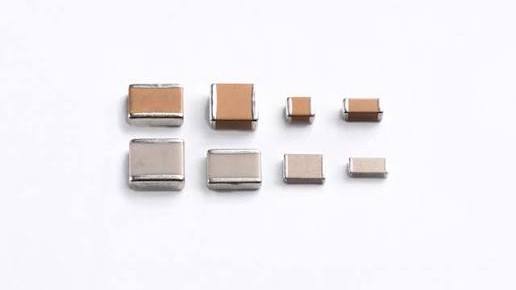
The MLCC market shows stark divergence: general‑purpose lead times stay at 14‑18 weeks, while high‑end AI/server models stretch beyond 20 weeks.
MLCC Market Split: General Stable, Premium Extended Lead Times

Navitas acquires Claros. It builds a rare grid-to-chip power architecture, creating an end-to-end pipeline from utility grid to AI processor cores.
Navitas to Acquire Claros, Extending AI Power Architecture from Grid to Chip