Russia Aims to Develop EUV Lithography Machine by 2036
2025-09-29
Recently, the Institute of Microstructural Physics of the Russian Academy of Sciences unveiled the long-term development roadmap for domestic Extreme Ultraviolet (EUV) lithography equipment. The plan aims to break the global monopoly in lithography equipment technology through a differentiated approach, with the goal of completing the development of EUV lithography machines for advanced processes below 10 nanometers by the end of 2036. Russia's EUV lithography machine development plan is divided into three main stages:
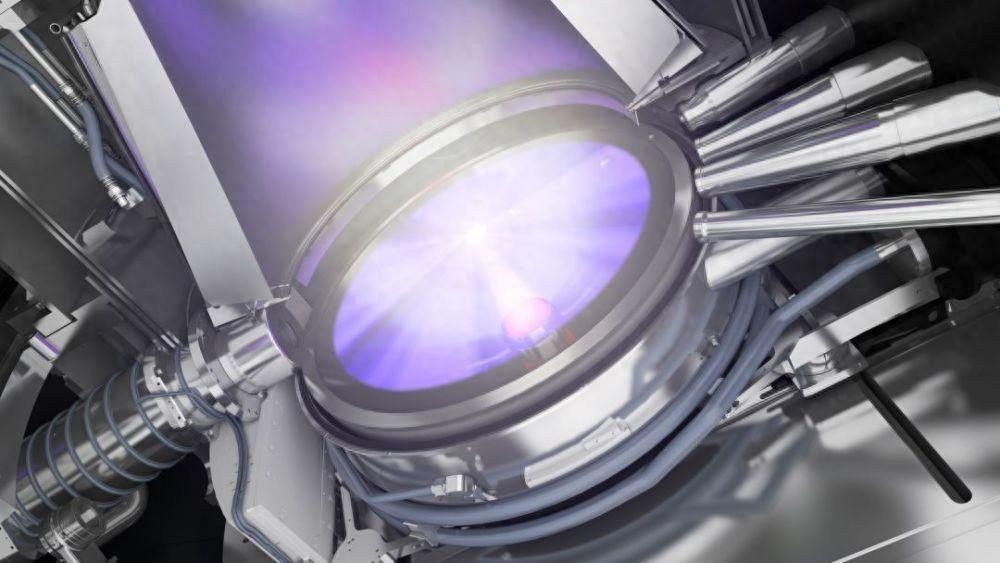 ● Stage One (2026-2028): Launch lithography machines supporting 40-nanometer processes, equipped with a double-mirror objective system, overlay accuracy reaching 10 nanometers, maximum exposure field of 3×3 millimeters, and a production efficiency of over 5 wafers per hour.
● Stage Two (2029-2032): Introduce scanning lithography machines supporting 28-nanometer processes (upgradable to 14 nanometers), featuring a four-mirror optical system, improved overlay accuracy to 5 nanometers, exposure field of 26×0.5 millimeters, and a production efficiency of over 50 wafers per hour.
● Stage Three (2033-2036): Roll out lithography machines supporting processes below 10 nanometers, with a six-mirror configuration, overlay accuracy of 2 nanometers, maximum exposure field of 26×2 millimeters, and a production efficiency of over 100 wafers per hour.
Russia plans to employ a set of technologies completely different from ASML to realize EUV lithography machines. Specifically, they intend to use hybrid solid-state lasers, xenon plasma light sources, and mirrors made of ruthenium and beryllium (Ru/Be). These mirrors can reflect light with a wavelength of 11.2 nanometers, reducing the contamination of optical elements and extending the lifespan of key parts. Compared with ASML's DUV equipment, this solution does not rely on high-pressure immersion liquids and multiple patterning steps, theoretically simplifying the production process and lowering the technical threshold.
Technical Challenges and Future Outlook
Despite the innovative nature of Russia's plan, achieving this goal still faces numerous challenges. Firstly, the complexity of EUV lithography technology is extremely high, requiring significant breakthroughs in light sources, optical systems, photomasks, and other aspects. Secondly, under the backdrop of international technological blockades, Russia needs to independently research and produce key components, which will be a formidable task. Additionally, the project requires substantial financial support and a high-quality workforce, both of which need the full backing of the Russian government and relevant institutions.
The potential impacts of Russia's EUV lithography machine plan on the global semiconductor industry are as follows:
● Technological Competition: Russia's differentiated technological approach may pose a certain challenge to ASML's market monopoly and promote the diversification of global lithography equipment technology.
● Industrial Ecosystem: The plan may attract international customers excluded from ASML's ecosystem, bringing new changes to the global semiconductor industry ecosystem.
Despite the many challenges, Russia's EUV lithography machine plan still has potential for development. In the future, Russia needs to continue to make efforts in technological research and development, financial investment, and international cooperation to ensure the smooth implementation of the plan. If successful, this plan will not only enhance Russia's position in the global semiconductor manufacturing field but also bring new development opportunities to the global semiconductor industry.
Semicon Semiconductor Chip Distributor
Semicon, a chip distributor, is dedicated to providing customers with efficient, reliable and diverse semiconductor product solutions. Semicon has been deeply engaged in the IC distribution field, covering a wide range of semiconductor product lines, including microcontrollers (MCUS), analog chips, memory chips, communication chips, etc., which are widely used in multiple fields such as smart home appliances, industrial control, and automotive electronics. Here are some carefully selected and recommended ic models:
● FS32K144HFT0VLHT: A high-performance microcontroller designed for automotive applications, offering robust performance and reliability in harsh environments.
● MAX232ECDR: A popular RS-232 transceiver IC, widely used for serial communication interfaces due to its efficient voltage conversion and compatibility.
● MMBFJ310LT1G: A high-voltage, high-current NPN transistor, ideal for power amplification and switching applications in various electronic circuits.
● ADUM1201ARZ: A digital isolator IC that provides reliable isolation for digital signals, ensuring safe and efficient data transfer in mixed-signal systems.
Email: info@semicone.com
Infineon and ROHM Collaborate to Advance SiC Power Device Package Compatibility
Accelerating AI Photonics: Applied Materials and GlobalFoundries Partnership
Related Article

Yageo plans a 10–15% MLCC and tantalum capacitor capacity increase by 2027, keeping utilization at 85–90% as AI demand tightens high-end supply and lead times stretch.
Yageo to Add 10% Capacity: Passive Component Expansion
FCC flags TP-Link over false certification data for four routers, three exceeding power limits, threatening Wi-Fi 8 approval.
FCC accuses TP-Link Data Misrepresentation, Wi-Fi 8 Faces Obstacles