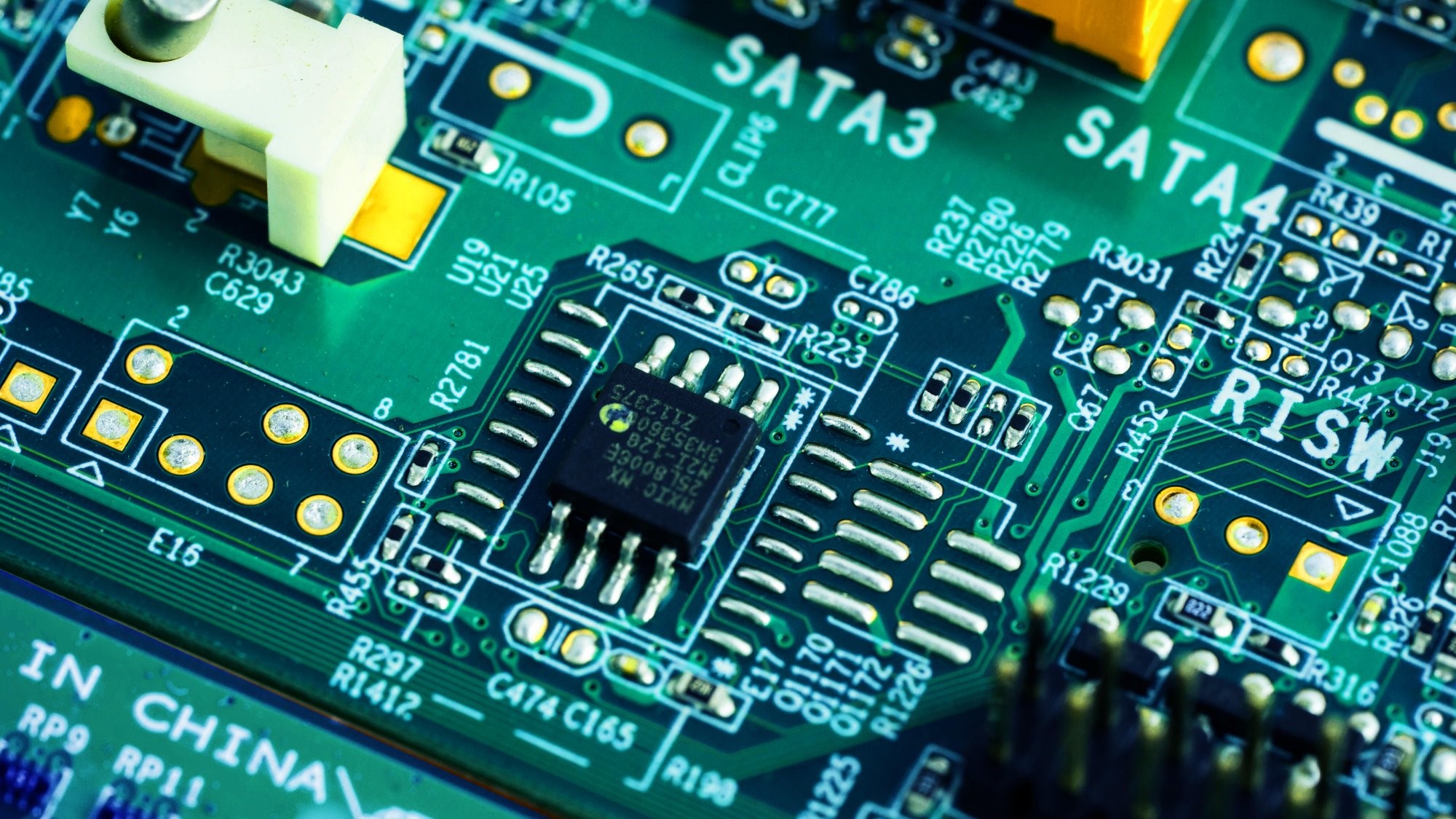
Electronic Components: The Synergistic Role of Passive and Active Components
2025-06-16
In modern electronic technology, components are the fundamental building blocks of complex electronic systems. Despite their small size, they collectively form powerful and widely-used electronic devices. Electronic components can be broadly divided into two categories: passive components and active components. These two types of components have distinct functions and characteristics, but they are interdependent and closely cooperate to drive the development of electronic technology.
I. Classification of Electronic Components
Electronic components can be generally categorized into passive and active components, each with its own focus in functionality, characteristics, and applications, yet both form the core part of electronic systems.
(1) Passive Components
Passive components are those that cannot actively supply energy but can store, dissipate, or transfer energy. They can operate without an external power source and are known for their simplicity, reliability, and low cost. The hallmark of passive components is their ability to function without external energy, exhibiting robust, simple, and reliable characteristics. However, they cannot amplify signals, which is a key distinction from active components. Common passive components include resistors, capacitors, inductors, and transformers.
● Resistors: Used to limit current, divide voltage, or split current, they are one of the most basic elements in a circuit.
● Capacitors: Capable of storing electric charge, they are used for filtering, coupling, and decoupling, and are widely applied in power and signal processing circuits.
● Inductors: Store magnetic energy and are commonly used in filtering, oscillating, and transformer circuits, presenting a reactive impedance to AC signals.
● Transformers: A special type of inductor that uses electromagnetic induction to transform voltage and current levels, and are key components in power transmission and distribution.
Passive components are widely used in various electronic circuits, from simple power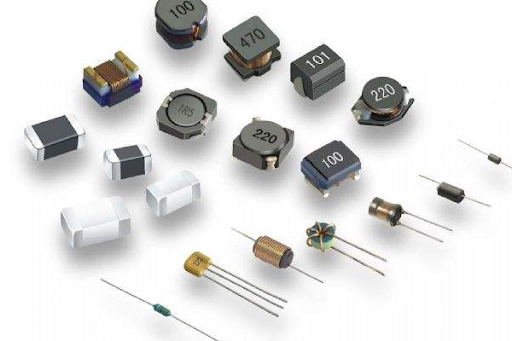 supplies to complex signal processing systems. They provide the basic electrical characteristics that ensure the stable transmission and conversion of current and voltage.
(2) Active Components
Active components are those that can control current or voltage and can actively amplify signals or supply energy. These components require an external power source to function. Common active components include transistors, diodes, and integrated circuits.
● Transistors: Including bipolar junction transistors (BJT) and field-effect transistors (FET), they are the core elements of amplifiers and switches.
● Diodes: With unidirectional conductivity, they are commonly used in rectifying, voltage stabilizing, and protective circuits.
● Integrated Circuits (IC): These integrate multiple transistors, diodes, and other elements onto a single chip to perform complex signal processing functions and are the core of modern electronic devices.
Active components play an irreplaceable role in signal enhancement and control. They can amplify weak signals, perform complex logical operations and data processing, and are the driving force behind the continuous advancement of electronic technology. They are widely used in computers, communication devices, consumer electronics, and other fields, where complex circuit designs and control logic enable various intelligent functions.
II. The Relationship Between Passive and Active Components
Although passive and active components appear to be opposites in definition and function, they closely cooperate and complement each other in actual circuits to form complete electronic systems. Active components typically require passive components to work in tandem. For example, transistors need bias resistors to set their operating points, and integrated circuits need capacitors for filtering. Passive components provide a stable working environment for active components, ensuring their normal operation.
● Cooperative Relationship: Active components usually require passive components for support. For example, transistors need bias resistors to set their operating points, while capacitors are used for filtering and coupling to ensure stable signal transmission.
● Dependence Relationship: Active components rely on passive components to adjust circuit parameters and provide a stable working environment. The precise characteristics and stability of passive components significantly impact the performance of active components.
● Integrated Applications: In modern circuit design, active components leverage passive components to achieve complex functions such as signal processing, amplification, and filtering. Together, they enable electronic systems to operate efficiently and stably.
III. The Role of Electronic Components in Modern Electronic Systems
Electronic components are the cornerstone of modern electronic systems, playing a crucial role in various fields. From consumer electronics to industrial control, from communication devices to aerospace, electronic components are omnipresent.
-
Enhancing System Performance: By precisely selecting and properly configuring electronic components, significant improvements can be made to system performance metrics such as response speed, accuracy, and stability.
-
Enabling Complex Functions: The advent of integrated circuits and other active components allows electronic systems to perform more complex functions, such as data processing, image recognition, and wireless communication.
-
Driving Technological Innovation: With the continuous emergence of new materials and processes, the performance of electronic components is constantly improving, providing strong support for the innovation and development of electronic technology.
IV. Conclusion
Passive and active components are two indispensable categories of electronic components. Although they differ in function and characteristics, they work closely together to build complex electronic systems. As technology continues to advance, electronic components will evolve towards higher performance, greater integration, miniaturization, and intelligence, bringing more possibilities to the future of electronic technology.
Discover Semicone IC Distributor
Semicone IC is a leading distributor specializing in high-quality semiconductor chips, catering to diverse industry needs. Here are some of our top recommended IC models:
● LPC11U35FBD48/401: A versatile ARM Cortex-M0+ microcontroller with USB connectivity, ideal for embedded applications requiring low power and efficient processing.
● LM25184QNGURQ1: A high-efficiency synchronous step-down converter, perfect for automotive and industrial applications where reliability and thermal performance are critical.
● STM32G031K8T6: A compact and powerful microcontroller featuring low power consumption and integrated peripherals, suitable for a wide range of IoT and consumer electronics applications.
Email: info@semicone.com
European Tier 1 Automotive Supplier Plans to Sell 6-Inch SiC Wafer Plant
Business Adjustment of Chip Giants: Focusing on Core and Divesting Non-Core Businesses
Related Article

Korea's Supreme Court upholds a KRW 18.66B fine on Broadcom for abusing its market position and forcing Samsung into a long-term chip supply deal through cutoffs.
Broadcom's Korean Case Ends in Final Ruling: Supply Leverage Cannot Become a Tool of Coercion

NXP issues its third 2026 price hike, effective January 1, 2027, without disclosing increases or part lists, as costs and lead times stretch and industry-wide price hikes continue.
NXP's Three Price Rounds in 2026: Increases, Part Numbers, and Cost Pressure